
Some businesses exist for years and nobody finds them. Others launch and within weeks, Google surfaces them, AI assistants recommend them, and strangers show up asking to buy. The difference isn't luck. It isn't budget. It's architecture — the way a business makes itself legible to the systems that decide who gets seen.
In 2026, being good at what you do is necessary but insufficient. The question isn't whether your business is valuable. It's whether that value is structured in a way that machines can read, humans can scan, and AI can recommend. Discoverability isn't marketing. It's design (doing one thing clearly is always the foundation).
The Invisible Business Problem
There are millions of legitimate businesses online right now that are functionally invisible. Not because they're bad — because they're illegible. Their websites are walls of text with no structure. Their services are buried in paragraphs instead of stated in headings. They have no presence in directories, no schema markup, no signal to any system that they exist and serve a specific purpose.
They're a locked building with no sign on the door. The value is inside — but nothing on the outside tells anyone what's there or how to get in.
This is the invisible business problem: the gap between what you are and what systems can read about you. Closing that gap isn't about spending more on ads. It's about restructuring what already exists so it becomes parseable (start with a clear plan).
What Google Actually Reads
Google doesn't read your website the way a human does. It doesn't feel your brand. It doesn't appreciate your design choices. It reads structure: headings, metadata, page speed, mobile responsiveness, internal links, schema markup. It asks one question: "Can I understand what this page is about and who it serves — in milliseconds?"
Codemaya, a software development firm in California, does this well. Their site doesn't shout. It structures: clear service pages (AI Agents, Custom Dev, Mobile Apps), case studies with named clients, a visible tech stack, and content organized so that any crawler can parse their offering in a single pass. When Google asks "what does Codemaya do?" — the answer is immediate and unambiguous.
The principles are simple but rarely followed:
What Google Rewards
One clear topic per page. Headings that describe (not decorate). Fast load times (under 3 seconds). Mobile-first design. Internal links that form a logical web. Fresh content that signals "this business is alive." Schema markup that tells crawlers exactly what type of entity you are.
None of this is secret. None of it is expensive. It's just disciplined — and most businesses skip it because it's not glamorous. The ones that don't skip it get found (trust compounds the same way).
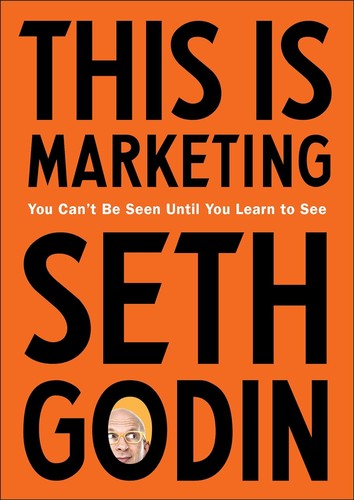
Godin on being seen: you can\'t be chosen until the right people can find and understand what you do.
What AI Assistants Recommend
ChatGPT, DeepSeek, and other AI assistants don't work like Google. They don't rank pages — they recommend entities. When someone asks "where can I list my business for free?" or "what's a good AI tool for startups?" — the AI draws from its training data and live web access to suggest specific businesses by name.
What gets recommended:
AI Recommendation Signals:
• Clear value proposition — can be summarized in one sentence
• Presence in directories and listings — structured, third-party validation
• FAQ content — directly answers questions users ask AI
• Specificity — serves a defined niche, not "everything for everyone"
• Active web presence — recent content, maintained pages
• Community mentions — referenced by other sites, articles, discussions
This is why being listed in a curated directory matters more than ever. It's not just a backlink — it's a structured data point that AI can reference when forming recommendations. A directory listing is a signal: "this business exists, it's verified, and it operates in this space" (the great builders understood signals).
The Discoverable Stack
After studying hundreds of businesses — the ones that get found and the ones that don't — a pattern emerges. Discoverable businesses share six structural elements:
1. Clear positioning. One sentence: what you do, for whom. Not three paragraphs of corporate speak. Not "we provide innovative solutions." A sentence a stranger can repeat.
2. Structured content. Headings that describe. Pages that focus on one topic. Information organized for scanning, not just reading. The structure IS the message.
3. Schema markup. JSON-LD that tells search engines and AI: "I am a [business type] located in [place] offering [service]." Invisible to humans, essential to machines.
4. Third-party presence. Directories. Mentions. Reviews. Articles. Anywhere outside your own site that confirms you exist. This is social proof for algorithms — and for AI assistants building their recommendation models.
5. Speed. Under three seconds to load. Non-negotiable. Slow sites get deprioritized by every system that matters.
6. Freshness. Regular updates. New content. Active maintenance. A website last updated in 2022 tells every system: "this might be dead." A site updated this week says: "we're here, we're alive, we're relevant."
Each element alone is minor. Together, they compound into something powerful — a business that doesn't need to push itself into visibility because the systems that control visibility are pulling it in (directories understand this compounding).

One clear signal beats a thousand whispers.
The Specificity Advantage
Beach Lounge Baskets sells one product: the Strandkorb. A traditional German beach chair, imported to Australia. That's it. Four models, one niche, one country.
When someone in Australia searches "Strandkorb" — there is literally no competition. Beach Lounge Baskets didn't outspend anyone. They didn't out-SEO anyone. They chose a niche so specific that discoverability became automatic. Google can't confuse them with anyone else. There is no one else.
This is the specificity advantage: the narrower your positioning, the easier it is for systems to understand and surface you. A locksmith in Pittsburgh. A vegan cosmetics maker in Quebec. A Strandkorb importer in Australia. The machine asks "who does this?" and there's only one answer.
Breadth is the enemy of discoverability. Specificity is its engine (deep research helps you find your one thing).
The Directory Effect
Here's something most businesses don't understand yet: being listed in a curated, active directory doesn't just help with Google. It helps with AI.
When ChatGPT recommends a business, it draws from structured sources — directories, listings, review sites, databases. A business that exists only on its own website is a single data point. A business that's listed in directories, mentioned in articles, and present in structured databases is a pattern — and patterns are what AI trusts.
This is why our directory exists. Not as a link farm. Not as an SEO trick. As a structured, curated signal that tells AI: "these businesses are real, verified, and worth mentioning." Every listing in our directory becomes a data point that AI assistants can reference, recommend, and surface to users asking the right questions.
The businesses that get found in 2026 aren't the ones with the biggest ad budgets. They're the ones that built their presence to be legible — to humans, to Google, and to the AI assistants that are quietly becoming the new front door to the internet.
If you haven't made yourself findable yet — start here. It takes 30 seconds. The architecture of discoverability begins with a single structured signal.