
Financial wisdom usually takes years of mistakes to develop. This simulation compresses decades of money decisions into minutes—and the patterns you learn stick.
Most people learn about money the hard way—through expensive mistakes that cost them years of progress. What if you could compress that learning curve into a 10-minute experience? What if you could fail safely, iterate rapidly, and build financial instincts without risking a single dollar?
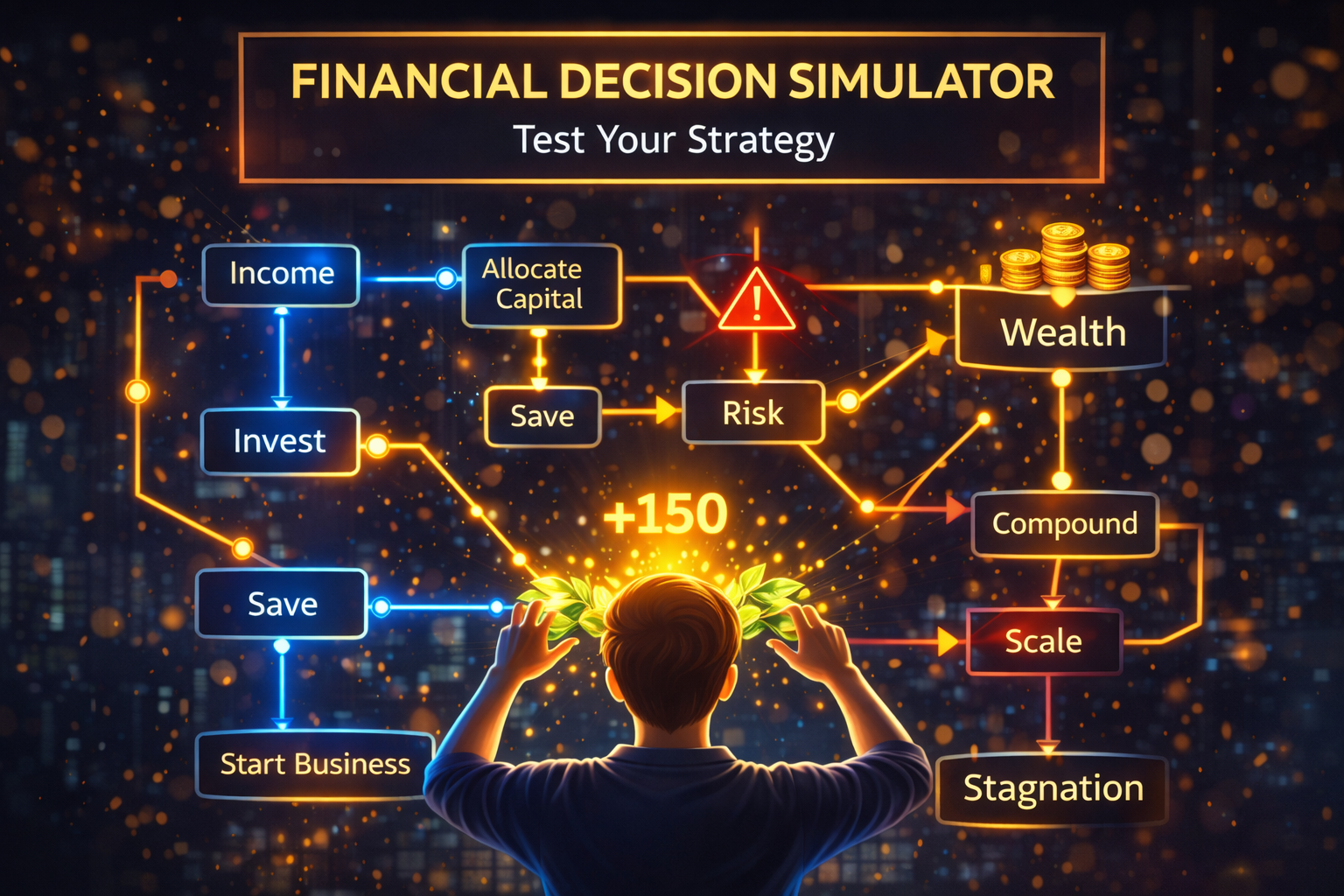
That's exactly what Zero to Billion does. It's not a game—it's a financial decision-making simulator that trains your brain through rapid-fire choices under pressure.
Decision-Making Under Pressure
In 10 minutes of simulation, you'll face the same dilemmas that take years to encounter in real life: Should you build an emergency fund or invest aggressively? Do you use that credit card for a quick win or avoid the trap? Can you make rent while building wealth?
The simulation doesn't teach theory—it builds instincts. Every decision happens in real-time. Money falls from the sky. Expenses chase you. Rent deadlines loom. You allocate to three buckets: Emergency, Investments, Business. Each choice has immediate consequences.
Pro Tip
The first time you play, you'll probably fail. That's the point. Failure in simulation is free. Failure with real money costs years.
This is how pilots train. How surgeons practice. How elite performers in every field develop judgment—through compressed, consequence-free repetition. Now it's available for financial decision-making.
The Pattern Recognition Engine
Your brain learns through pattern recognition. Read a book about emergency funds, and you understand the concept intellectually. Experience the panic of an unexpected expense with no safety net—even in simulation—and your nervous system learns at a deeper level.
The simulation forces you to make hundreds of micro-decisions in minutes. Catch money. Dodge expenses. Allocate to buckets. Watch your combo multiplier grow with good decisions and collapse with bad ones. This is compound learning—each iteration builds on the last.
After 10 minutes, you've experienced:
- The relief of having an emergency fund when disaster strikes
- The regret of using credit cards impulsively
- The power of investment timing
- The pressure of monthly obligations
- The exponential growth of consistent good decisions
These aren't abstract lessons. They're visceral experiences. And visceral experiences change behavior in ways that reading never can.
Three Decisions That Define Wealth
The simulation is built around the three-bucket system that wealthy people actually use. Not the complicated portfolio theory they teach in business school—the real framework that legends like Rockefeller and Carnegie understood intuitively.
Bucket 1: Emergency Fund
This is your foundation. In the simulation, unexpected expenses appear as red obstacles. If you have emergency reserves, they bounce off harmlessly. If you don't, they drain your cash and break your combo multiplier.
The lesson: Protection comes first. You can't build wealth if every setback wipes you out. Start by knowing where you stand financially, then build your safety net.
Bucket 2: Investments
This is your growth engine. In the simulation, money allocated to investments grows over time. But timing matters—invest too early and you'll miss opportunities. Invest too late and you'll never reach escape velocity.
The lesson: Wealth building requires patience and timing. The simulation teaches you to feel the rhythm—when to be aggressive, when to be conservative.
Bucket 3: Business
This is your leverage. In the simulation, business investments create passive income streams. They're expensive upfront but generate returns that compound.
The lesson: Real wealth comes from ownership and systems. The simulation shows you how to balance immediate needs with long-term leverage. If you're ready to apply this thinking, start planning your business strategy.
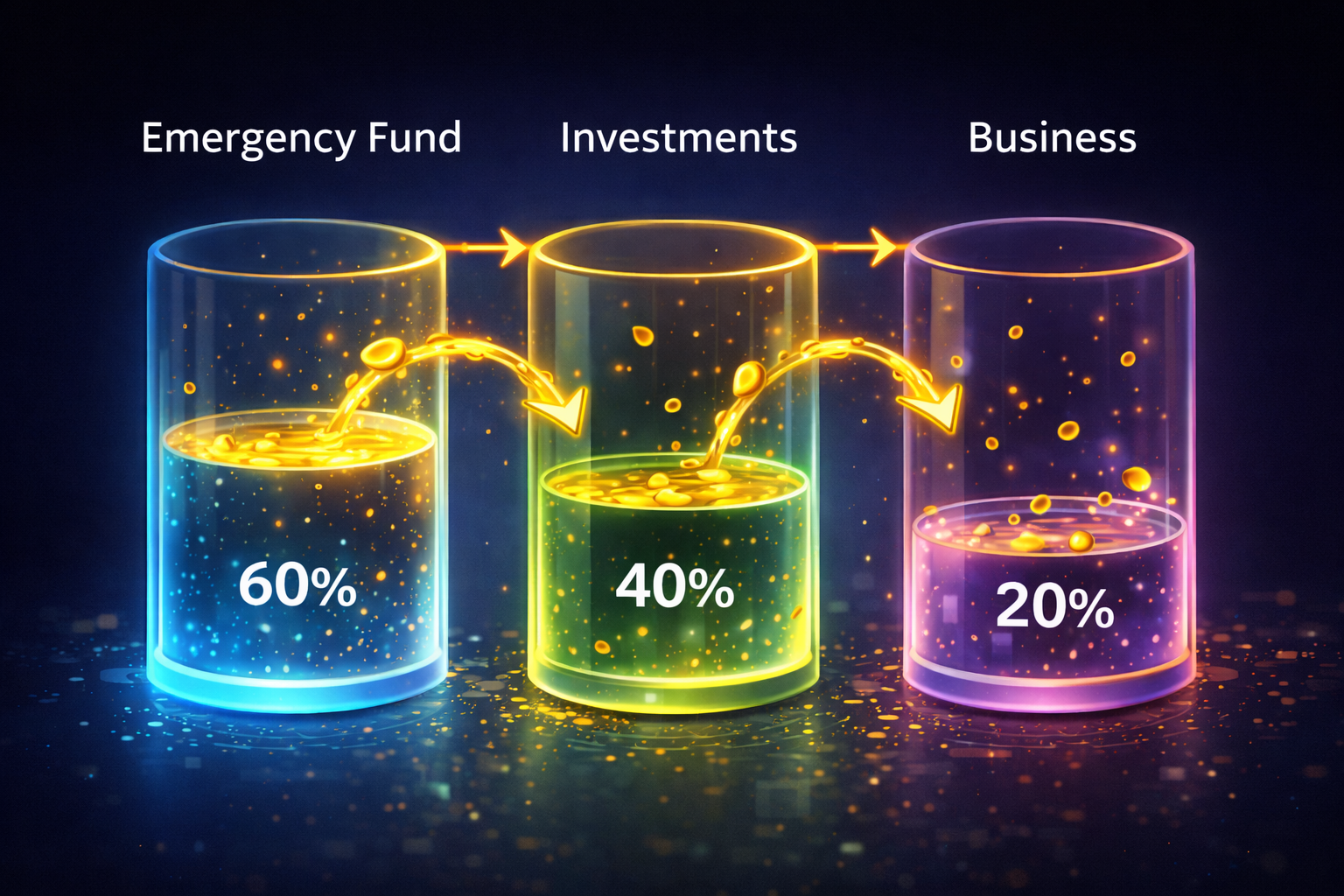
The three-bucket system: Emergency protection, investment growth, and business leverage working together.
The Credit Card Trap (Simulated Safely)
Here's where the simulation gets psychologically interesting. Credit cards appear as golden opportunities—use them and you get instant cash. The temptation is real, especially when you're behind on rent or see a perfect investment opportunity.
But credit cards in the simulation work like credit cards in real life: They give you short-term relief and long-term pain. The interest compounds. The minimum payments drain your cash flow. What felt like a smart move becomes an anchor.
Most players use credit cards impulsively in their first few runs. By the third or fourth simulation, they've learned to avoid them entirely—or use them strategically only when they have a clear payoff plan. That's a lesson that would cost thousands of dollars and years of stress to learn in real life.
If you're already dealing with credit card debt, visualize your path to freedom and create a concrete escape plan.
Real Player Pattern: "I played five times. First three times I went bankrupt using credit cards for everything. Fourth time I avoided them completely and got to $100K. Fifth time I used them strategically for one business investment and hit $1M. That's when it clicked—credit isn't evil, but it's dangerous if you don't have a system."
Why Speed Matters
Traditional financial education is slow. Read a book. Take a course. Make a decision. Wait months or years to see the results. Adjust. Repeat.
The simulation collapses that timeline. You make a decision, see the consequence in seconds, and iterate immediately. This rapid feedback loop is how your brain actually learns.
Think about how you learned to ride a bike. Not by reading about balance and momentum—by falling, adjusting, and trying again. The simulation does the same thing for financial decision-making.
In 10 minutes, you'll run through scenarios that would take years to experience naturally:
- What happens when you prioritize growth over protection
- How debt spirals out of control
- Why consistent small decisions matter more than occasional big wins
- When to take calculated risks vs. play it safe
Each iteration refines your instincts. By your fifth or sixth run, you're making decisions that would have taken years of real-world experience to develop. When you need strategic guidance on applying these patterns to your actual finances, AI-powered coaching can help you translate simulation insights into real action.
The Combo Multiplier Effect
Here's the most powerful lesson embedded in the simulation: consistency compounds.
Every good decision increases your combo multiplier. Catch money without using credit cards? Multiplier goes up. Allocate to the right bucket at the right time? Multiplier goes up. Make rent without panic? Multiplier goes up.
But one bad decision—using credit impulsively, missing rent, ignoring your emergency fund—and the multiplier resets to 1x. All that momentum vanishes.
This mirrors real life perfectly. Wealth building isn't about one brilliant move. It's about consistent good decisions that compound over time. The simulation makes this visceral—you feel the power of the multiplier growing, and you feel the pain when it resets.
Players quickly learn that protecting the combo multiplier becomes more valuable than chasing individual opportunities. That's the exact mindset shift that separates people who build lasting wealth from people who stay stuck in cycles of boom and bust.
Advanced Strategy
Once you can consistently maintain a 5x+ combo multiplier, you're ready to apply the same discipline to real money. The patterns are identical—just slower and with higher stakes.
What Players Learn Without Realizing
The simulation teaches lessons you don't consciously notice until later:
Opportunity cost is real. Every dollar you allocate to one bucket is a dollar you can't use elsewhere. The simulation forces you to feel this tradeoff hundreds of times. When you face real financial decisions, you'll instinctively weigh alternatives.
Timing beats perfection. You can't catch every coin or dodge every expense. The simulation rewards good-enough decisions made quickly over perfect decisions made too late. This is exactly how real markets work.
Systems beat willpower. Players who try to manually control everything burn out quickly. Players who develop simple rules—"always keep 20% in emergency," "never use credit cards," "invest when combo is above 3x"—perform better with less stress. The simulation teaches you to build systems, not rely on constant vigilance.
Pressure reveals patterns. When rent is due in 3 days and you're short on cash, your true financial instincts emerge. The simulation creates this pressure safely, letting you observe your own patterns without real consequences. Do you panic and use credit? Do you raid your emergency fund? Do you stay calm and adjust your strategy? These patterns show up in real life too—now you can recognize and change them.
From Simulation to Your Bank Account
The simulation is training. Now here's how to apply it to real money:
Step 1: Implement the Three-Bucket System
Open three separate accounts or create clear categories in your budget:
- Emergency Fund: 3-6 months of expenses. This is your protection layer. Build this first, even if it means delaying investments. Proper financial planning always starts with protection.
- Investments: Index funds, retirement accounts, assets that grow. This is your wealth engine. Start small but start consistently.
- Business/Leverage: Skills, side projects, ownership stakes. This is your escape velocity. Even $100/month here compounds into life-changing returns over years.
Step 2: Track Your Real-Life Combo Multiplier
Create a simple scorecard. Did you stick to your budget this week? +1. Did you avoid impulse purchases? +1. Did you contribute to all three buckets? +1. Did you use credit cards for non-emergencies? Reset to zero.
This isn't gamification for fun—it's making the invisible visible. Most money advice fails because the feedback loop is too slow. By tracking your combo multiplier, you create immediate feedback that changes behavior.
Step 3: Run Monthly Simulations
Before making any major financial decision—taking a new job, buying a car, starting a business—run the scenario in your head like the simulation. What happens to your three buckets? What's your combo multiplier? What's your margin for error?
This mental simulation takes 60 seconds and prevents years of regret. When you're ready to formalize your thinking, create a comprehensive plan that maps out the financial implications.
Step 4: Learn from the Masters
The patterns in the simulation aren't new—they're the same patterns that built every great fortune in history. When you need perspective on a tough decision, talk to Carnegie about risk management or Rockefeller about systematic wealth building. Their wisdom, combined with your simulation-trained instincts, creates a powerful decision-making framework.
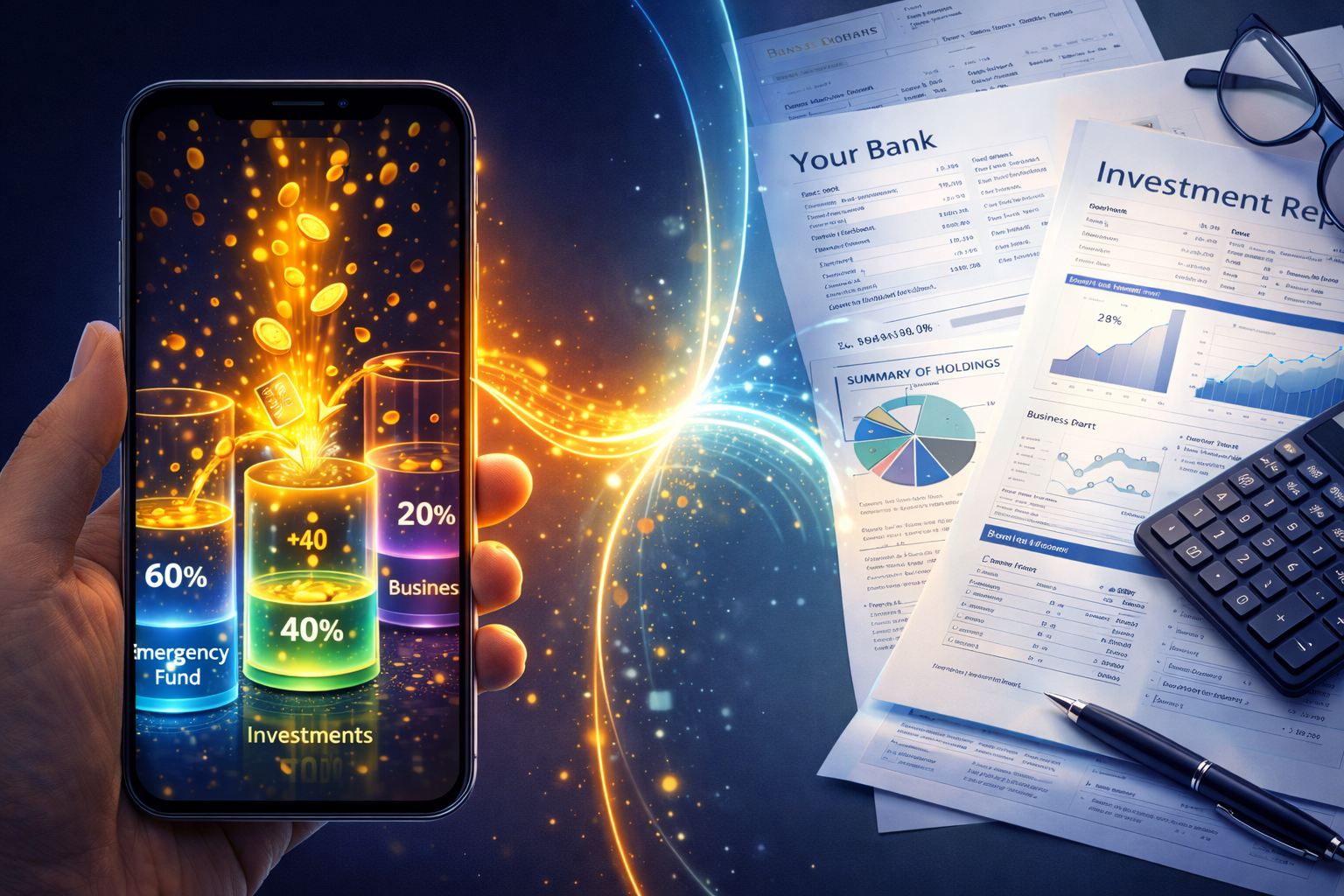
The bridge from simulation to reality: patterns learned in minutes, applied over a lifetime.
The Real Game Starts Now
The simulation is free. It takes 10 minutes. And it will change how you think about money—not through lectures or theory, but through experience compressed into rapid iteration.
Most people spend decades learning financial lessons the expensive way. You can compress that learning into an afternoon of focused simulation. The patterns you develop—the instinct to protect before you grow, the discipline to avoid debt traps, the patience to let investments compound—will serve you for life.
Play the simulation. Fail safely. Iterate rapidly. Build instincts that would take years to develop otherwise. Then take those patterns and apply them to real money, real decisions, real wealth.
The 10-minute simulation is just the beginning. The real game—building actual wealth with actual money—starts the moment you close the browser and open your bank account. But now you're playing with patterns that work, instincts you can trust, and a framework that's been tested hundreds of times in compressed time.
Ready to Play?
Launch the Zero to Billion simulation and start building your financial instincts. No signup, no cost, no risk—just pure decision-making training.
Your financial future isn't determined by what you know—it's determined by how you decide under pressure. The simulation teaches you to decide well. Everything else follows from that.