
You've been treating money like a transaction. What if you treated it like a relationship? The wealthiest people don't chase money—they create conditions where money chases them. Here's how to flip the script and make money want to stay.
Every relationship requires attention, respect, and intentionality. Your relationship with money is no different. Yet most people approach wealth-building with desperation, fear, or neglect—the exact behaviors that repel what they're seeking. The truth? Money behaves like a partner: it flows toward those who respect it, grows with those who nurture it, and multiplies for those who give it purpose.
This isn't about manifesting or wishful thinking. It's about understanding the psychology and mechanics of wealth attraction. When you shift from transactional thinking to relational thinking (adopt the modern Midas mindset), you create magnetic conditions that naturally attract and retain wealth.
Stop Chasing, Start Attracting
Desperation has a smell. When you chase money from a place of scarcity—working frantically, jumping at every opportunity, constantly worried about running out—you broadcast neediness. And just like in human relationships, neediness repels.
The wealthiest individuals operate from abundance. They make decisions based on value creation, not survival. They invest in long-term strategic resilience rather than short-term fixes. This confidence isn't arrogance—it's the natural result of understanding how wealth actually works.
Mindset Shift
Replace "I need money" with "I create value that attracts money." This subtle reframe changes your entire approach from desperate to magnetic.
Scarcity thinking creates a self-fulfilling prophecy. When you believe money is scarce, you hoard it, avoid risks, and miss opportunities. When you operate from abundance, you invest strategically, take calculated risks, and create multiple income streams. The difference isn't luck—it's psychology.
Start by examining your money story. What did you learn about wealth growing up? Are those beliefs serving you? Sometimes the greatest breakthroughs come from wisdom beyond our own experience (connect with business legends who built empires from nothing). Their insights can rewrite your financial narrative.
Give Money a Job (Purpose Creates Loyalty)
Money without purpose is like a talented employee with no direction—it wanders, gets distracted, and eventually leaves. Money with a clear mission stays, works hard, and brings friends.
This is where most people fail. They earn money, it sits in checking accounts, and slowly bleeds away through lifestyle inflation and impulse purchases. There's no plan, no purpose, no job description. Every dollar should have an assignment before it arrives.
Create a comprehensive financial plan that gives each dollar a role: some dollars are soldiers (emergency fund protection), some are workers (investment accounts), some are scouts (exploring new opportunities), and yes, some are for enjoyment. But even fun money has a purpose—maintaining your sanity and motivation.
Real Example: Sarah earned $5,000 monthly. Previously, it disappeared into "life." She restructured: $1,000 to investments (workers), $500 to emergency fund (soldiers), $500 to skill development (scouts), $2,500 to living expenses, $500 to guilt-free spending. Within 18 months, her investment account generated enough passive income to cover her phone bill. Small purpose, big momentum.
Start with clarity. Use our net worth calculator to understand your current position, then build a strategic plan (use our planning tools) for where you're going. When money knows its job, it performs.
Respect Money's Time (Compound Interest is Love Language)
If money had a love language, it would be quality time. The longer you give money to work, the more it falls in love with you. This is compound interest—the eighth wonder of the world, according to Einstein.
Here's the math that changes everything: $10,000 invested at 8% annual return becomes $21,589 in 10 years. The same amount becomes $46,610 in 20 years. And $100,627 in 30 years. Notice the acceleration? That's compound interest showing its affection.
Most people underestimate the power of small, consistent actions (the 1% daily improvement principle). They want instant results, so they chase get-rich-quick schemes or give up entirely. But wealth-building is a marathon, not a sprint.
Time Advantage
Starting 10 years earlier is worth more than doubling your investment amount later. A 25-year-old investing $200/month until 65 accumulates more than a 35-year-old investing $400/month for the same period. Time is your greatest asset.
The key is patience paired with consistency. Set up automatic investments. Let time do the heavy lifting. While you sleep, your money is working, compounding, multiplying. This is how you make money love you—by giving it the time and space to grow.
Feed It, Don't Starve It (Investment Over Hoarding)
There's a critical difference between saving and investing. Saving is defensive—protecting what you have. Investing is offensive—growing what you have. Both matter, but only one builds wealth.
Cash sitting in a checking account loses value every year to inflation. It's like keeping a plant in a dark closet—technically alive, but slowly dying. Money needs sunlight (opportunity), water (capital), and nutrients (smart allocation) to thrive.
This doesn't mean reckless speculation. It means strategic deployment. Understand market dynamics, diversify intelligently, and invest in assets that appreciate. Real estate, index funds, businesses, skills—these are the gardens where money grows.
The Hoarding Trap: Michael saved $50,000 over 10 years, keeping it "safe" in a savings account earning 0.5% interest. After inflation, his purchasing power decreased by roughly 20%. His friend invested the same amount in a diversified portfolio averaging 7% returns and ended with $98,000. Same discipline, radically different outcomes.
Start by building your financial operating system—the infrastructure that turns income into wealth. Establish an emergency fund first (3-6 months of expenses), then deploy capital into growth vehicles. Don't let fear of loss prevent you from the opportunity of gain.
If you're carrying high-interest debt, that's your first investment—paying it off. Use our debt calculator to create a payoff strategy. Eliminating 18% credit card interest is an immediate 18% return on investment.
Create Multiple Streams (Polyamory for Your Portfolio)
Relying on a single income source is like having one friend—risky and limiting. The wealthy don't have jobs; they have income ecosystems. Multiple streams provide stability, growth, and optionality.
There are three primary income types: active (trading time for money), passive (money working for you), and portfolio (investments generating returns). Most people have only active income. The goal is to build all three.
Active Income: Your salary, freelance work, consulting. This is your foundation, but it's capped by time. You can't work 400 hours per week.
Passive Income: Rental properties, royalties, automated businesses, dividend stocks. These generate money while you sleep. Building passive income requires upfront effort or capital, but the payoff is freedom.
Portfolio Income: Capital gains from investments, interest, dividends. This is money making money—the ultimate form of wealth.
Start Small
You don't need to launch a business empire tomorrow. Start with one additional stream: rent a spare room, invest in dividend stocks, create a digital product, or monetize a skill. Each stream compounds your security and growth.
Diversification isn't just smart—it's essential. When one stream slows, others compensate. This is how you create antifragile wealth that grows stronger under pressure.
Consider starting a side business or consulting practice. Our business plan generator can help you structure your idea into a viable income stream. Even $500/month in additional income, invested consistently, becomes $100,000+ over 10 years.
Protect It Like You Love It (Risk Management)
You protect what you value. If money matters to you, you build walls around it—not to hoard it, but to ensure it's there when you need it. This is risk management, and it's the unsexy part of wealth-building that separates those who keep money from those who lose it.
Emergency Fund: Your first line of defense. 3-6 months of expenses in a high-yield savings account. This prevents you from raiding investments during crises or going into debt for unexpected expenses.
Insurance: Health, life, disability, property. These aren't expenses—they're protection against catastrophic loss. One medical emergency or lawsuit can wipe out decades of wealth-building. Insurance is the price of peace of mind.
Legal Structures: As your wealth grows, consider LLCs, trusts, or other structures that protect assets from liability. Consult professionals. The cost of protection is always less than the cost of loss.
Diversification: Never put all your eggs in one basket. Spread risk across asset classes, industries, and geographies. When one investment struggles, others thrive.
Protection in Action: Jennifer built a $200,000 investment portfolio over 15 years. She also maintained a $30,000 emergency fund and proper insurance. When she was laid off during an economic downturn, her emergency fund covered expenses while she found new work. Her investments stayed intact, continuing to compound. Her colleague without protection had to liquidate investments at a loss and went into debt. Same crisis, different outcomes.
Risk management isn't pessimism—it's realism. The wealthy don't take reckless risks; they take calculated risks with downside protection. They make strategic decisions based on data, not emotion.
When facing complex financial decisions, don't navigate alone. Get AI-powered guidance tailored to your specific situation, or learn from those who've built and protected massive wealth (chat with Rockefeller or Carnegie about wealth preservation strategies).
The Relationship Mindset
Making money love you isn't about tricks or hacks. It's about fundamentally changing how you relate to wealth. Stop seeing money as something to chase, hoard, or fear. Start seeing it as a partner in building the life you want.
Like any relationship, this requires:
- Attention: Regular check-ins on your financial health, tracking progress, adjusting strategies
- Respect: Treating money with care, not wasting it on things that don't serve your goals
- Purpose: Giving money clear direction and meaningful work to do
- Patience: Allowing time for compound growth without constant interference
- Protection: Building safeguards against loss and catastrophe
- Growth: Continuously learning, adapting, and improving your financial literacy
The people who build lasting wealth aren't necessarily smarter or luckier. They simply understand that money responds to how you treat it. Treat it with scarcity and fear, and it leaves. Treat it with respect and purpose, and it multiplies.
This shift from transactional to relational thinking (challenge everything you think you know about money) is the difference between working for money your entire life and having money work for you.
Your Next Steps
Understanding these principles is step one. Implementation is where transformation happens. Here's your action plan:
30-Day Money Love Challenge
Week 1: Calculate your net worth and create a financial snapshot. Identify your money story and limiting beliefs.
Week 2: Give every dollar a job. Create purpose-driven budget categories and automate savings/investments.
Week 3: Research and start one new income stream. Even small—$100/month matters.
Week 4: Build your protection layer. Establish or boost emergency fund, review insurance coverage.
Start with awareness. Use our net worth calculator to understand where you stand today. Then create a strategic plan for where you're going. If you're building a business as an income stream, our business plan generator provides structure and clarity.
Remember: wealth-building is a journey, not a destination. There will be setbacks, market crashes, unexpected expenses. But with the right relationship with money—built on respect, purpose, and patience—you create conditions where wealth naturally flows toward you and stays.
The question isn't whether money will love you. The question is: are you ready to create the conditions that make it inevitable?
Stop chasing. Start attracting. Give money purpose, time, and protection. Build multiple streams. Make decisions from abundance, not scarcity. This is how you make money love you—not through manipulation, but through genuine partnership.
Your financial future isn't determined by your current situation. It's determined by the relationship you build with money starting today. Make it a good one.
Go deeper — one book worth your time
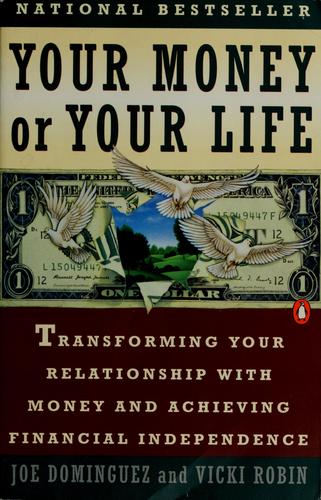
If money is a relationship, this reframes every purchase as hours of your life traded away — and changes how you spend.