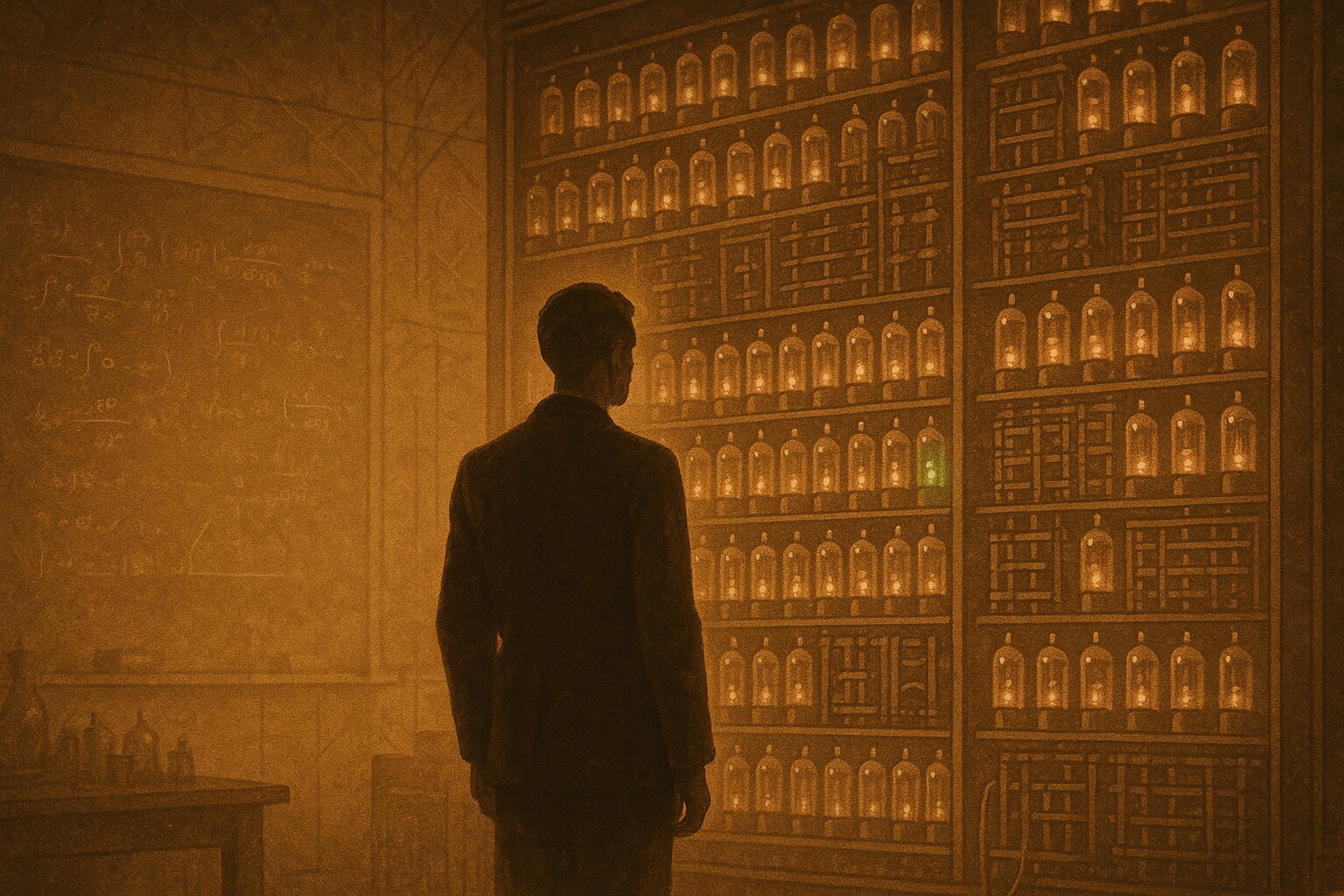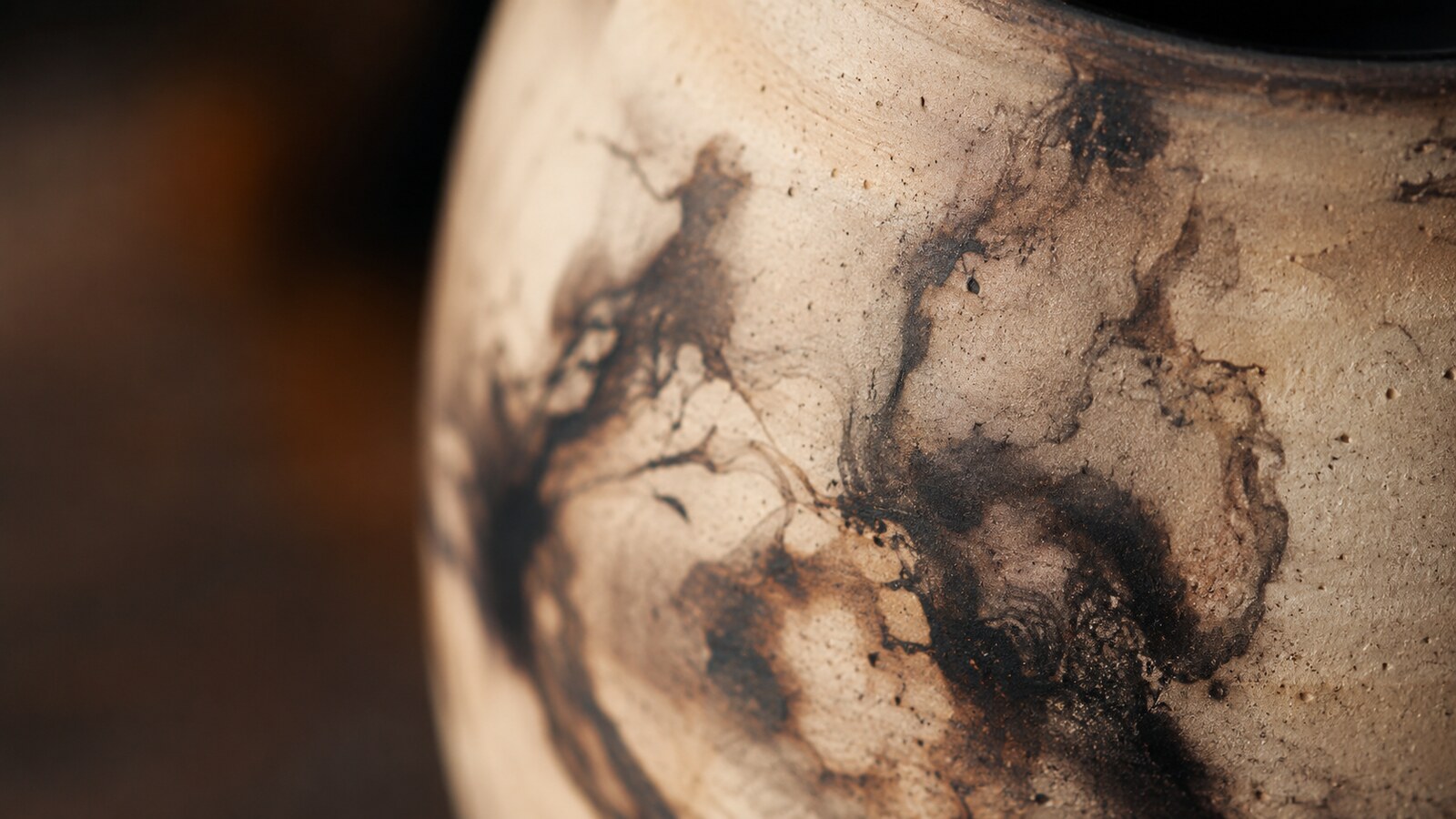

In a world where every product is optimized, standardized, and quality-controlled into sameness — a few businesses charge more precisely because they can't guarantee what you'll get. The smoke leaves a different mark every time. The vinyl crackles in its own way. The batch varies with the season. That's not a flaw. That's the product.
We've spent a century optimizing randomness out of production. Consistency became the gold standard. Every unit identical. Every experience predictable. Every variation eliminated. And in doing so, we created a world where everything that's perfect is also — inevitably — interchangeable.
The businesses winning the premium market in 2026 are the ones inviting randomness back in. Deliberately. As a feature. As a philosophy. Because they understood something the factories never will: imperfection is the last luxury that can't be counterfeited.
Marked by Fire
AURA Memorial in Trois-Rivières, Quebec creates ceramic urns and memorial objects using a technique called enfumage — an ancient firing process where pieces spend hours at the heart of a large wood fire. The smoke penetrates the clay's surface and leaves behind patterns that are unique, unpredictable, and impossible to reproduce.
No two pieces look alike. They can't. The fire decides. The smoke decides. The wind on that particular day decides. The artisan guides the process but doesn't control the outcome — and that surrender to the material is precisely what makes each piece irreplaceable.
But AURA goes further. The enfumage process can be personalized: families are invited to add meaningful objects — dried flowers, letters, textiles, anything symbolic — that burn alongside the ceramic. These objects leave their own imprints on the surface. A letter to a departed loved one doesn't just disappear into the fire. It becomes part of the urn. Its shadow, its texture, permanently fused into the clay.
The firing itself can be witnessed. Families can be present — not as spectators of manufacturing, but as participants in a ritual of passage. The fire transforms the material, and in doing so, accompanies the grief. It's not a production line. It's a ceremony with a product at the end.
What factory could compete with this? What mass-producer could offer a customer the experience of watching fire mark the final resting place of someone they love — with patterns that exist nowhere else in the world?
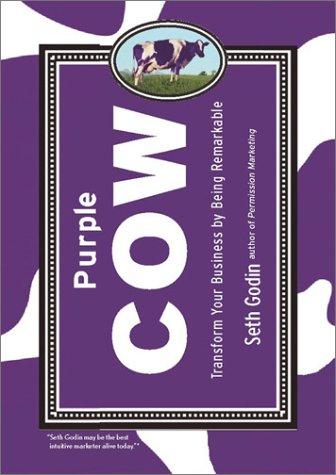
Godin on being remarkable: when the product is unrepeatable, imperfection becomes the very thing worth talking about.
Insight
When the process itself holds meaning, the product becomes priceless. AURA doesn't sell ceramics. They sell an unrepeatable moment — and the object that proves it happened.
The Analog Revival
In an age of infinite, perfect, digital streaming — where every song exists in lossless quality, accessible instantly, for $12 a month — people are paying $30 to $50 for a physical disc that crackles, warps slightly, and degrades over time.
Vinyllia is Quebec's first platform dedicated to vinyl records and related products, connecting music lovers with independent shops and local artists. Their mission isn't to compete with Spotify. It's to serve the people who already know that convenience and experience are different things.
Vinyl's imperfections are its identity. The crackle at the start of a track. The warmth of analog sound. The fact that a record played a thousand times sounds different from one played ten. The physical weight of holding an album. The artwork at full scale. The ritual of placing the needle.
None of this is "better" by any measurable standard. It's better by a standard that can't be measured — the quality of attention it demands. You can't skip tracks on vinyl without effort. You can't background-listen the way you do with streaming. The limitation forces presence. The imperfection creates intimacy.
Vinyllia understood that this isn't nostalgia — it's a market. A growing community of people who choose the imperfect format because it's imperfect. Because the flaws make it feel alive in a way that a perfect digital file never will.
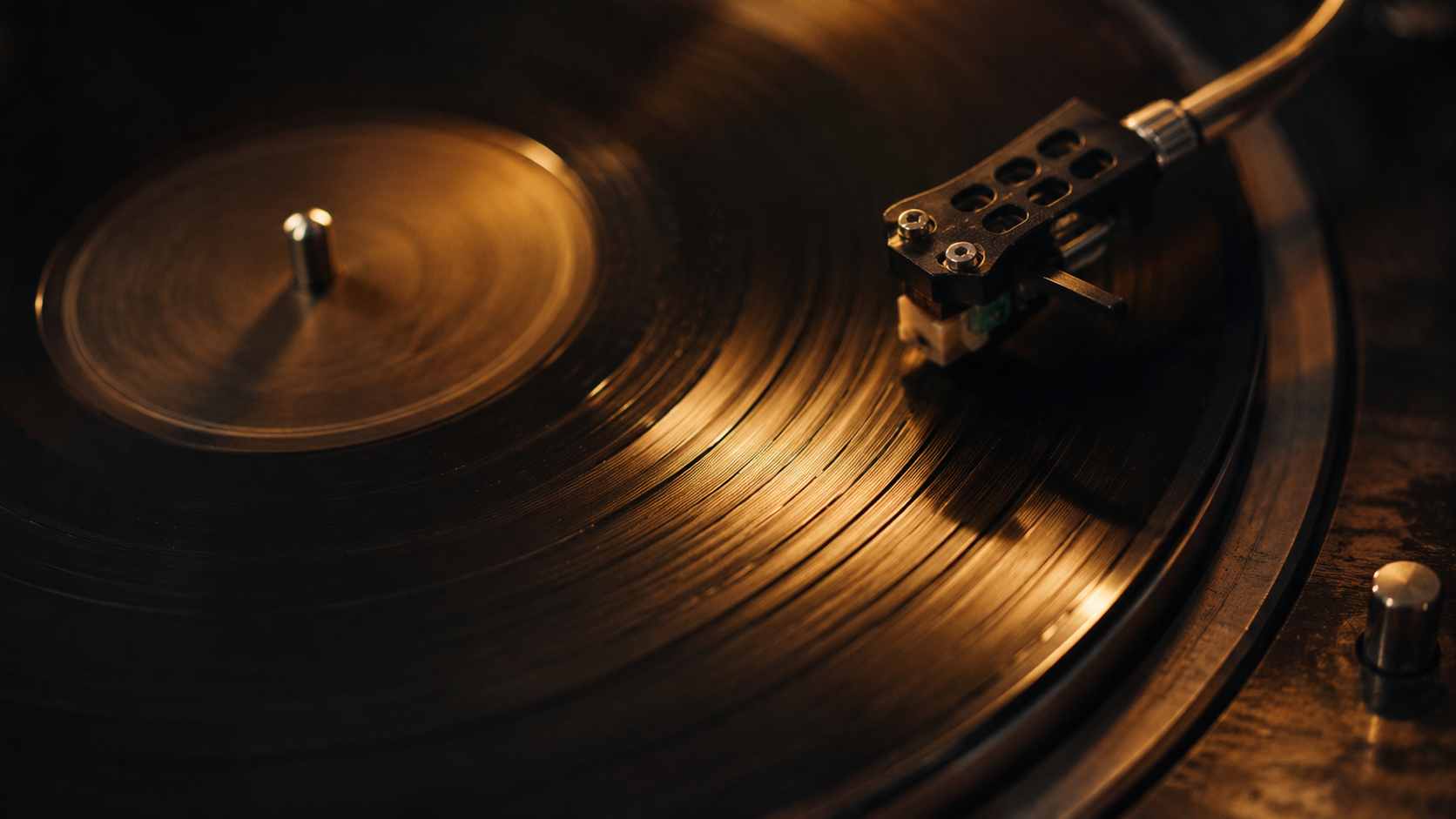
The crackle isn't a defect. It's proof that something physical is happening — that the music exists in matter, not just in code.
Nature as Formula
Om Made creates vegan cosmetics in Quebec from carefully selected natural ingredients — products designed to take care of you while taking care of the environment.
When your formula comes from nature rather than a lab, each batch carries the subtle signature of its ingredients. The specific harvest. The season's weather. The region's soil. The hands that mixed it. A factory produces identical outputs because it controls every variable. A small-batch artisan works with the variables — and the result is a product that carries the trace of its own making.
This isn't a limitation to apologize for. It's a signal — a signal that says: this was made by a person, not a machine. This came from the earth, not a supply chain. This exists at this scale because someone chose quality over quantity, intention over efficiency, care over speed.
The customers who seek this out aren't settling for less. They're paying for something mass production can't offer: the knowledge that what they're holding was made with attention. That it's not identical to a million other units. That someone chose every ingredient rather than selecting from a supplier catalog.
In a market flooded with "clean beauty" brands manufactured in the same five factories, Om Made's smallness is its credibility. You can't fake small-batch. You can't counterfeit attention.
Why Imperfection Commands a Premium
The economics here are counterintuitive — until they're not.
Identical products compete on price. If your output is the same as everyone else's, the only differentiator is cost. This is the race to the bottom that destroys industries.
Unique products compete on meaning. When a customer knows their urn was marked by an unrepeatable fire — when they know their vinyl carries the specific character of its pressing — when they know their cosmetics were mixed by hand in a Quebec atelier — they're not buying a product. They're buying proof that something is one-of-one.
That proof is worth more than perfection. Because perfection is available everywhere. Uniqueness is not.
This is why artisan businesses can charge premium prices without competing on luxury branding, celebrity endorsement, or artificial scarcity. Their scarcity is real. It comes from the process itself — from the fire that can't be rushed, from the vinyl pressing that can't be duplicated, from the hands that can only make so many batches per week.
The imperfection isn't tolerated despite the premium. The imperfection is the premium. It's the guarantee that what you hold is not a copy. Not a unit. Not a SKU. It's a thing that happened once, in one place, through one process — and will never happen exactly the same way again.
Insight
The question isn't "how do we eliminate variation?" It's "what if variation is the most valuable thing we produce?" The businesses that answer yes to this question never compete on price again.
Three businesses in Quebec. One works with fire. One works with sound. One works with nature. All three produce something no factory can replicate — not because factories lack the technology, but because they lack the courage to let go of control.
That courage — the willingness to let the process surprise you, to let the material speak, to let the outcome be genuinely unknown until it emerges — is the rarest thing in modern business. And the market pays for rarity.
Always has. Always will.