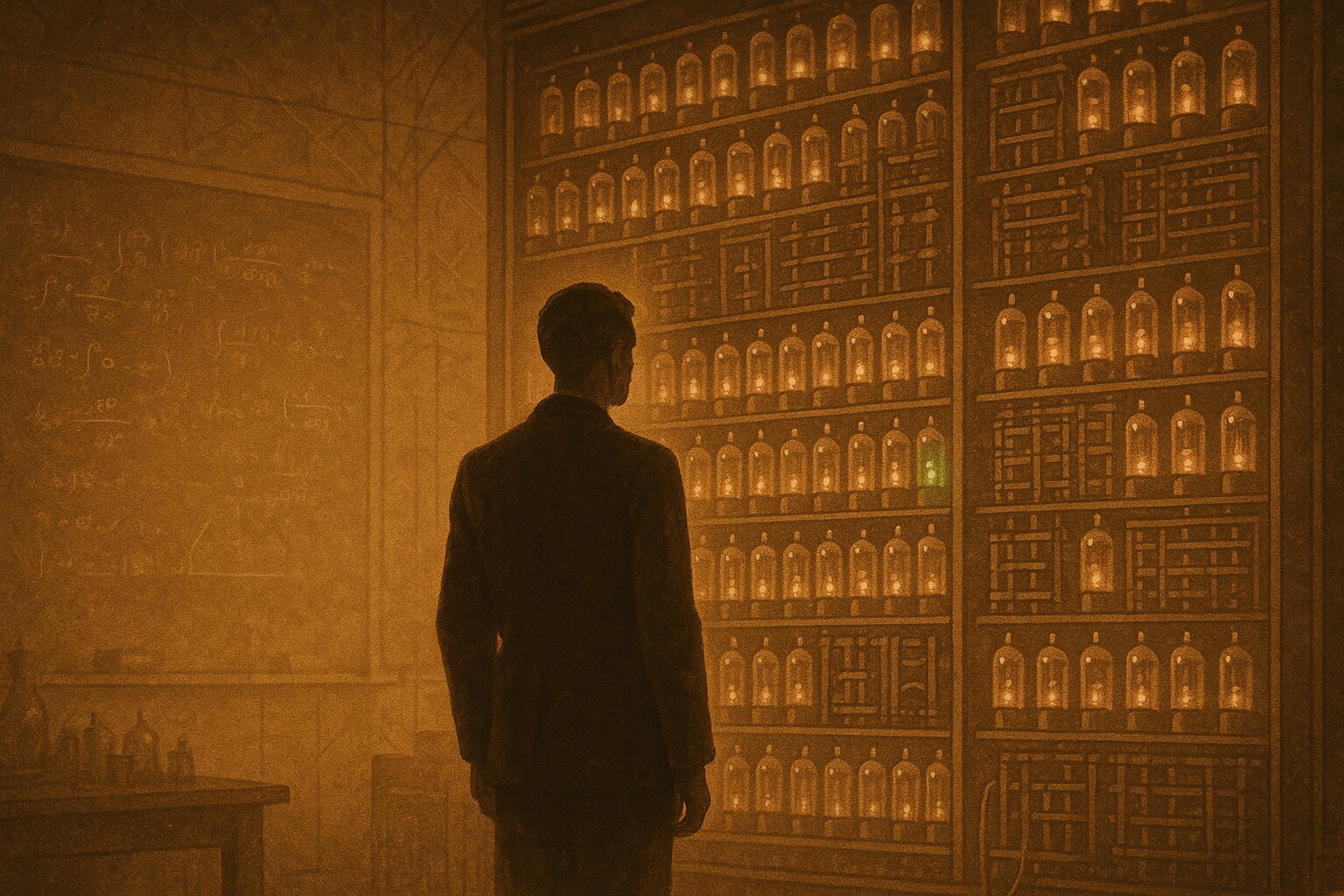

It is 1945. Two in the morning on a mesa in the New Mexico desert, in a secret town called Los Alamos that does not appear on any map. The war is not over. And a man in a three-piece suit is doing arithmetic in his head faster than the machine humming in the next room. His name is John von Neumann, and in this one decade he builds two futures you use every single day — the way you think through a problem, and the machine you think it through on. Put on the sepia glasses. We're going to the room where it started.
Here's the part that should give you chills — the good kind. The device you're reading this on was born from the most impossible math problem in human history. Not a spreadsheet. Not a video game. A bomb. And the strangest, most hopeful twist of the whole century is this: we never stopped building the bombs — the arsenals are still out there, still being modernized, quietly, to this day. What we stopped doing was using them. Not once in eighty years — not because we ran out, but because somewhere along the way we grew conscious enough to hold the fire back. The weapon we learned to fear. The machine it accidentally forced into existence, we never put down. One we contain. The other we can't imagine living without.
1944: the year strategy stopped being a hunch
Walk into Princeton in 1944. A slim book lands on desks: Theory of Games and Economic Behavior, by von Neumann and an economist named Oskar Morgenstern. Before it, "strategy" was gut feeling in a good suit. After it, conflict had math. Every rivalry, every deal, every standoff suddenly hid an optimal move you could reason toward instead of guess.
That book is the great-grandparent of this entire blog. When we show you that the simplest strategy in the world quietly beat everyone in the tournament, or how to run those four rules when a client actually screws you — you're speaking his language, translated out of the equations. Think in moves and countermoves and you're standing, without knowing it, in a room you'd have needed a security badge to enter.
The machine under your fingers was born of an impossible sum
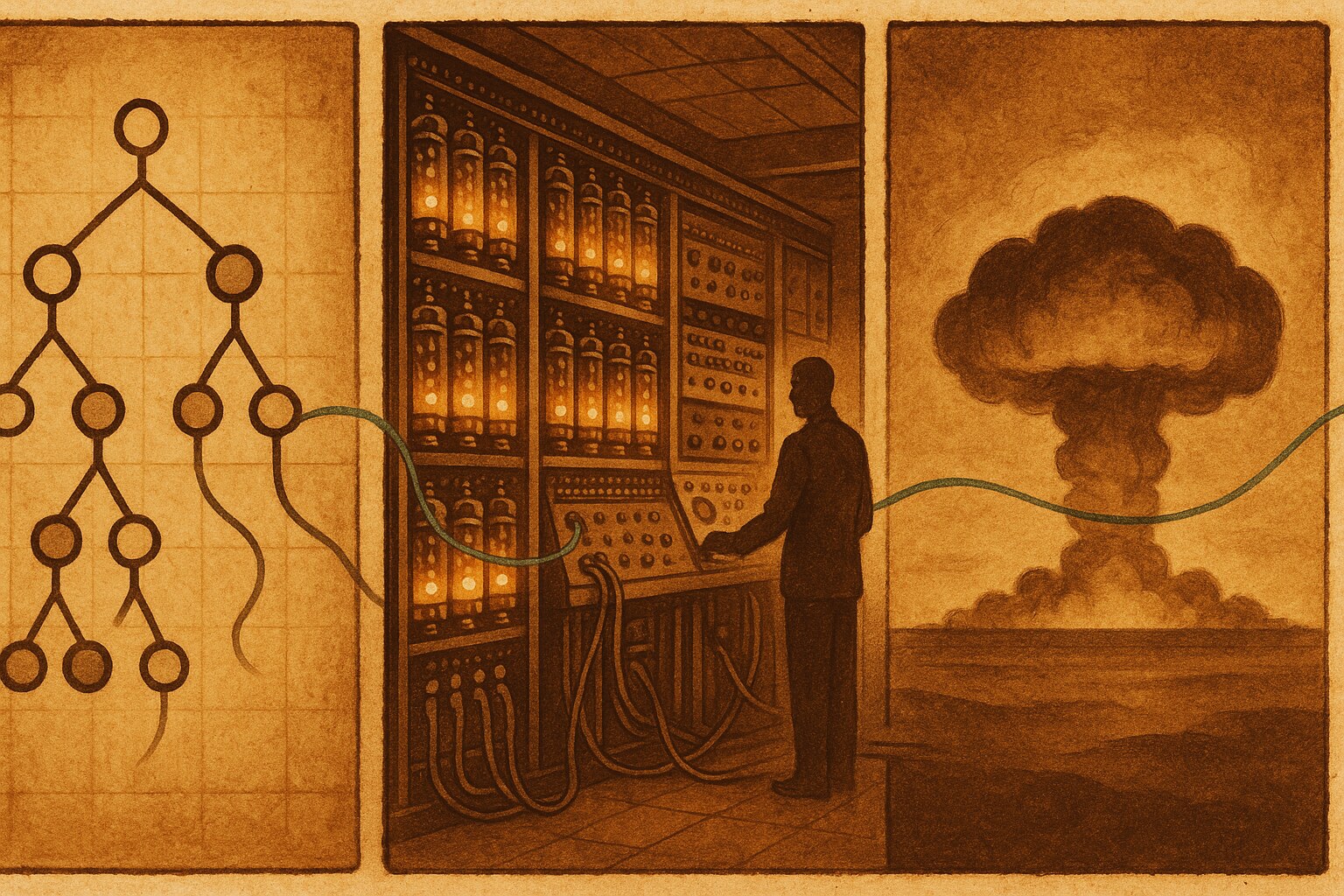
Now the time travel gets physical. Down the hall, the war effort needs numbers no human hand could finish in a hundred lifetimes — physics unfolding in millionths of a second, calculations so vast that a room full of mathematicians with pencils would die of old age before the answer came. There is no tool on Earth that can do it. So von Neumann sketches one. A machine that thinks: a processor, and a memory that holds the data and the instructions that act on it. 1945. We still call it the von Neumann architecture, and it is, fundamentally, how the device in your hand works this very second.
Sit in that for a beat. The single most destructive project in history had one quiet, permanent side effect — it demanded a brain made of glowing tubes, and once that brain existed, it could never be un-invented. The mission that created it is gone. The creation outlived it by eighty years and counting.
The part worth marveling at
This is the twist that makes the whole trip worth taking. Point a genius at an impossible problem and he doesn't just solve it — he leaves behind tools he never meant to give you. The bomb was the question. The computer was the accident. And the accident turned out to be the gift.
Think about what actually survived that decade. Not the fear. And not because the arsenals vanished — they never did; we simply grew conscious enough to keep our hand off the trigger for eighty years and counting. What quietly survived, and spread into everything, is the machine that now runs your business, your maps, your memory, your entire trade. Von Neumann pointed the same restless mind at conflict and gave us strategy as a science; he pointed it at calculation and gave us the computer. The two futures you lean on every day came from one skull, in the dark, at two in the morning.
He wasn't a saint — no honest history pretends otherwise, and we won't idolize him. But the ledger of what he built is staggering: the way we reason through decisions, and the machine we reason on. History held onto the tools and let the terror fade. That's not a warning. That's a small, stubborn piece of good news.
Why this still matters to you in 2026
Because we're living the sequel — and it's the hopeful version. We are building thinking machines again, direct descendants of that room full of tubes, except this time the stakes are a business, not a war. The lesson von Neumann's era hands us isn't fear. It's a habit: build the tool, keep the hand human. A machine is only ever as good as the person steering it — which is exactly why, when you work with AI, you keep the keys: the machine proposes, you decide.
It's the same nerve this blog keeps pressing, in a gentler register. Your weakest relationship caps your revenue. Winning the negotiation while losing the relationship is the expensive win. A clean framework beats a hot reaction. Narrow beats broad. Tactics are ancient. What's new — what was born in that desert — is a machine powerful enough to run them faster than you can blink, and a person who still has to decide what it's for.
So put the sepia glasses back on the shelf. We just stood in the room where the future you're typing on was first sketched — at two in the morning, on a dark mesa, by a man chasing an impossible sum. The problem he was solving is gone. The machine he left behind is everywhere. Build the tool. Keep the hand human. Everything we write here is a footnote to that one sentence — and to the quiet miracle that, out of the worst decade imaginable, what we kept was the good part.
The book that started it all
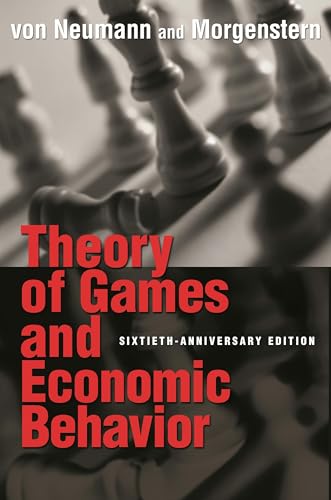
The founding text itself — the 1944 book where strategy became mathematics. Dense, historic, and the origin point of everything in this cluster.
View on Amazon →