
The average CEO works 62.5 hours a week. They spend 72% of that time in meetings. And the companies that grow fastest? Their CEOs have the least full calendars. The data on this is clear and uncomfortable: the more a CEO does, the less the company becomes.
The Busiest CEOs Run the Slowest Companies
Harvard Business School tracked 27 CEOs minute-by-minute for an entire year. What they found should terrify every founder who wears "busy" like a medal:
- 62.5 hours per week average — 9.7 hours per weekday, plus weekends and vacations
- 72% of time in meetings — most of which could have been emails, or better yet, decisions made by someone else
- 18 out of 21 monthly leadership hours consumed by operational concerns — leaving only 3 hours for actual strategy
- Only 6% of CEO time spent with frontline employees — the people who actually know what's happening
Three hours a month on strategy. For the person whose entire job is strategy.
This isn't a time management problem. It's an identity problem. Most CEOs fill their calendars because empty space feels like laziness. They attend meetings because declining feels like abdication. They do the work because nobody else does it exactly like them.
And their companies grow at the speed of one person's capacity — which is to say, slowly.
The Delegation Gap: 33% More Revenue
Gallup studied Inc. 500 CEOs — the founders of the fastest-growing private companies in America. They measured one trait: delegation talent. The results weren't subtle:
- CEOs with high delegator talent generated 33% more revenue than those who held on
- Three-year growth rates: 100+ percentage points higher for delegators vs non-delegators
- They created more jobs — building larger organizations faster
And yet: 75% of entrepreneurs score limited-to-low on delegator talent. Three out of four founders are actively handicapping their own company's growth by not letting go.
In 360-degree feedback studies, 58% of founders are rated "poor at delegating" by their own teams. The people working for them can see it. The founder often can't — because they're too busy doing the work to notice the work isn't theirs to do.
Here's the paradox that breaks most founders: the thing that made you successful as a startup — doing everything yourself — is the thing that kills you as a company. The skill that got you from 0 to 1 is the opposite of the skill that gets you from 1 to 100.
The Number
33% more revenue. 100+ percentage points faster growth. Same markets, same industries. The only variable: whether the CEO let go. That's not a marginal improvement — it's a different trajectory.
What the Job Actually Is (3 Things)
Strip away everything a CEO shouldn't be doing — the meetings, the approvals, the reviews, the "just checking in" — and you're left with a surprisingly short list of things that only the CEO can do:
1. Setting direction.
Where are we going and why? Not how. Not the roadmap. Not the feature list. The direction. The "we're going there and here's why it matters" that gives everyone else the context to make their own decisions. This is the work that requires seeing the whole board — something impossible when you're stuck executing one move at a time.
2. Allocating resources.
People, money, attention — who gets what? This is the most powerful lever in any company and it's the one most CEOs delegate least (because it means saying no to people they like). But every "yes" to one thing is a "no" to everything else. A CEO who doesn't own allocation doesn't own the company's future.
3. Holding the standard.
Culture, quality, speed — what's acceptable here? Not enforcing rules. Setting the bar by what you tolerate and what you don't. The CEO is the living definition of "how things work around here." This can't be delegated because it's not a task — it's a presence.
Everything else — product decisions, marketing campaigns, sales calls, hiring interviews for mid-level roles, attending every standup, approving every expense — is work you're stealing from someone who should own it. And every time you steal that work, you're telling your team: "I don't trust you with this." They hear that message clearly, even if you never say it.
The Paradox: Your Job Is to Become Unnecessary

The empty calendar isn't laziness — it's the space where real leadership happens.
The best CEO builds a machine that runs without them. Then they do the one thing no machine can: see what's next.
This isn't lazy. It's the hardest work there is — because it requires letting go of the thing that gave you identity and control. Most founders are their company. Their calendar, their decisions, their fingerprints on every output. Removing yourself from that feels like dying. But it's actually the company being born as something bigger than one person.
A company that needs its CEO for daily operations is fragile. One vacation, one illness, one bad week — and everything stalls. A company that operates without its CEO is antifragile — it can survive anything, including losing the founder entirely.
The test is simple: can you disappear for two weeks and nothing breaks?
If not, you're not a CEO. You're an operator with a title. And your company's ceiling is your personal bandwidth.
Buffett sits in his office in Omaha and reads all day. Berkshire Hathaway runs a $900 billion company with 30 people at headquarters. That's not an accident — it's the logical conclusion of a CEO who understood that his job was to do one thing extraordinarily well and let everyone else do the rest.
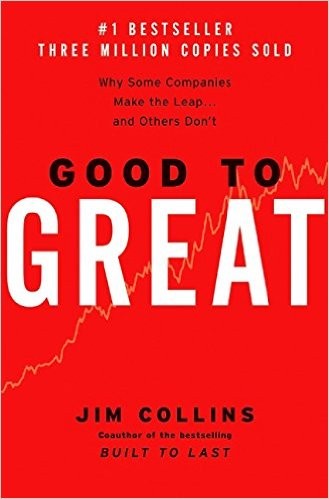
Jim Collins on Level 5 leadership: the quiet, almost invisible leaders who build companies that outgrow and outlast them.
How to Do Less (Without Everything Falling Apart)
This isn't "delegate and disappear." It's systematic removal — done carefully, over months, until the machine hums without your hands on it.
Audit your week ruthlessly.
Look at the last 7 days. For every meeting, task, and decision: could someone else have done this? Be honest. The answer is usually yes for 85-90% of your hours. The remaining 10-15% — that's your actual job. Everything else is habit, ego, or a failure to build systems.
Give decisions away with context, not instructions.
"Here's the outcome I need, here are the constraints, here's what success looks like — you figure out how." This is delegation. "Do it this way" is micromanagement wearing a delegation costume. Your team is capable of more than you're letting them show you.
Accept 80% quality from others.
Your 100% on a task that isn't your job is a worse outcome than their 80%. Why? Because your 100% cost the company your attention on something that actually mattered. The CEO who edits every email draft is producing perfect emails and a mediocre company.
Eliminate before delegating.
Half the things on your plate shouldn't exist at all. Before you hand a task to someone else, ask: "What would happen if nobody did this?" Often the answer is: nothing. Kill it. The best delegation is deletion.
Protect your thinking time like a meeting with your most important investor.
Because it is. The CEO's unstructured time — reading, walking, staring out windows — is where strategy comes from. Where pattern recognition happens. Where the next big bet becomes clear. You can't think clearly when every 30-minute slot is spoken for.
The Quiet Power of the Empty Calendar
When a CEO's calendar is empty, it looks like they're not working. It looks irresponsible. Luxurious. Wrong.
They are working. They're seeing patterns others miss — because they're not buried in execution. They're asking questions nobody else has the altitude to ask. They're making the two or three decisions per quarter that change the trajectory of the entire company.
You cannot do this in back-to-back meetings. You cannot do this while reviewing landing page copy. You cannot do this while "just jumping on a quick call."
The data is unambiguous: CEOs who delegate more, grow more. CEOs who do less of the wrong things create space for the right things. CEOs who make themselves unnecessary build companies that outlast them.
So here's the uncomfortable question: what would happen to your company if you did 80% less tomorrow?
If the answer is "it would collapse" — you haven't built a company. You've built a job that depends on you. Fix that first.
If the answer is "it would be fine" — congratulations. You're actually doing the job.
Now go do even less.
Need to rethink how your company operates without you at the center? Rebuild your business plan around systems instead of heroics, or get AI-powered guidance on your specific situation. Sometimes the best next move is the one where you ask someone who's been there.