
You didn't start a business to send invoices. You didn't quit your job to chase unpaid receipts, copy-paste data between spreadsheets, or manually email every new lead. Yet here you are — spending 40% of your week on tasks that don't grow anything. That's not running a business. That's being a very expensive secretary.
Here's the uncomfortable math: if your time is worth $100/hour and you spend 10 hours a week on admin tasks that could be automated, you're burning $4,000/month. Not on growth. Not on clients. On data entry, reminders, and copy-paste.
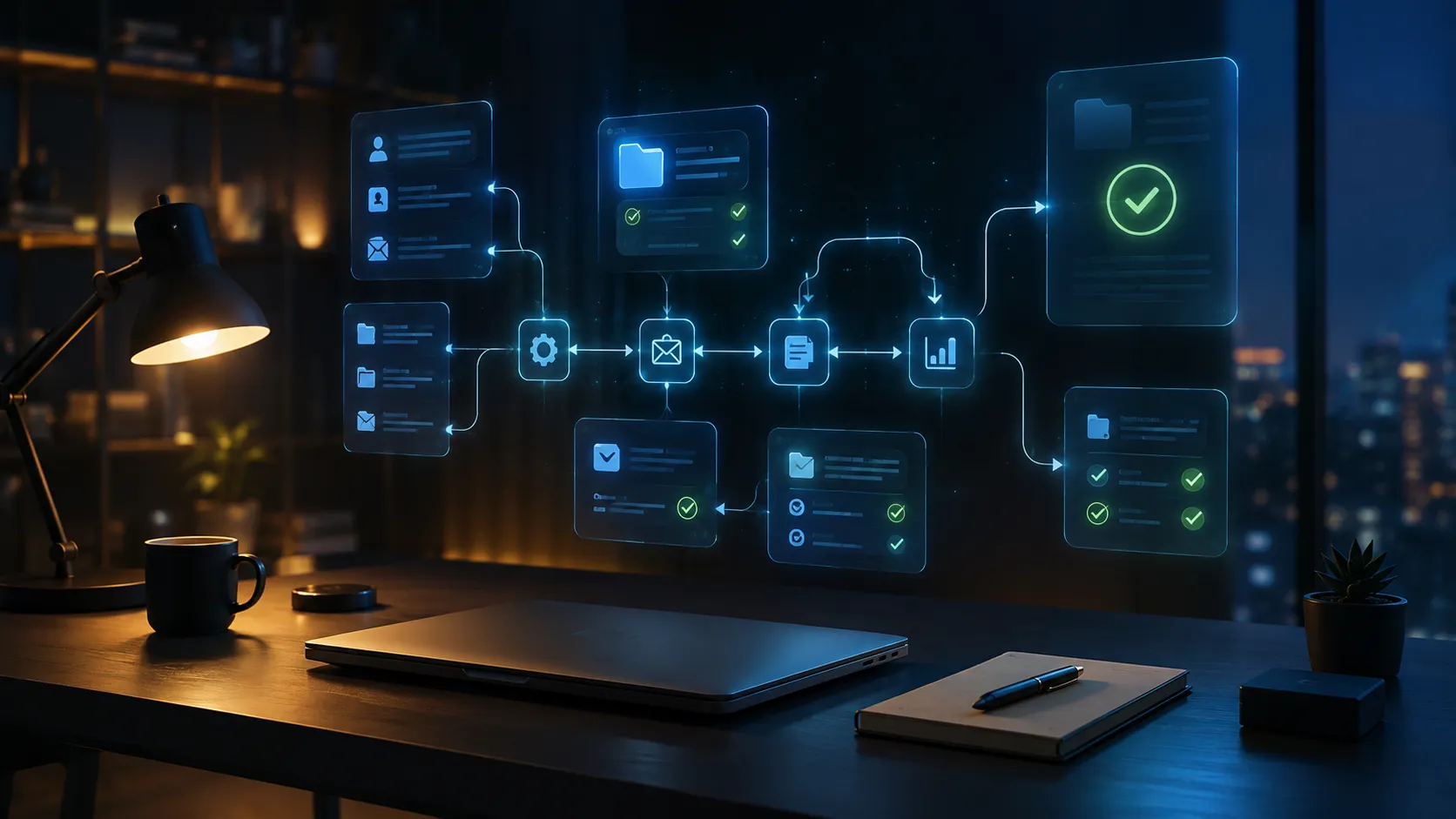
AI changed what you can build from scratch. But it also changed what you can eliminate. The repetitive, predictable, soul-draining tasks you do every week? Most of them can run themselves now. Not with clunky multi-step automation chains — with intelligent systems you describe once and let run.
The Expensive Habit of Doing Everything Yourself
Most founders wear every hat because they think they have to. They invoice manually because "it only takes a minute." They send follow-ups by hand because "no one else knows the clients." They track everything in spreadsheets because "the system works."
But the system doesn't work. It just functions. And functioning isn't growing.
The physics of wealth are clear: leverage beats labor every time. Every hour you spend on maintenance is an hour you didn't spend on the things that actually move the needle — closing deals, building relationships, creating products that earn while you sleep.
The shift isn't about working less. It's about working on the right things. The unreasonable advantage goes to the founder who focuses all their energy on what only they can do — and automates everything else.
What You Should Stop Doing Manually (Today)
Here's what AI can take off your plate. Not someday. Not when you "get around to it." Today.
Invoicing & Payments
- Auto-generate invoices when a project is marked complete — no more "I forgot to bill them"
- Auto-send payment reminders at 7, 14, and 30 days — polite, persistent, and you never have to write the awkward email
- Auto-reconcile payments received vs. outstanding — know instantly who owes what
The businesses that earn trust effortlessly are the ones where everything just works — including getting paid on time.
Client Communication
- Welcome sequences for new clients — a 3-email series that sets expectations, builds confidence, and runs without you touching it
- Follow-up emails after quotes — the ones you keep meaning to send but forget (these alone can increase close rates 20-30%)
- Appointment reminders that reduce no-shows by 60-70%
- Status updates that answer "where's my project?" before the client has to ask
Every automated touchpoint is a trust signal. The client doesn't know it's automated — they just know your business is responsive, professional, and on top of things.
Scheduling & Booking
- Online booking that syncs with your actual calendar — no more "does Tuesday work?" emails
- Auto-block buffer time between appointments so you're not running back-to-back
- Cancellation handling — automatic rebooking options without 4 emails of back-and-forth
Reporting & Visibility
- Daily revenue summaries sent to your inbox — know your numbers without opening anything
- Client pipeline visualization — who's at what stage, who needs attention
- Expense categorization — AI reads receipts and sorts them automatically (your accountant will love you at tax time)
Content & Marketing
- Social media posts drafted and queued from your recent work
- Email newsletters assembled automatically from your latest updates
- Review requests sent after project delivery — build social proof on autopilot
- SEO content that makes your business built to be found \n
- Professional tone conversion — translate any message into polished corporate language in seconds, perfect for client emails and proposals
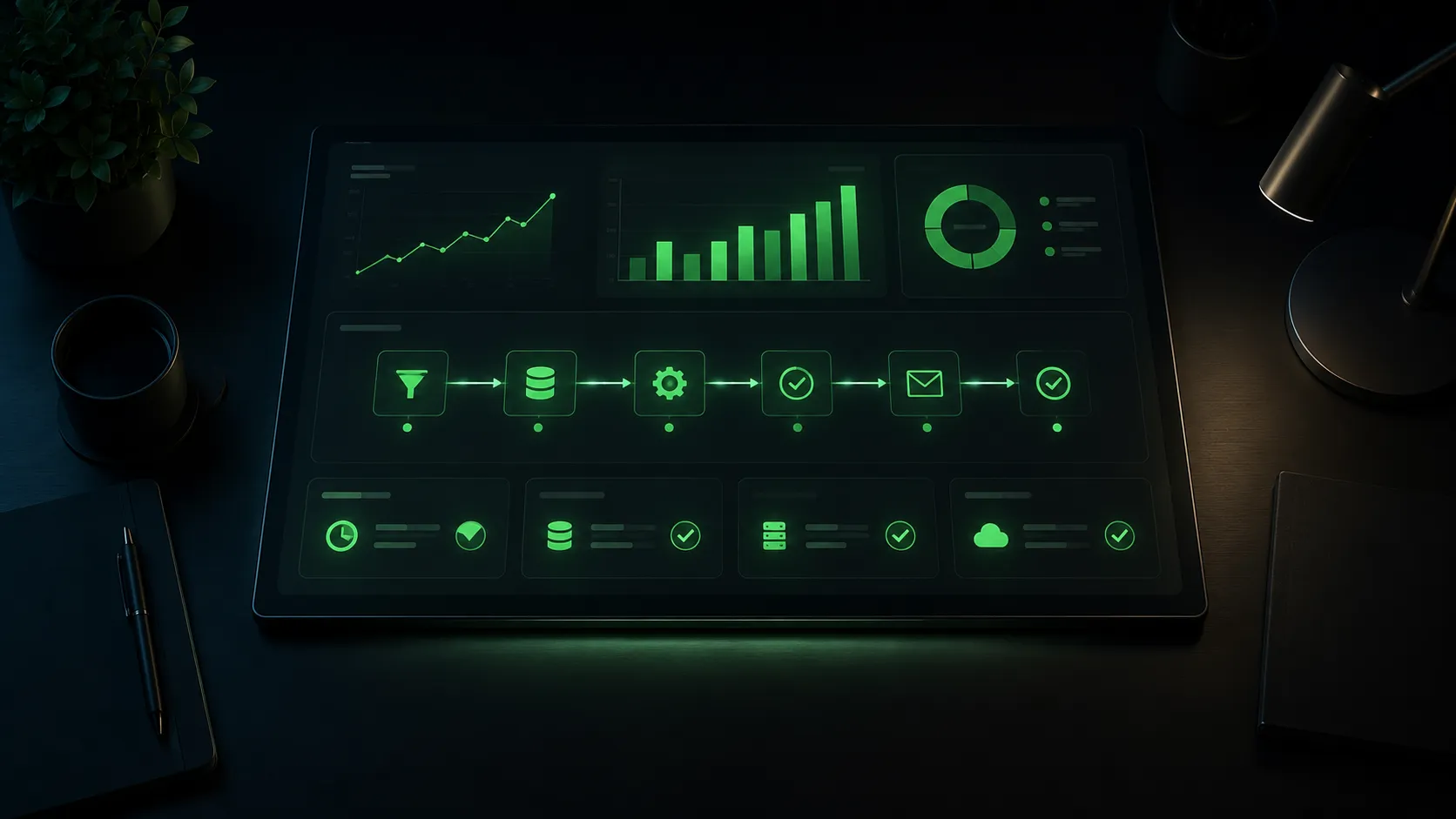
One screen. Everything that matters. No spreadsheet juggling, no tab switching — just clarity.
The Internal Dashboard: Your Business at a Glance
Right now you probably check your numbers across 6 different places — bank account, spreadsheet, email inbox, project management tool, calendar, maybe a CRM. Each one shows a fragment. None shows the whole picture.
An internal dashboard is a single screen that shows everything:
- Revenue this month vs. last month
- Active clients and their status
- Pending invoices and amounts owed
- Upcoming deadlines and commitments
- New leads and where they came from
You can build this. Describe it to an AI agent: "I want a dashboard that shows my monthly revenue, pending invoices, active projects, and upcoming appointments. Pull from [these sources]." Iterate until it looks right. Deploy it. Open it with your morning coffee instead of checking five apps.
This is the kind of tool that would cost $3,000-$5,000 from a developer. Or you can describe it into existence in an afternoon. The free tools available to you right now make this trivial.
How to Automate Without Breaking Everything
Don't try to automate your entire business in a weekend. That's how things break and you lose trust with clients. Instead:
- Pick ONE task. The one you hate most. The one you keep procrastinating. Start there.
- Describe the rule. "Every time X happens, do Y." Every time a project is marked complete → generate invoice. Every time a new client signs up → send welcome email series. Simple if-then logic.
- Test for one week. Watch it run. Check the outputs. Trust but verify.
- Add the next one only after the first is solid. Stack them gradually.
- Never automate judgment calls. Automate the execution around your decisions — not the decisions themselves.
Within a month of adding one automation per week, you'll have reclaimed 10+ hours. That's not a small thing. That's an entirely different week.
The "Hate List" Method
Write down every task you did this week that made you think "I shouldn't be doing this." That's your automation roadmap — in priority order. Start at the top.
What Happens When You Reclaim 10 Hours a Week
10 hours back isn't just "nice." It's transformative. Here's what becomes possible:
- Serve 2-3 more clients without working longer hours — immediate revenue increase
- Build something new — a digital product, a new service tier, a passive income stream
- Think strategically — actually plan where you're going instead of just surviving the week
- Rest — without guilt, because the business isn't falling apart without you
Within 6 months of consistent automation, you'll have systems running that would cost $2,000-$5,000/month if you hired a human to do them. Except your systems don't call in sick, don't need training, and don't make mistakes at 4 PM on a Friday.
Your business starts feeling like a business instead of a job. You work on it instead of in it. That's not a luxury reserved for companies with engineering teams. That's accessible to you right now — if you stop waiting and start building.
Need help identifying what to automate first? Get AI-powered guidance to audit your operations. Or see how history's most effective leaders designed systems that ran without them — the principles haven't changed.
The Real ROI
Automation isn't about being lazy. It's about being honest — honest that your time has a value, honest that repetitive work doesn't deserve your best hours, and honest that growth requires space. Build that space. Protect it. Use it for the work only you can do.
The founders who scale aren't working harder than you. They're working on different things. They automated the predictable. They systemized the repetitive. They freed themselves to do the one thing only they can do: decide where the business goes next.
AI just made that freedom accessible to everyone — not just companies with engineering teams. The path from here to seven figures runs through systems, not longer hours. What's the first task you stop doing manually?