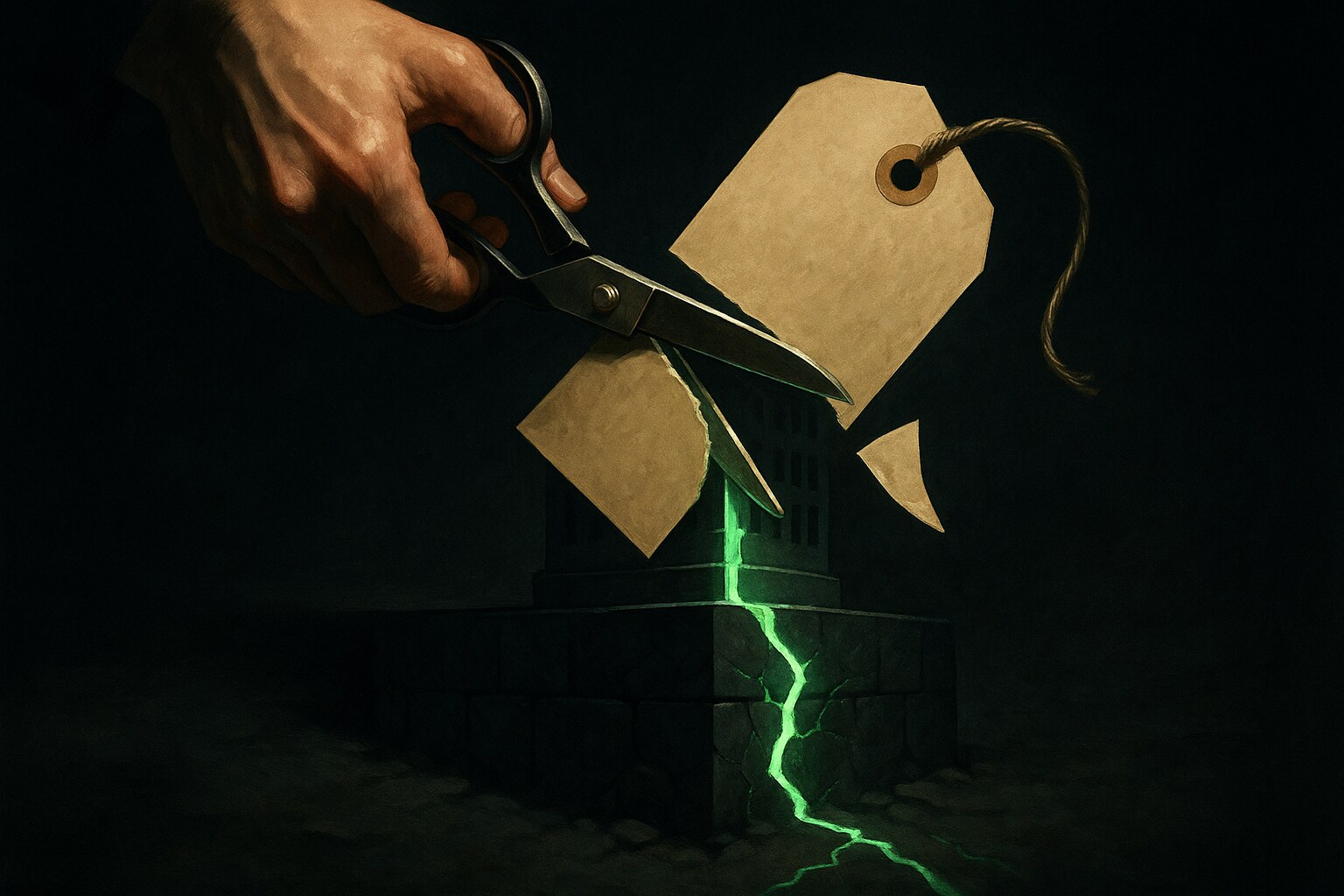

Dropping your price feels like the safe move. It's the most dangerous decision you'll ever make — and the worst part is it doesn't feel dangerous at all. It feels responsible.
Here's what actually happens the moment you cut your price. You don't win an argument about value. You concede one. You stand in front of the market and say, out loud, I don't think what I do is worth more than this. And the market believes you. Instantly. Because you're the expert on your own worth, and you just testified against yourself.
Being cheaper isn't a pricing strategy. It's a confession dressed up as generosity. And it's the single most expensive sentence a business can utter, because everything downstream of it — your margin, your clients, your reputation, your sanity — gets billed to that one decision for years.
A Discount Is an Admission
When you lower your price to close a deal, you think you're removing an obstacle. What you're really doing is answering a question the customer hadn't finished asking: Is this worth it? By flinching first, you answer no on their behalf.
The customer who was on the fence wasn't waiting for a smaller number. They were waiting for a reason to believe. Price is the loudest signal of belief you send. Cut it, and you don't look generous — you look unsure. And nobody hands their trust to someone who seems unsure of their own value. As we've written before, the businesses we trust instantly are the ones that act like they deserve it. Discounting is the opposite reflex — it broadcasts doubt at the exact moment confidence was the product.
Insight
The customer isn't comparing your price to your competitor's. They're comparing your price to how confident you seem charging it. A high price held calmly reads as proof. A low price offered nervously reads as a warning.
The Race to the Bottom Has Only One Winner — and It's Never You
Every market has a floor, and someone is always willing to go lower than you. There's a contractor with lower overhead. A freelancer in a cheaper city. A competitor funded by someone who doesn't care about profit yet. If your edge is "cheaper," your edge belongs to whoever is more desperate than you this quarter.
Cheap is not a moat. It's a starting gun. The moment you compete on price, you've entered a race whose only finish line is zero, and you've handed the trophy to whoever can survive on the least. That's not a position of strength — it's a business model built on outlasting your own suffering. The specialist who cut their focus in half escapes this race entirely, because they stopped being comparable. You can't be underpriced on a thing only you do.

One path is a queue of interchangeable "cheaper" descending to zero. The other rises alone — toward the client who chooses instead of compares.
Cheap Clients Are the Most Expensive Clients
Here's the cruelty nobody warns you about: the client who chose you because you were cheapest is the client who will cost you the most. They negotiate the hardest. They complain the loudest. They churn the fastest — because the next cheaper thing is always one click away, and loyalty was never in the deal. You bought them with price, so price is the only thing holding them, and price is the one thing you can always be beaten on.
Meanwhile the client who paid your full rate is calm. They chose you for a reason that wasn't a number, so a smaller number elsewhere doesn't move them. They refer people like themselves. They stay. This is the business you get chosen once and never re-evaluated for — and it is impossible to build on a discount. Discounts attract exactly the people who will leave you for the next discount. You are not building a client base. You are renting a crowd.
Consider a real one: Denver Patio Masters, an outdoor-living contractor on Colorado's Front Range, could have chased every "how much for a patio?" quote by shaving their number until they won on price. They didn't. They planted a flag as the outdoor-living specialist — the people who build the space where a family actually lives all summer. That's not the cheapest quote in the inbox. It's the one that isn't competing on the same axis at all. When you're the specialist, the price conversation changes from "who's lowest?" to "who do I trust with this?" — and craft becomes the premium, not the liability.
The Math Nobody Does Before They Discount
Discounting feels free. It isn't. It's the most expensive lever you own, and the arithmetic is brutal once you actually run it. Say you make a 30% margin. Cut your price 10% to "win more volume," and you haven't lost 10% of profit — you've lost a third of it. To break even you now need to sell roughly 50% more units, to the hardest, cheapest, most demanding customers in your market, for the same money you made before. You didn't lower a price. You quietly signed up for more work, worse clients, and thinner margin, all at once.
And that's just the visible cost. The invisible one is worse: every dollar you shave is a dollar you'll never invest back into being better — the thing that would have let you charge more in the first place. The wrong number doesn't just cost you a sale — it slowly kills the business, because it starves the very quality that justifies the price. Cheap is a loop that tightens. The lower you go, the less you can afford to be worth more, so the lower you have to go.
Raising Your Price Is the Cheapest Growth You'll Ever Buy
Here's the inversion. If a 10% discount can cost you a third of your profit, a 10% increase hands you the same third — with no extra work, no new clients, no new overhead. It's the closest thing to free money a business will ever be offered, and most owners are too scared to pick it up. They'll spend six months chasing volume to replace margin they could have kept by adding one digit and holding their nerve.
The fear is always the same: they'll leave. Some will. The cheap ones. The ones who were costing you the most anyway. What's left is a smaller, calmer, more profitable book of clients who chose you for something realer than a number — and you now have the margin to make what you sell genuinely better, which lets you charge more still. That's the loop running the other direction. You don't win by being the cheapest option. You win by being the one worth choosing — and then having the discipline to price like it.
So the next time you reach for the discount, hear the sentence underneath it, the one your customer hears loud and clear: I don't believe this is worth more. If that's true, fix the thing, not the price. And if it isn't true — if you know your work is worth it — then say so with the only number that ever proves it. Being cheaper was never the safe choice. It was just the one that let you avoid the harder, more valuable work of being worth every dollar you're afraid to charge. If you want to pressure-test your own number against people who never once competed on price, you can always talk it through with the minds who built things that lasted.
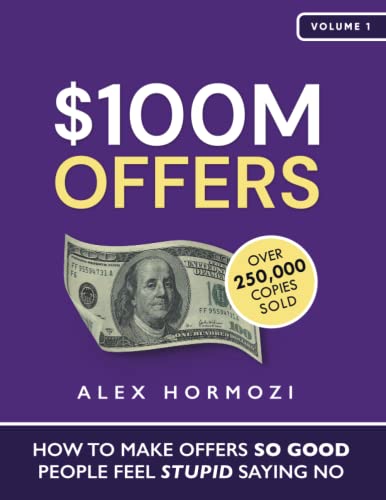
The entire book is an argument against competing on price. Instead of a smaller number, build an offer so clearly worth it that cheaper stops being the question. If this article stung, this is the playbook for charging more without apology.
View on Amazon