
You already decided. Before you read the reviews, before you compared prices, before you checked the credentials. Something fired in the back of your brain — older than language, faster than thought — and said: them.
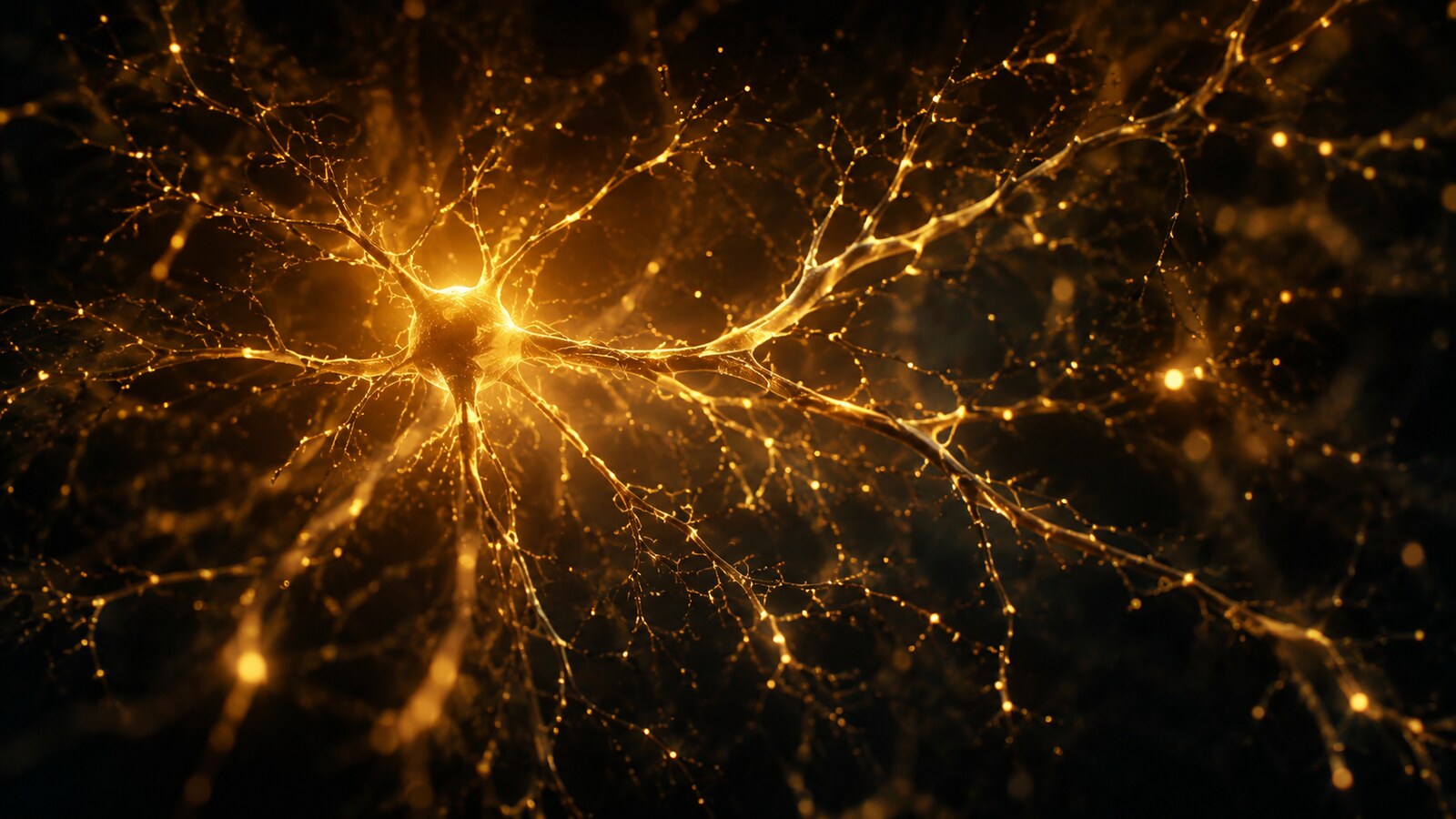
This is not a metaphor. Neuroscience calls it thin-slicing — the brain's ability to make accurate judgments in milliseconds using fragments of information. Daniel Kahneman called it System 1: the fast, automatic, effortless mode of thought that governs 95% of our decisions. We think we're rational. We're not. We're rationalizers — constructing logical narratives after the body has already committed.
Some businesses understand this. Not intellectually — instinctively. They don't try to convince you. They don't need to. Everything about them — the name, the site, the first three seconds of contact — communicates a single message so clearly that your nervous system relaxes before your prefrontal cortex has finished loading the page.
That message is: you're safe here.
The Millisecond Decision
In 2006, researchers at Carleton University found that users form reliable aesthetic judgments about websites in 50 milliseconds — 1/20th of a second. Not enough time to read a word. Not enough time to process a logo. But enough time for the brain's threat-detection system to render a verdict: safe or unsafe, professional or amateur, trustworthy or suspicious.
This isn't shallow. It's ancient. For hundreds of thousands of years, our ancestors made survival decisions in fractions of seconds — is this person friend or predator? Is this food or poison? Is this shelter or trap? The same neural architecture now evaluates your homepage.
The businesses that win aren't the ones with the best product. They're the ones that pass the 50-millisecond test. Everything after that — the reviews, the comparisons, the "research" — is confirmation bias dressed in rational clothing.
The Scam Radar
In industries plagued by fraud, trust isn't a differentiator. It's oxygen.
Consider dog breeding. The internet is saturated with puppy scams — fake photos, stolen deposits, dogs that don't exist. Buyers know this. Their scam radar is permanently activated. Every breeder's website triggers the same question: is this real?
BlueHaven French Bulldogs in Northern Utah understood this at a molecular level. A mother-daughter team — Donna and Lacey — who built their entire brand architecture around a single psychological principle: eliminate every possible source of doubt before it forms.
Their site has a "Beware of Scammers" page. Not buried in a footer. Prominent. It says: we know what you're afraid of, and we're on your side. AKC registration displayed upfront. Puppy nannies for delivery — personal humans, not shipping labels. Testimonials with full names and photos. A real physical address. Mother and daughter visible, named, present.
Every element answers the same unspoken question: is this real? And the answer arrives before the conscious mind finishes asking. The amygdala — the brain's threat-detection center — scans the page in milliseconds and finds nothing to flag. No stock photos. No vague language. No hiding. The nervous system exhales. The decision is made.
BlueHaven doesn't compete with other breeders on price or selection. They compete on one axis only: trust velocity — how fast they can move a stranger from suspicion to safety.
The Chemical-Free Promise
There's a counterintuitive principle in trust psychology: what you don't do can be more powerful than what you do.
Psychologists call it "negative signaling" — communicating value through absence. A restaurant that says "no MSG" isn't telling you what's in the food. It's telling you what's not. And that absence creates a feeling of safety disproportionate to its actual impact.
Fresh Tech Maid in Chicago has operated for nine years on this single insight. Their entire brand rests on two words: chemical-free.
They're not selling cleaning. They're selling the absence of poison.
Think about what happens psychologically when someone enters your home with chemicals. There's a low-grade anxiety — invisible, often unconscious — about residues on surfaces your children touch, fumes in air you breathe, substances you can't pronounce on labels you don't read. Fresh Tech Maid doesn't address this anxiety. They eliminate the category entirely.
Nine years. Multiple awards. A loyal customer base that never switches. Not because the cleaning is measurably better — but because the feeling of choosing them is measurably safer. The decision doesn't require ongoing evaluation. You chose once. The anxiety dissolved. You never thought about it again.
That's the power of trust through subtraction. Remove the thing people fear, and you become the permanent choice.

In a row of closed doors, the one that glows gets chosen. Not because it's better — because it's visible, warm, and open.
The Name That Solves
Before a website loads. Before a Google result is clicked. Before a phone number is dialed. There's the name.
Most business names are meaningless containers — abstract words chosen because the .com was available. They carry no information. They trigger no association. They require the brain to do work: what is this? what do they do? should I care?
Sherlock's Locksmith in Pittsburgh broke this pattern entirely. The name does three things simultaneously:
- Identifies the service — locksmith. No ambiguity.
- Triggers an archetype — Sherlock Holmes. Investigation. Problem-solving. Intelligence.
- Implies competence — if Sherlock can't solve it, nobody can.
All of this arrives in the brain before the conscious mind has processed the letters. The name is pre-trust. It does the selling before the website gets a chance to. With 122 Google reviews and a 4.9-star rating, the name's promise is confirmed — but the seed was planted in the name itself.
This is branding at its most fundamental: not a logo, not a color palette, not a tagline. A name that answers the question "why you?" before it's asked. A name that solves the smallest decision — whether to keep reading — before the reader decides to decide.
The Anatomy of Instant Trust
These three businesses — a breeder, a cleaner, a locksmith — share nothing in common except one thing: they all pass the 50-millisecond test. They all trigger the same neurological response: safe. real. competent. chosen.
Dissected, the pattern reveals itself:
Specificity over generality. None of them say "we do everything." BlueHaven breeds French Bulldogs. Fresh Tech Maid cleans without chemicals. Sherlock's opens locks. The narrower the claim, the more believable it is. A brain scanning for threats interprets breadth as vagueness, and vagueness as risk.
Transparency over polish. Real names. Real addresses. Real processes shown. The brain's fraud-detection system looks for authenticity signals — and the strongest signal is: nothing is hidden. Polish without transparency reads as salesmanship. Transparency without polish reads as honesty.
Identity over brand. Donna and Lacey. A family business in Pittsburgh. A Chicago team that won awards. Real humans, not corporate entities. The brain trusts faces more than logos, names more than brands, stories more than slogans. This isn't sentiment — it's neurology. The fusiform face area activates trust circuits that no logo can reach.
Constraints as confidence. What you refuse to do signals what you're committed to. No chemicals. No shipping puppies like cargo. No compromise on one specific thing. Constraint communicates mastery. A business that does less appears to know more.
The Question for Your Business
Every business has a homepage. Every homepage has approximately 50 milliseconds to pass or fail the oldest test in human psychology: is this safe?
Not "is this good?" Not "is this cheap?" Not "is this the best option?" Those are System 2 questions — slow, deliberate, rational. They come later. They only come if System 1 doesn't kill the interaction first.
The question is not what your business does. The question is what a stranger's amygdala decides about you in the time it takes to blink.
What does your name communicate before your site loads? What does your homepage communicate before it's read? What absence defines your brand? What constraint signals your mastery?
The businesses that answer these questions — honestly, specifically, visibly — don't compete for attention. They don't negotiate on price. They don't chase leads. They get chosen. Instantly. Repeatedly. Without ever understanding why most of their competitors never will.
Because most competitors are optimizing for System 2. And by the time System 2 arrives, the decision was already made (the greatest business minds in history understood this intuitively — long before neuroscience had a name for it).
The Core Principle
Trust is not built over time. It's communicated in milliseconds. The businesses that get chosen aren't better — they're clearer. Clarity is the shortest path to trust, and trust is the shortest path to revenue.
Already built something worth choosing? Get discovered →