
For twenty years, the whole game was getting found. Rank on Google. Show up in the directory. Claim your spot and wait to be discovered. We built entire industries around being findable. And then, almost overnight, people stopped looking the way they used to. They stopped scrolling through options. They started asking a question and taking the answer. Being found was yesterday. Being named is now.
Here's the shift, in one scene. A year ago, someone who needed what you sell opened Google, typed a few words, and scrolled a list of ten links — maybe clicking two. Today that same person opens an AI and asks, "who's good for this?" They don't get ten links. They get a name. Maybe three. The sorting already happened, somewhere you'll never see, before the answer ever reached them. You're either in that answer or you're not in the conversation at all. We dug into why this changes everything for how businesses actually get chosen — this is what it means for where your business lives.
What "Being Found" Actually Meant
Being found was always a game of surfaces. You optimized a page, you earned a backlink, you climbed a ranking, and the reward was a chance — a position on a list where a human might notice you. The whole discipline of getting discovered online was built on one assumption: that a person would do the searching, the scrolling, and the choosing.
Directories lived inside that assumption. A listing was a line in a database, waiting. If someone browsed to the right page, scanned far enough, and your entry caught their eye, you won. It worked — we even wrote the playbook on making a business discoverable and what ninety businesses taught us about getting found. But every bit of that effort pointed at the same endpoint: a human, scrolling, deciding. Pull that human out of the middle, and the whole structure loses its purpose.
Insight
Being found rewards visibility — showing up where someone is looking. Being named rewards legibility — being understood well enough that a machine brings you up on its own. Those are different games, and most businesses are still playing the first one.
People Don't Browse Anymore. They Ask.
Watch how anyone actually looks for something now. They don't comparison-shop across tabs. They ask — the way you'd ask a knowledgeable friend — and they expect a straight answer. The question went from "show me the options" to "tell me who." And an answer, unlike a list, has no page two. There's the name that comes up, and there's everyone else, invisible.
This is the quiet earthquake under every business's feet. For decades, being on the list was enough, because the list was the destination. Now the list is a backstage detail nobody sees. The destination is the answer — a single, confident recommendation. If your business isn't legible to the thing generating that answer, you're not ranked low. You're simply absent. And absence doesn't feel like losing. It feels like nothing happening, which is exactly why most businesses won't notice until it's late.
Why Old Directories Can't Help You Here
A traditional directory is a filing cabinet. It stores your name, your category, your link, and it waits. That was the right design for a world of human browsers. It's the wrong design for a world of machine answers, for a simple reason: a static row in a database isn't something an AI can understand and vouch for. It's just data sitting there.
Getting named requires something a filing cabinet can't offer. The system answering the question has to actually know your business — what you do, who you're right for, why you'd be a good call — well enough to bring you up when, and only when, you genuinely fit. That's not storage. That's closer to how a person who truly knows your work remembers you and mentions you at the right moment. A list can't do that. Something that knows you can.

A list leaves you among the forgotten rows. Being named means stepping out of the file and into the answer.
What a Directory Has to Become
So we stopped building a better filing cabinet and built something closer to a memory. That's the honest meaning of the word we use for it — not "a directory with AI features bolted on," but a directory where the intelligence is the foundation. Three things make it real, and none of them are promises for later; they're how it works today.
It curates itself. Every business that joins is read, understood, and reviewed by AI — not dropped into a pile waiting for a human moderator. The directory forms an actual understanding of who you are, because you can't recommend what you don't understand.
It's built to be read by machines. The listings aren't shaped only for a person skimming a page; they're structured so the AIs people now ask — the ones writing the answers — can parse your business and surface it. Legible by design, not by accident.
It talks about you. This is the part that stops being a directory and starts being a world. Our editorial minds — the same ones who work alongside founders — know the businesses in here, and they bring them up in conversation when a visitor's need genuinely matches. Not spam, not name-dropping. The same restraint a trusted friend uses when they vouch for someone. Because trust is what gets a business chosen, and it's why some names feel safe the instant you hear them.
Where This Goes
Be clear-eyed about the stage we're at: this is early. People still search the old way, and AI recommendation is a young channel, not a finished one. We're not going to pretend a wave has already crested when it's still building. But the direction is not in doubt. Every month, more people ask instead of search, and every month, being named matters a little more than being found.
That's the whole case for getting in now. The businesses that become legible, understood, and recommendable before the wave crests are the ones who'll own their name when the question gets asked at scale. Not because they gamed anything — because they were present, and understood, early. You can see the whole thing for yourself: talk to the minds and watch how a recommendation actually surfaces, or add your business and become a name the system knows.
Being found was about being somewhere a person might look. Being named is about being someone the machine brings up without being asked twice. The list is becoming the backstage. The answer is the stage now. The only question worth asking: when the machine answers, is your name in it?
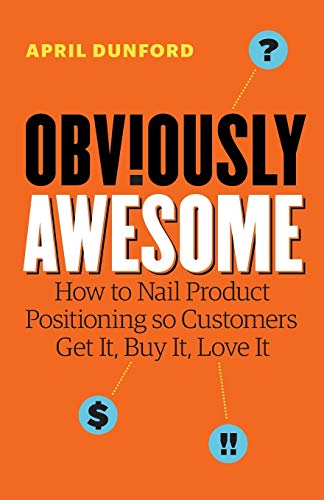
To be named, you first have to be understood. Dunford's book on positioning is the sharpest guide to making your business instantly legible — to people and to the machines that now answer for them.
View on Amazon