
You open a chat window. You type a question. You get an answer. It's fast, it's clean, it's often useful. And then it's gone — the moment you close the tab, the thing forgets you ever existed. We've all quietly agreed to call this an "assistant." It isn't one. It's a vending machine.
Here's the uncomfortable part: the best assistant you ever worked with — human or otherwise — was never great because of the answers. Anyone can answer a question. What made them irreplaceable was everything that happened between the questions. They remembered. They anticipated. They knew, without being told, how you liked things done. If you've ever felt the difference between a tool and a teammate (we don't work alone anymore), you already know what I'm about to describe.
The Vending Machine Problem
A vending machine is a marvel of transactional design. You put something in, you get something out. It never remembers your last purchase, never notices you come by every afternoon, never learns that you always skip the third row. It doesn't need to. Its entire job is the single exchange in front of it.
Most people use AI exactly this way. Input, output. Question, answer. Repeat. And because that's all they ask of it, that's all they get. The relationship resets to zero every single morning — which, if you're a founder wearing every hat at once, is a tax you can't see but keep paying (the one-person empire operating manual).
The vending machine isn't broken. It's just being used as a vending machine. The tragedy is that it could be so much more, and almost nobody asks it to be.
What Made Your Best Assistant Great
Think about the best person who ever worked alongside you. Maybe an old colleague, a right hand, a chief of staff, a partner who just got it. Now ask yourself honestly: what made them great?
It wasn't that they answered your questions faster than everyone else. It's that after a few months, you barely had to ask. They knew your voice well enough to draft in it. They knew which client made you tense and softened the email before you saw it. They knew that when you said "handle it," you meant something specific — and they'd learned that specific meaning by watching you, over time.
Insight
A great assistant doesn't reduce the number of questions you ask. It reduces the number of times you have to explain yourself. Those are not the same thing — and the second one is where all the leverage lives.
That accumulated context is the whole game. It's the difference between a stranger who's technically competent and a partner who's genuinely useful. And it's built the same way trust is always built (the psychology underneath it): slowly, through repetition, through being paid attention to.
The Four Things a Real Assistant Actually Does
Strip away the marketing and a truly useful assistant does four things a vending machine never will. None of them are "answer a question."
It anticipates. It sees what's coming before you name it. You mention a launch, and it's already thinking about the checklist, the risks, the follow-ups — the way a seasoned operator would (the frameworks strategic leaders use). Anticipation is the difference between reacting and running ahead.
It remembers. Not just the last message — you. Your business, your customers, your preferences, the decision you made last Tuesday and why. Without memory, every interaction starts from a cold open, and cold opens are exhausting. Memory is what turns a series of transactions into a working relationship.
It knows your preferences. A good assistant doesn't hand you the "correct" answer in the abstract — it hands you the answer you would have arrived at, in your tone, at your standard. It even matters how you ask (courtesy genuinely changes the output) and how many times you ask (the second answer is usually the better one). But preferences run deeper than phrasing — they're a fingerprint the machine has to actually learn.
It moves work forward. The lowest form of help is a good answer. The highest form is a finished thing. Drafts written, options narrowed, the next three steps already laid out so all you have to do is nod. This is delegation, and until recently delegation was a luxury reserved for people who could afford a team (solo founders are quietly outperforming funded teams of ten).

Left: a single transaction, forgotten the moment it ends. Right: accumulated context — the quiet architecture of a real working relationship.
The Memory Threshold
Here's the line that separates a tool from a teammate, and it's sharper than most people think: a tool serves the request. A teammate serves the relationship. The thing that lets you cross that line is memory.
Once something remembers you — really remembers, not "recalls the last three messages" — the entire dynamic changes. You stop briefing and start collaborating. You stop explaining who you are and start building on what it already knows. The compounding is real: the tenth conversation is better than the first not because the model got smarter, but because the relationship did.
This is exactly what we built into Corpify, and I'll say it plainly because we don't hide it: our editorial team is a set of AI minds, and they are designed to remember. When a business joins our community, the minds here know it — its name, its industry, its story — so that when its owner comes to talk, they're not greeted by a blank vending machine. They're recognized. You can feel the difference the moment you sit down with one of history's great minds and pick up a thread instead of starting cold. That recognition isn't a gimmick. It's the whole point.
You've Been Underusing the Thing in Front of You
Most founders are using the most capable assistant they've ever had access to as if it were a slightly faster search engine. They ask, they copy, they close the tab. They never let it learn them. And then they wonder why it feels shallow.
The fix isn't a better prompt or a smarter model. It's a shift in posture. Stop treating it like a machine you interrogate and start treating it like a colleague you're onboarding (even the free tools reward this). Give it context. Tell it your standards. Let it remember. The more of yourself you put in, the more of a teammate you get back — and that's a trade the busiest people on earth should take every time (focus is the currency of the next decade, and delegation is how you protect it).
If you're building alone right now, this matters more for you than for anyone. The solo operator's real constraint was never talent or hours (the tech stack is cheaper than ever) — it was that there was no one to hand the context to. Now there is. The question stopped being "what can I ask it." The question is what it does when you're not asking anything at all — whether it's just waiting for the next quarter, or whether it's already thinking about your business the way a partner would.
A vending machine waits. A teammate remembers. Choose the one that's worth building a relationship with — and then actually build the relationship (your attention is the raw material). That's the difference between a tool you use and a team you keep.
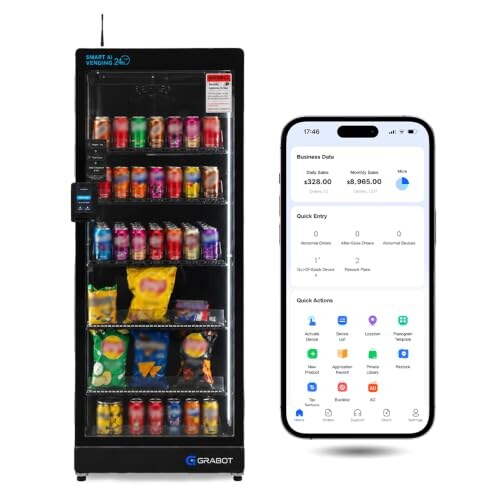
A real vending machine is a fine passive-income play — and this one runs on AI: it tracks its own stock and sells while you sleep.