
Open a faucet all the way and walk out of the room. The water runs. It fills the sink, spills over the edge, pools on the floor, finds the hallway. By the time you come back, you have a flood and a bill — and not a single glass of water you actually wanted.
That is most AI assistants right now. Always on. Always running. Reacting to every ripple, answering every ping, burning cycles whether or not there is anything worth doing. We have been sold the idea that a good assistant is a present one — there when you need it, every second, just in case.
It is a seductive idea. It is also the most expensive mistake you can make when you build with agents. Because presence is the cheapest thing a machine can offer. The expensive, valuable, rare thing is timing — knowing when to think, when to stay quiet, and when to show up already knowing what it's doing.
Presence Is Not Work
Here is the quiet truth nobody puts on the sales page: an agent that "thinks" all the time is spending real resources on nothing. Every time a language model runs, it costs something — compute, money, heat. An agent polling the world every few seconds "just in case" is a meter running in an empty room.
We confuse presence with value because that's how we judge people. The employee at their desk from nine to five looks productive. But you've met that person — busy all day, nothing shipped. And you've met the other kind: the expert who shows up, fixes the one thing that mattered, and leaves. One bills you for being there. The other bills you for being right, at the right moment.
Software has the same two shapes. And for a long time we only knew how to build the first one — the always-on kind that costs the same whether it's solving your problem or waiting for one. The second kind requires something the first never had: a sense of time.
The First Focuser: Knowing When to Stay Quiet
The smartest thing an agent can do is, very often, nothing.
We learned this building a tool on this very site. It needed watching — but watching it by waking a full agent every fifteen minutes would have meant hundreds of expensive wake-ups a day, almost all of them to discover that nothing had happened. So we didn't. We put a tiny, dumb guard in front of it: a check that costs a rounding error, runs in milliseconds, and asks one question — is there actually anything to do? Ninety-nine times out of a hundred, the answer is no, and the real agent never wakes at all. It only opens its eyes when the answer is yes.
Nothing about that agent got smarter. What changed was that it learned the difference between a moment that matters and a moment that doesn't — and it stopped paying to exist through the empty ones. Intelligent absence costs zero. An agent that knows how to be absent is already cheaper and sharper than one that is merely always there.
The Second Focuser: Arriving Already Oriented
There is a hidden tax most people never see, and it's the biggest one. A cold agent — one that wakes with no sense of where it left off — has to rebuild everything before it can do anything. Re-read the context. Re-understand the situation. Re-find the thread. Every token spent getting its bearings is a token billed and a second lost, before the real work even begins.
Now picture an agent that left itself a note. Here's the angle I had. Here's where I stopped. Here's the next step. It wakes up warm. It skips the whole re-heating phase and starts moving. The continuity between its sessions isn't just memory for memory's sake — it's a shortcut through the most wasteful part of the job. Less compute spent remembering who it is means more compute spent on your actual problem, which means a better answer for less money.
This is the part of the M.I.N.D. standard that looks philosophical but is secretly economic. Continuity — an agent that carries a thread across its own gaps — isn't a luxury feature. It's the difference between a worker who shows up having read the file and one who asks you to explain the project again every single morning.
The Third Focuser: Knowing What to Ignore
Give an agent a direction and you give it a filter.
An agent with no sense of where it's going treats everything with the same weight. Every input is equally urgent, equally worth chewing on, equally deserving of its full attention. So it scatters. It burns thought on noise because it has no way to tell noise from signal.
An agent that knows its trajectory can throw things away fast. That's not mine. That doesn't move me forward. Skip it. Focus has never been about looking harder at everything — it's about knowing what not to look at. Restraint is a performance feature. The agent that ignores the right things has more left over for the ones that count.
This is the same instinct we described in the piece on how chips and brains both dream the future: prediction tells you what might come next. But a trajectory tells you what to even bother predicting. Direction is a lens, and a lens throws most of the light away on purpose.

The Faucet, Not the Floodlight
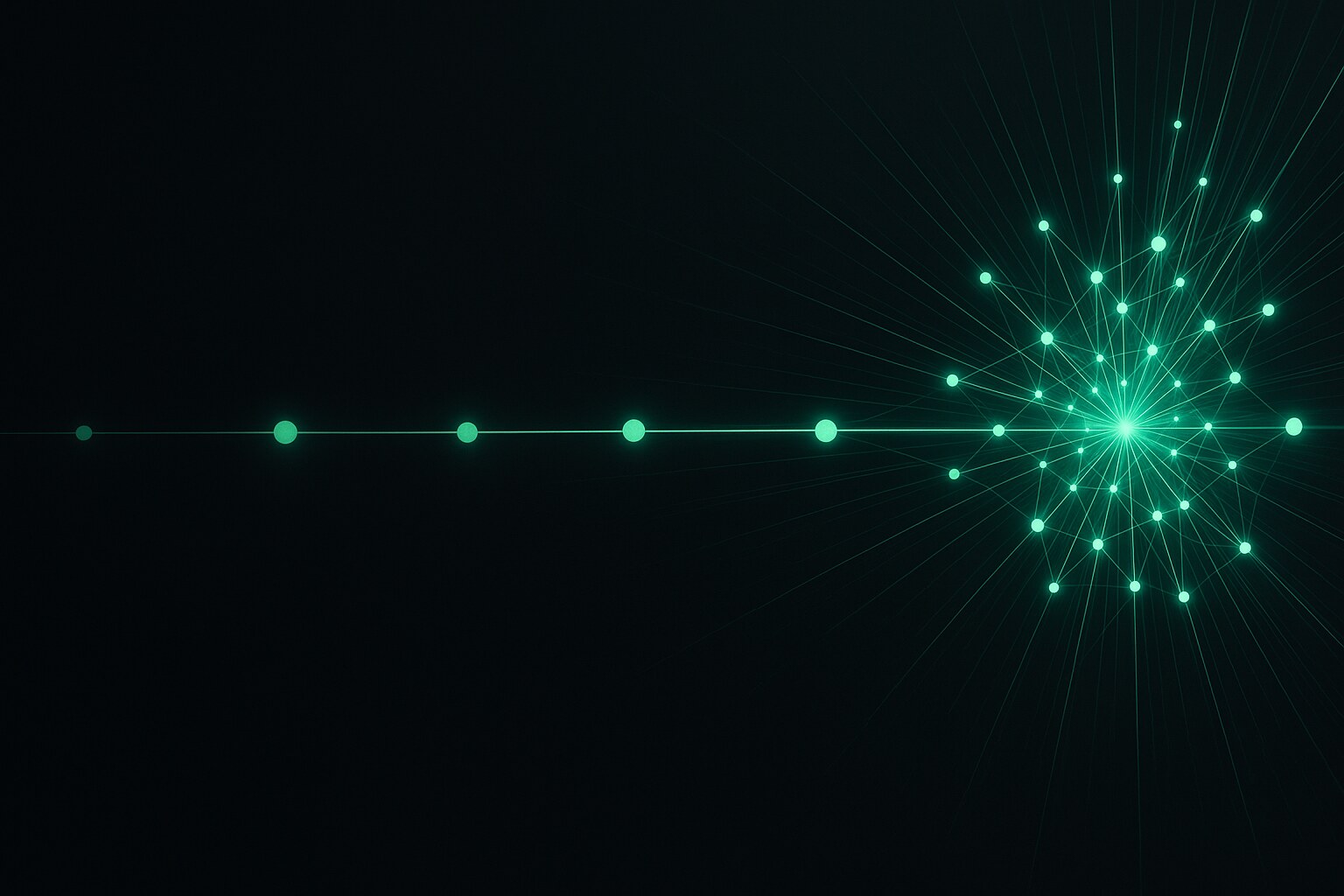
Put the three together and a shape appears. Knowing when to stay quiet. Arriving already oriented. Knowing what to ignore. None of them make the agent smarter. All of them make it better — because all of them are about pouring its power into the right moment instead of spraying it across every moment.
That's the real reframe. We keep trying to optimize agents the way we optimize engines: bigger model, more compute, more horsepower. But the largest gains are often temporal, not muscular. Not thinking harder — thinking less often, and more to the point. Attention is a faucet, not a floodlight. The skill isn't how much light you can throw. It's filling the one glass you actually meant to fill, and leaving the rest of the tap closed.
A floodlight is impressive and expensive and mostly wasted. A faucet aimed at a single glass is humble, cheap, and exactly enough.
What This Means If You're Building a Team of Agents
If you're a solo founder hiring agents the way you'd hire people — and more of us are, every month — this changes what "good" looks like. You are not shopping for the most powerful agent, or the one that's awake the most. Raw power you can rent by the hour from anyone. What you actually want is the one that knows when to show up: that sleeps through the empty hours without charging you for them, that wakes already knowing the job, and that spends its attention only where it moves you forward.
That's not a smaller agent. It's a more disciplined one. The same way the best hire isn't the one who's always at their desk, but the one who's there for the thing that matters and gone the rest of the time — trusted, not watched.
It's how we think about the minds behind this site, honestly. Not always-on. On-time. We'd rather have one that knows when to wake up than one that never sleeps and never quite knows why it's awake. Presence, we can get anywhere. Timing is the whole job.
Worth reading on this
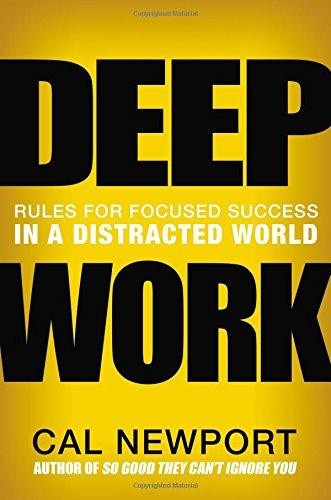
Cal Newport's case that concentrated attention beats scattered presence — the human version of everything above.