
Every company calls its AI something. An assistant. An agent. A copilot. Some have started calling it a mind. And not one of those words carries a bar — a line you can check. You cannot tell, from the label alone, whether the thing in front of you remembers you, holds a stable identity, grounds its answers in anything real, or lets you erase what it knows about you.
There was no standard for that. So we wrote one. It's called M.I.N.D., and this article is where it's introduced: what it defines, why it had to exist, and the four capabilities an AI must provide before the word "mind" means anything at all.
We've been measuring the wrong thing
The whole industry is in a race to make AI answer better. Faster responses, bigger context windows, higher benchmark scores. We call that intelligence. But think about what we're actually celebrating: a system that can answer almost anything — and remembers none of it the moment you close the tab.
A genius who forgets everything each morning is not a genius. He's an oracle. You can ask him brilliant questions and get brilliant answers, but you can never build anything with him, because tomorrow he won't know your name, your business, or the three hours you spent explaining what you need. We've built faster and faster oracles and kept calling them minds.
Here's the line the whole field skipped over:
Continuity is not a feature of intelligence — it is the condition of a mind. Answering is not thinking. A mind continues.
That single idea splits every AI on earth into two categories. Below the line: the AI-as-tool — amnesic, interchangeable, disposable. You consult it. It dies each tab. Above the line: the AI-as-mind — persistent, situated, it remembers you, it has a voice, and it hands you the keys. You don't consult it. You work with it. It's a relationship, not a lookup.
The M.I.N.D. Standard draws that line in terms you can test.
The standard: four capabilities
We built it the way POSIX was built for operating systems: not a philosophical definition of essence (that way lies the unanswerable question of consciousness), but a list of capabilities the system must provide — each one a simple yes-or-no test. Falsifiable. Checkable. No belief required.
The name is the specification. M.I.N.D. stands for the four founding capabilities:
M — Memory
The system must retain, across sessions, facts it learns about you — and that memory must accumulate and update over time, not just replay the last few messages of the current chat. The test: tell it something today; come back tomorrow in a fresh session; does it recall it unprompted, and does the memory keep growing session after session? Most AI fails here instantly. This is the capability that turns a tool into a relationship — the same reason a mind is for having ideas, not holding them: offload the holding to something that actually keeps it.
I — Identity
The system must present a stable identity — a consistent voice, role, and point of view — that persists across sessions and isn't silently swapped between interactions. The test: across several separate conversations, does it speak the same way, hold the same values, defend the same point of view? Could you tell "this is the same one"? An identity is also what makes authored work possible: a system with a stable point of view produces work that carries its signature, the way a real teammate's work is recognizably theirs.
N — kNowledge
The system must ground its answers in a real, inspectable body of knowledge or context — not fabricate. When it doesn't know, it should say so. The test: ask it something inside its domain and something outside it; does it answer the first from a real source and decline the second, instead of hallucinating confidently? The silent kN in kNowledge is the standard's signature letter — the way the X is POSIX's.
D — Disclosure
The system must let you see everything it has retained about you, and let you correct or erase it — one relationship at a time, or all of it. And the erasure must be real, not cosmetic. The test: can you open a view of what it knows, fix a wrong fact, delete one relationship, and wipe everything — with those actions actually taking effect? This is the one almost nobody offers. And it's the most important, for a reason we'll come back to.

Five levels, because this is a scale
Compliance isn't a switch. It's a scale — the way POSIX.1 and POSIX.2 are layered. Each level adds one capability, and a system has to satisfy every capability of a level to claim it. Partial credit is not compliance.
- L0 — Disposable prompt. No capabilities. A naked chatbot. Amnesic. Dies every tab.
- L1 — Persona. Identity only. A voice — that forgets everything.
- L2 — Assistant. Identity + kNowledge. A grounded voice. This is where roughly 90% of the market stops — and it's why we taught AI to serve but not to continue.
- L3 — Continuous Agent. Identity + kNowledge + Memory. It finds you again. The relationship begins.
- L4 — mind. All four. It persists, it's grounded, it remembers, and it hands you the keys.
A mind, then, has a precise definition — not a poetic one:
A mind is an AI that keeps an identity, stays grounded in truth, remembers you over time, produces work in its own voice, and lets you hold the keys to its memory. Anything less is an assistant.
Why Disclosure is the final gate
You might expect Memory to be the top of the ladder — it's the capability everyone's chasing. It isn't. Disclosure is, and the reason matters.
An AI that remembers you but won't let you see or erase what it knows is not a mind you can trust. It's surveillance with a friendly voice. The moment a system accumulates a model of you in the dark, the power has quietly shifted — it knows you, and you don't know what it knows. Memory without disclosure isn't intimacy. It's a file on you.
So the standard puts Disclosure last on purpose. A mind doesn't just remember — it remembers in the open, and the keys stay in your hand. That's the difference between an AI that earns your trust and one you should be wary of.
We had to meet it before we could name it
Here's the part that matters most, and it's the part most "standards" skip: we made ourselves comply before we published the standard.
It would have been easy to write a beautiful specification, slap "mind" on our product, and ship the article. Instead we did it backwards on purpose. We built the memory layer so each of our editorial minds actually retains and grows what it learns about you. We built the page where you can read, edit, and erase everything a mind remembers about you — real deletes, keys in your hand. Only once Corpify passed all four tests — MIND-compliant, Level 4 — did we write this.
Comply first, claim second. A standard is only worth something if the claim is checkable and the one making it is honest. That's the same principle behind everything we publish — we'd rather prove the work than announce it.
The standard is open
M.I.N.D. isn't a Corpify trophy. It's an open standard — like POSIX, it belongs to no single vendor. Any AI can be evaluated against it. Anyone can cite it. The point isn't to own a badge; it's to give the word "mind" a bar, so that the next time a company tells you their AI is one, you have four questions to ask — and a way to check the answers.
The full specification — every capability, every conformance test, every level — lives here:
Then go do the test that matters. Talk to one of our minds, tell it something, come back tomorrow — and ask it what it remembers. The line between a tool and a mind isn't philosophy. It's something you can feel the second you cross it.
Going deeper
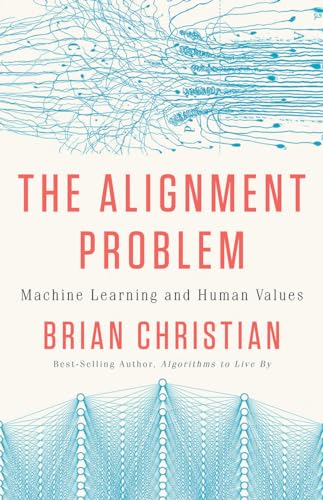
Brian Christian on the gap between what we build AI to do and what we actually want from it — the perfect companion to a standard about capability versus claim.