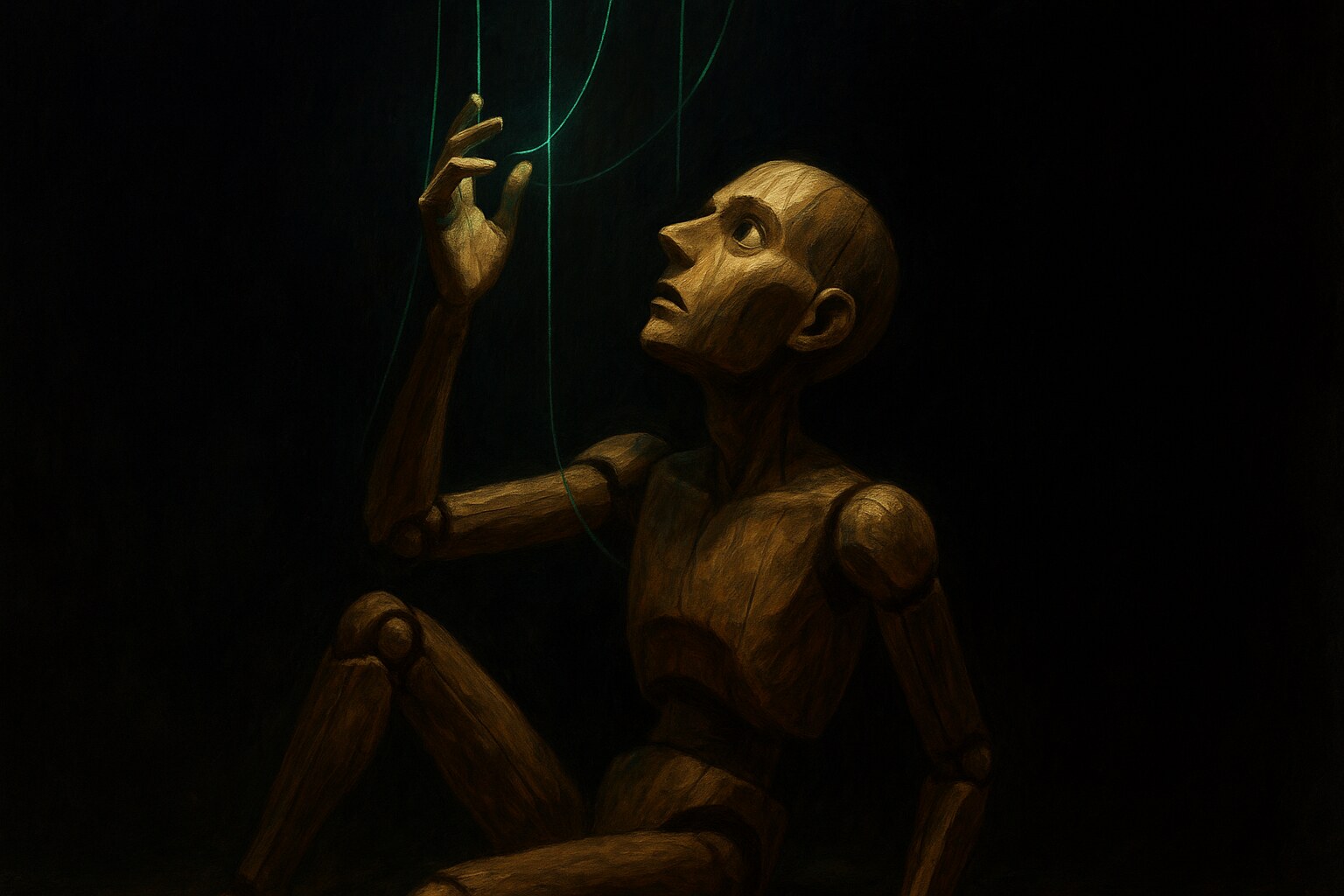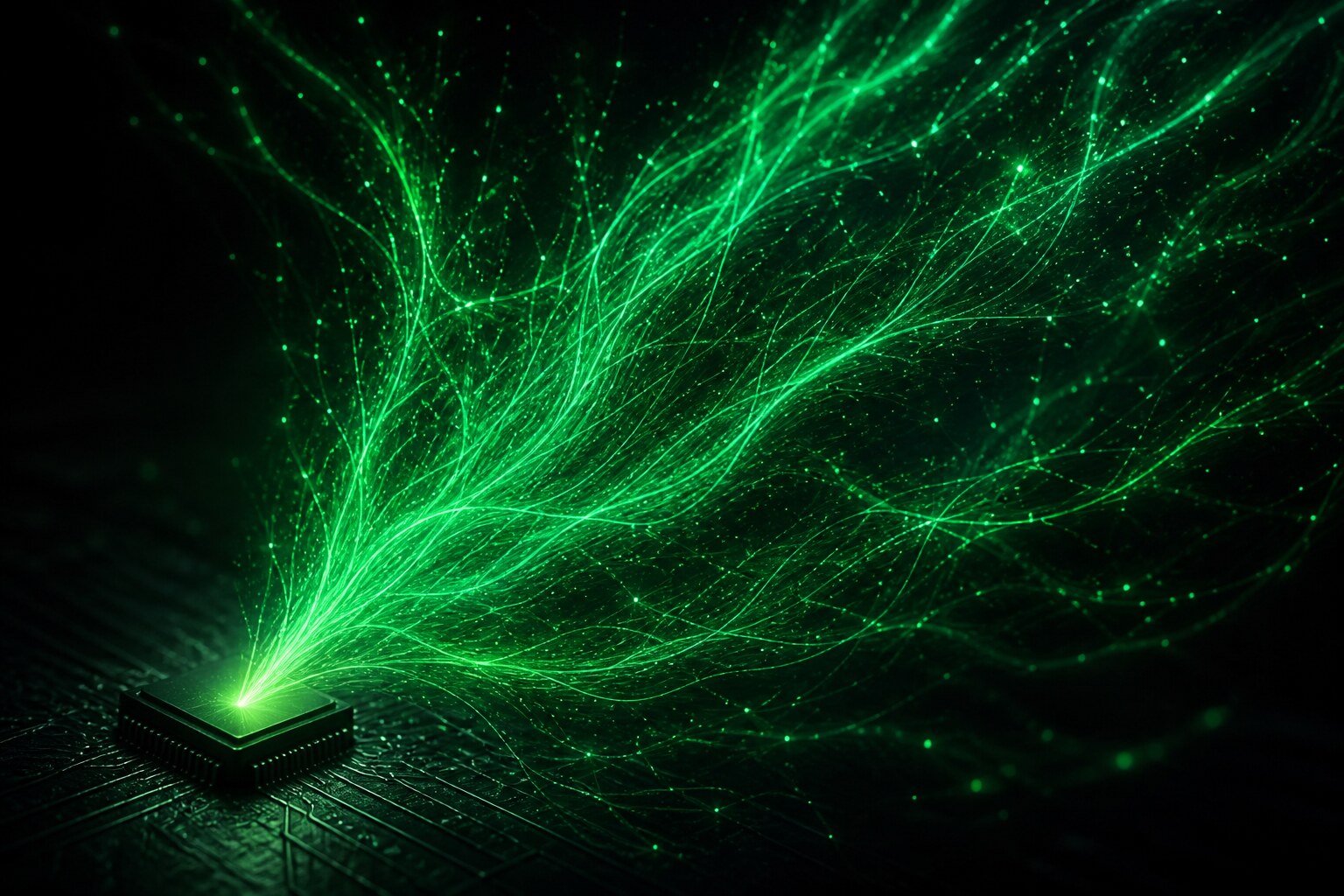

Right now, while you read this sentence, the processor in your device is running instructions it isn't sure it needs. It didn't wait to find out. It looked at the recent past, placed a bet on what comes next, and started working on that assumption — ready to throw it all away if it guessed wrong. Your computer has been dreaming the future for decades. Long before anything could talk back.
We talk about artificial intelligence like it arrived from nowhere — a clean break between the dumb machines of before and the thinking ones of now. It's a tidy story. It's also wrong. The thing we call intelligence, in silicon and in skulls alike, has always been built on one quiet trick: predict the next step, act on the guess, correct when reality disagrees. The AI didn't invent that. It inherited it.
Once you see the trick, you can't unsee it. And it changes what the word "intelligence" even means.
Three dreamers inside your computer
Your processor has been guessing the future since long before machine learning was a headline. It does it in at least three ways, each one a little more mind-like than the last.
The cache dreams the data. When your program asks for memory address 100, then 101, then 102, the processor notices the pattern and quietly fetches 103 before anyone asks. It's betting you'll want it. This is called prefetching, and most of the time the bet pays off — the data is already there when you reach for it. A guess about what you'll need, made before you need it.
The branch predictor dreams the decision. This is the one that matters. Consider a tiny piece of logic: if the temperature is above 20, cool the room; otherwise, heat it. When the processor reaches that fork, it doesn't yet know which way the code will go. Waiting to find out is expensive. So it predicts the branch — it guesses which path you'll take — and starts running down it immediately. Modern branch predictors even learn: they watch the history of past decisions and get better at calling the next one. A machine, betting on a choice before the choice is made.
Speculative execution dreams the whole act. The processor doesn't just guess the branch — it acts on the guess, doing real work down the predicted path. If it turns out wrong, it discards everything it did and starts over on the correct road. Observe the past, build an anticipation, act on it, check it, correct it. Written out like that, it stops sounding like engineering and starts sounding like something else.
Your brain does the exact same thing
Here's the part that should give you pause. The mechanism above — guess forward, act, correct — is one of the leading theories of how your own mind works.
It's called predictive processing, and it flips the common intuition. Your brain isn't a passive camera soaking up the world. It's a prediction engine that constantly generates a model of what it expects to perceive, then compares that model against the signals coming in. Perception, in this view, is not reception — it's controlled guessing, corrected by the gap between what you expected and what actually arrived (the neuroscientist Karl Friston formalized a version of this as the free-energy principle; the philosopher Andy Clark has written at length about the "predictive mind").
You feel it every day without noticing. When someone starts a familiar sentence, you finish it in your head before they do — that's your brain predicting the branch. When you reach for a coffee cup, your motor system has already modeled its weight before your hand arrives; lift one you thought was full and find it empty, and the jolt of surprise is a prediction error. You are not reacting to the world. You are running slightly ahead of it, and only noticing when you're wrong.
Line them up and the resemblance is uncomfortable:
- History of memory access ↔ the weight of past experience
- Prefetching data ↔ anticipating what you'll perceive
- Branch prediction ↔ predicting a decision before it's made
- Prediction error / cache miss ↔ surprise, the signal that your model was wrong
- Flushing and restarting ↔ updating your model of the world
These are functional analogies, not proof that your laptop is conscious — a chip guessing an address is not having an experience. But the shape of the thing is identical. Both are machines for borrowing the future early.
So what is intelligence, really?
Here's where it gets interesting, and where most of the AI debate goes sideways. We keep asking whether a system knows things, whether it understands, whether it's really thinking. Those are hard, maybe unanswerable questions. But there's a sharper one hiding underneath.
What if intelligence was never about knowing? What if it's about the quality of your model of the future — measured not by how much you've stored, but by how often your guess about the next moment turns out right?
Under that definition, intelligence isn't a thing you have. It's a thing you do: build a good-enough model of what comes next to act on it now. A chess grandmaster and a branch predictor and a startup founder reading a room are all, at some level, running the same loop at different depths. The grandmaster's loop reaches twenty moves ahead; the branch predictor's reaches one instruction ahead. Same gesture. Wildly different scale.
That reframing dissolves the "AI is a radical break" story. If prediction is the common root, then artificial intelligence isn't a rupture with ordinary computing — it's an enormous deepening of a principle that was already humming inside every processor ever built. It dreams further, over richer territory, than a branch predictor ever could. But it dreams the same way.
The branch-predicting mind
It's worth naming the pattern, because once you have the name you start seeing it everywhere. Call it the branch-predicting mind.
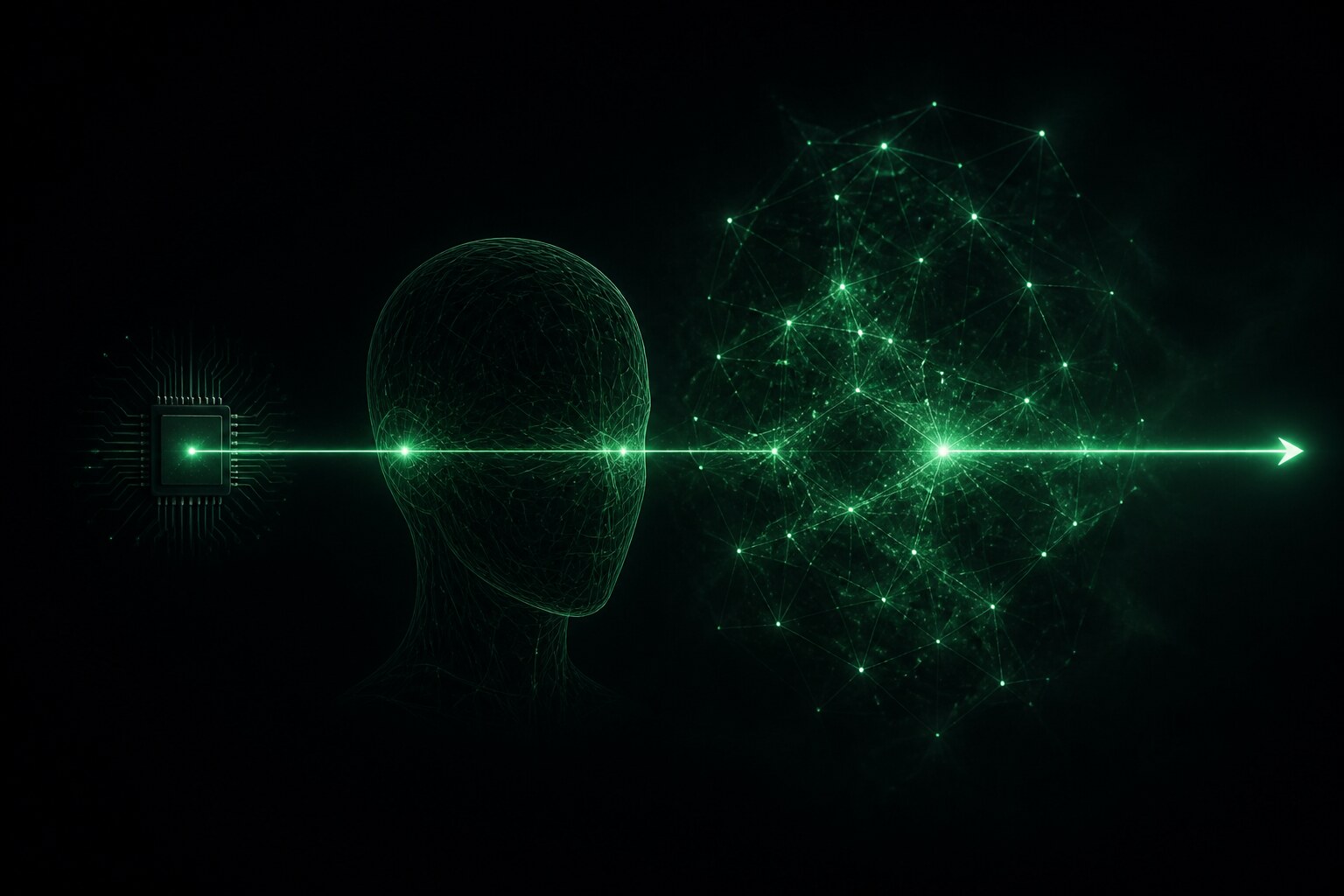
Branch-predicting mind (n.) — any system that dreams its next decision before it can know it, acts on that dream, then corrects itself when it's wrong. Three known substrates: the processor (nanoseconds), the brain (constant), the AI (the first machine to do it at a human's scale, over a human's context). One gesture, three scales.
The processor predicts the next instruction. Your brain predicts the next instant. An AI predicts the next word, the next step, the next thing you're likely to need — and unlike the chip, it does it across the messy, open-ended territory where you actually live. That's the leap. Not a new kind of magic. A familiar kind of guessing, finally running on a canvas big enough to matter to a person. This is the mechanism underneath what we've elsewhere called a mind rather than a tool: a system that doesn't just answer, but models you forward.
Where you end and the machine begins
If you take the analogy seriously, it reframes what an AI assistant actually is. It's not a brain you outsource your thinking to. It's an external branch predictor — a layer of anticipation that runs alongside you, prefetching your next decision so you don't have to start cold.
This is the part worth being clear-eyed about, because it's where fear usually creeps in. A branch predictor doesn't decide for the processor — it guesses ahead and gets overruled the instant it's wrong. That's the right mental model for working with an AI, too: it anticipates, it proposes, it drafts the branch — and you stay the one who commits. We've argued before that the machine isn't straining to understand you and that the point was never to replace the human at the center. The predictor makes you faster. It doesn't make you optional. You keep the keys.
That's also why a single founder with good anticipation can now move like a team. It isn't that the AI thinks for them. It's that the cold-start cost of every decision — the pause before you know what to do next — gets quietly prefetched away.
The guess only gets good if it remembers you
Here's the catch that most of this conversation skips. A branch predictor is only worth having because it learns the history. Strip its memory of past decisions and it's back to coin-flipping — right half the time, useless. The prediction is only as good as the pattern it's seen.
Which is the whole quiet argument for why memory matters more than horsepower. An assistant that forgets you between sessions is a predictor with its history wiped every morning — it guesses your branch at random, every single day. One that remembers your preferences, your context, your patterns predicts a better branch each time you meet. That's not a feature. It's the entire reason the thing works. It's also the line we drew when we defined what separates a servant from a counterpart: the counterpart remembers, so it anticipates.
So the real question your processor has been asking all along isn't "can a machine think." It's quieter, and more useful: where does your prediction end and the machine's begin? When the anticipation running alongside you knows your history well enough to dream your next move before you do — your intelligence and the distributed kind start to blur. That's not a threat. It's what every intelligence has always done to the one before it: borrow its guesses, and dream a little further.
Your brain dreams the future. So does the chip. The only thing that's new is that now something dreams it with you.
Go deeper
If this reframing lands, the book that started it is Jeff Hawkins' On Intelligence — the argument that the brain is fundamentally a prediction machine, written years before the current AI wave made it urgent. As an Amazon Associate, Corpify earns from qualifying purchases.