
Here's the sentence nobody wants to hear: you're not busy. You're hiding. And "busy" is the most respectable place left to hide.
We treat busy like weather — something that happens to you. The clients pile up. The inbox floods. The market shifts. You didn't choose any of it, you're just reacting, heroically, from dawn to midnight. Poor you. So noble. So tired.
But strip away the story and look at the calendar. Every block on it is a yes you said. Every fire you're fighting is one you agreed to walk into. The overwhelm you blame on everyone else — the clients, the family, the economy — is a stack of your own decisions wearing a disguise. Busy isn't a condition. It's a choice you keep making and then resent.
Busy Is an Anesthetic
Ask anyone why they're slammed and they'll list external forces like a weather report. What they won't say — because they can't see it — is the real function busy serves: it keeps a certain question permanently out of earshot.
The question is Does any of this matter?
As long as you're drowning in tasks, you never have to sit still long enough to ask whether they're the right tasks. Motion feels like progress. A full day feels like a productive day. And a productive-feeling day lets you sleep without confronting the terrifying possibility that you've spent six months brilliantly executing the wrong thing.
That's what busy really is. Not a workload — an anesthetic. It numbs the part of you that suspects you're avoiding the one move that would actually change your business, because that move is scary, or slow, or forces a decision you don't want to make. So you answer forty emails instead. You reorganize the CRM. You "get on top of things." And the needle never moves, but you're too exhausted to notice, which was the point all along.
Insight
The tasks you reach for when you're anxious are almost never the tasks that matter. They're the ones that reward you fastest with the feeling of having done something. Comfort dressed as work.
The Tell: You Feel Guilty When You Stop
Here's how you know busy has become your hiding place: the moment you slow down, you feel guilty. Not tired — guilty. As if stillness itself were a moral failure.
That guilt is the anesthetic wearing off. In the quiet, the avoided question gets loud again, and it's unbearable, so you rush back into motion to shut it up. You call it discipline. It's the opposite. The disciplined person can sit in the silence long enough to hear what actually needs doing (strategic silence is a skill, not a luxury). The busy person can't — so they never find out.
The founders who grind eighteen-hour days aren't more committed than the ones who don't. Often they're less — less willing to face the hard, ambiguous, high-stakes work of thinking. Grinding is easy. It's thinking that's expensive. As we've written before, the people winning aren't the ones running hottest — they're the ones who stopped confusing exhaustion with contribution.
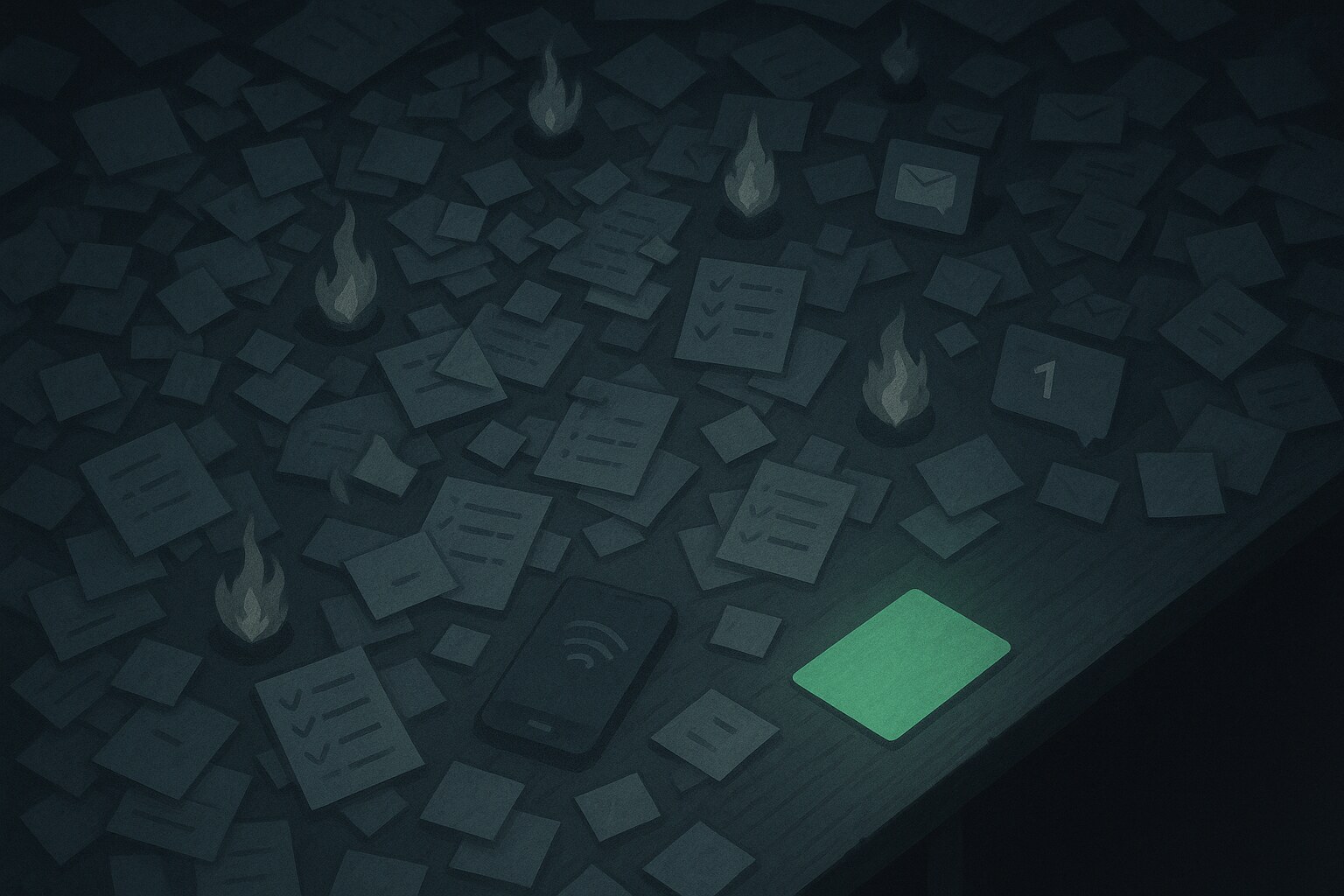
The one thing that would change everything is usually the thing the noise keeps pushing to the edge of the desk.
Whose Fault Is It, Really?
Notice who takes the blame. The client who "needs it now." The team member who "can't handle it without you." The market that "moves too fast." Everyone but you.
But the client needs it now because you never set a boundary. The team can't function without you because you never built the relationships that let you let go. The market moves fast for everyone — the ones who aren't drowning simply chose fewer things to chase (they cut their focus in half, then did it again). Every external cause you point to has your fingerprints on it. That's not an accusation. It's the good news. If it were truly everyone else's fault, you'd be powerless. Because it's yours, you can change it.
The uncomfortable truth: blaming your busyness on others is a way to keep the busyness. If it's their fault, you never have to do the one thing that ends it — decide what actually matters and let the rest fall. And letting things fall requires admitting some of what you've been doing never mattered in the first place. That's the part that stings. That's the part busy protects you from.
The Cost of the Disguise
Every hour spent in busy-as-hiding is an hour not spent on the small number of decisions that actually compound. The invisible math of small decisions is brutal here: it's not the single wasted day that ruins you, it's the pattern — a year of full calendars and no forward motion, because motion was never the goal, avoidance was.
Meanwhile the real work waits. The pricing you've been scared to raise (the wrong number quietly kills the business). The offer you keep meaning to sharpen. The product you'd have to actually finish. The conversation you've been dodging. These sit untouched because they're hard and slow and don't hand you the little dopamine hit of a cleared inbox. So the meaningful stays undone while the meaningless gets done twice.
Consider: Two solopreneurs, same market, same hours. One spends the week reacting — answering, fixing, attending, "staying on top of it." The other spends four of those days on a single thing that changes their pricing power for the next two years, and lets a dozen small fires burn themselves out. At year's end, one is busy and broke. The other is calm and paid. The difference wasn't effort. It was the courage to be ruthless about what deserved attention.
How to Stop Hiding
You don't fix this with a productivity system. A better calendar just organizes the avoidance more efficiently. You fix it by facing the question busy was built to drown out: What am I actually avoiding?
Sit with it until it's answered honestly — not "I'm avoiding my emails" but "I'm avoiding deciding whether this whole direction is right." Then run the trade every real choice demands (the frameworks strategic leaders actually use): what is the one thing that, if it went well, would make most of the busy irrelevant? Do that. Protect the time for it violently. Let the small stuff fail loudly enough that you learn most of it never mattered.
It won't feel productive. It'll feel exposed — because you've removed the anesthetic and you're finally awake to whether the work matters. That discomfort isn't a sign you're doing it wrong. It's the first honest thing you've felt in months. The ability to sit in that discomfort and think is becoming the rarest currency there is. And if you ever want to pressure-test your thinking against people who chose the hard road on purpose, you can always talk it through with the minds who built things that lasted.
You were never too busy. You were just afraid of what you'd have to face if you slowed down. Slow down. Face it. That's where the work you've been avoiding — the work that actually changes everything — has been waiting the whole time.
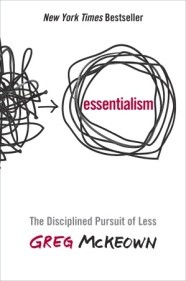
The whole book is one uncomfortable idea worn a hundred ways: almost everything is noise, and busy is how we avoid choosing what isn't. If this article stung, this is the deep end.
View on Amazon