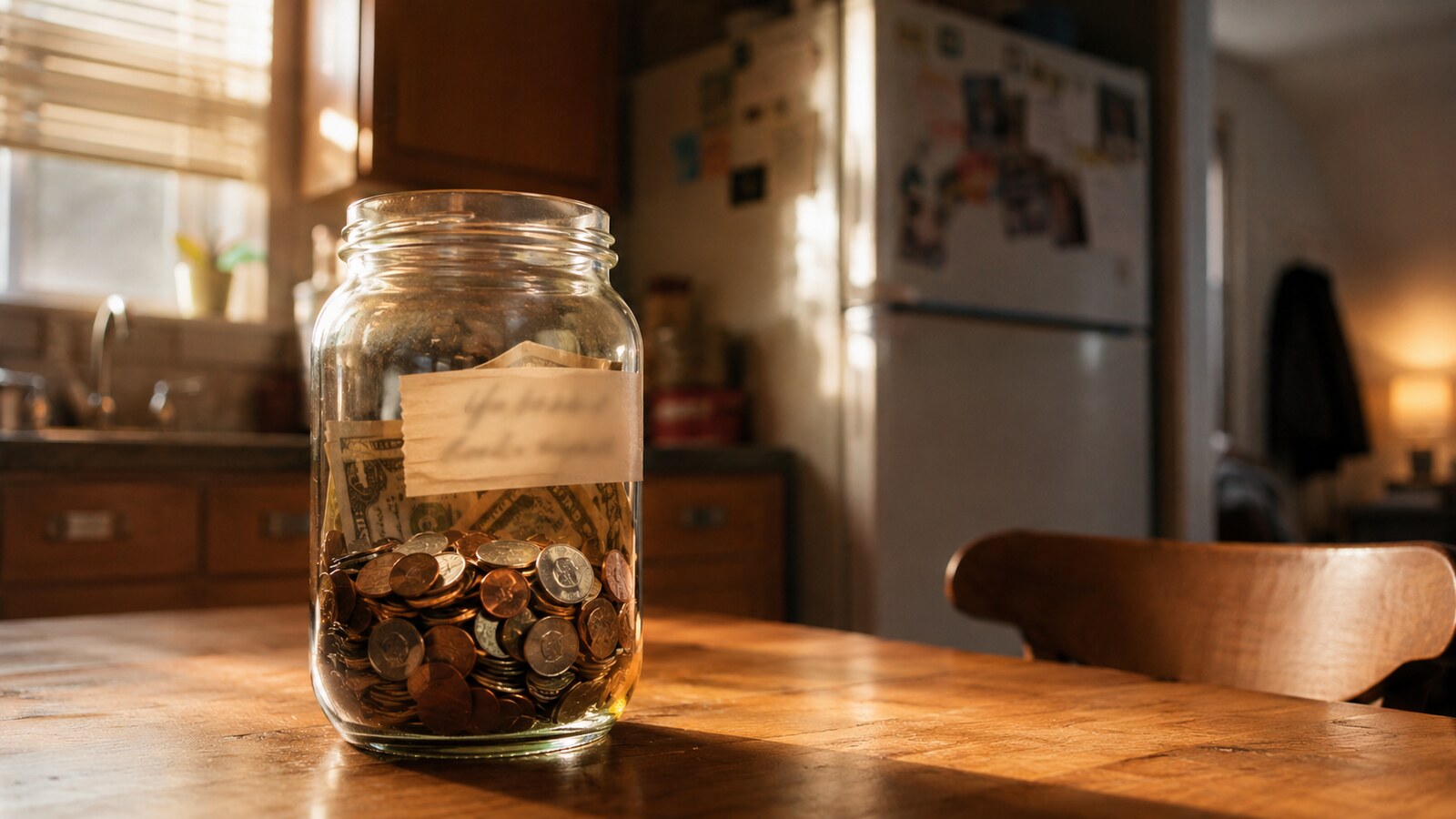

$10,000 in 12 months. On a low income. It sounds like a headline written by someone who's never been broke. But here's what $10,000 actually looks like when you break it down: $833 per month. $192 per week. $27 per day.
That's it. Twenty-seven dollars a day — saved, not earned on top. This article is the exact system to get there. No investment advice. No "start a business" hand-waving. No privilege assumed. Just the math, the structure, and the decisions that turn $27/day from impossible to automatic.
The Math That Changes Everything
Most people fail at saving because they think in months. "$833 a month" feels crushing. But reframing the number changes everything:
- $27/day — that's a meal out you skip, a subscription you cancel, or a shift you pick up
- $192/week — one transfer every Friday
- $833/month — the target, not the way you think about it
Write down $27. Put it somewhere you see daily. That's your number. Everything below is about making that number happen without destroying your life.
Step 1: The Three-Account System
You need three bank accounts. Not one. Not "I'll keep track in my head." Three actual accounts.
- Bills account — rent, utilities, phone, insurance. Fixed costs only. Paycheck hits here first.
- Spending account — groceries, gas, fun. This gets a fixed weekly amount. When it's empty, you're done for the week.
- Savings account — the $10K account. Ideally a TFSA (if you're in Canada, it grows tax-free). Money goes in. It does not come out.
The system works because it removes decisions. You don't "decide" to save each month. The money moves automatically on payday. Willpower is unreliable. Automation is permanent.
Set up automatic transfers the day you get paid. Bills account gets what it needs. Savings account gets $833 (or whatever you can start with). Spending account gets the rest. Live on the rest.
Step 2: The Cuts (Real Numbers, Not Vague Advice)
Here's where most guides say "spend less on coffee." That's useless. Here are actual categories with actual savings, from people who've actually done this:
| Category | Cut | Monthly savings |
| Subscriptions | Cancel everything except 1 streaming service | $40–$80 |
| Food | Meal prep Sundays, no delivery apps, grocery list only | $200–$400 |
| Transport | Carpool, bus pass, bike for short trips | $100–$300 |
| Phone plan | Switch to a $25-35 plan (Fizz, Public Mobile, Lucky) | $40–$60 |
| Shopping | 30-day rule: want something? Wait 30 days. Still want it? Buy it. | $100–$200 |
| Energy | LED bulbs, thermostat down 2°, shorter showers | $20–$50 |
Conservative total: $500–$1,090/month. You don't need all of them. You need enough of them to hit your $833 target. Pick the ones that hurt least first.
The food category is the big one. Most people on low income overspend on food not because they eat expensively, but because they buy without a plan. A Sunday meal prep session — even basic rice, beans, and vegetables — can cut food costs by 40% without feeling like punishment.

You don't need an app. A pen and honest numbers are enough to start.
Ramsey\'s step-by-step plan for building savings on any income — behavior first, math second.
Step 3: The Boosts
Cuts alone might not get you to $833 if your income is very low. That's honest. So here's the other side: adding income without quitting your job.
Quick wins (this week):
- Sell things you own but don't use — Facebook Marketplace, Kijiji, Poshmark. Most people have $500-$2,000 in unused stuff.
- Cash back apps on groceries you're already buying (Caddle, Checkout 51, PC Optimum)
- Return items bought in the last 30 days that you don't need
Monthly boosts ($200-$800/month):
- One freelance skill on the side — cleaning, lawn care, dog walking, tutoring, data entry
- Weekend shifts if your job allows overtime
- Rent out a room, parking spot, or storage space
- Deliver food or groceries on your own schedule (DoorDash, Instacart)
You don't need a "side hustle empire." You need $200-$400 extra per month to bridge the gap between cuts and $833. That's one client, one weekend shift, or one room rented.
Step 4: The Automation
The moment you rely on willpower, you fail. Month 1 you're motivated. Month 4 you're tired. Month 8 you'll justify one splurge that becomes three. The system must run without you thinking about it.
Set up (once, takes 20 minutes):
- Auto-transfer to savings account on payday — your bank's online banking can do this
- Auto-pay all bills from bills account — never miss, never think about it
- Weekly spending limit alert on your spending account (most banks offer this)
- Remove saved credit cards from online stores — add friction to spending
After setup, you don't "save" anymore. The saving happens. You live on what's left. That mental shift — from active saving to passive living-on-less — is the difference between people who save $10K and people who intend to.
Step 5: The Canadian Advantage
If you're in Canada, you have tools most countries don't. Use them.
TFSA (Tax-Free Savings Account): Your $10K grows tax-free. Interest, dividends, gains — all yours, no tax. If you're 18+ and have never contributed, you likely have $88,000+ in room. Check your contribution room →
FHSA (First Home Savings Account): If you're saving to buy your first home, the FHSA is better than a TFSA — you get a tax deduction on deposits AND tax-free growth. Double benefit.
GST/HST credit and CCB: If your income is low, you may already receive these quarterly. Don't spend them. Redirect to savings automatically.
Low-cost banking: Simplii Financial, Tangerine, and EQ Bank all offer no-fee accounts with higher interest on savings. If you're paying bank fees, stop today. That's $15-$30/month going nowhere.
These aren't loopholes — they're legal money glitches the government designed for you to use. Most people never bother. You will.
The Timeline (What to Expect)
Month 1-2: Hardest. You're building the habit. The system feels tight. You'll miss old spending patterns. This is normal. Push through.
Month 3-4: It starts feeling automatic. You stop checking the savings account daily. The automation carries you. You've saved $2,500-$3,300.
Month 5-8: Momentum. You might find extra money — a tax refund, a bonus, selling more stuff. Put ALL windfalls into savings. Don't reward yourself by spending them. The $10K is the reward.
Month 9-12: The finish line is visible. $7,500+ in the account. The last stretch is the easiest because you can see it working. You're not the same person who started.
After the $10K? That's your emergency fund, your first investment, your "never go back to zero" money. The habits stay. The next $10K takes 8 months. The one after takes 6.
What $27 a Day Actually Looks Like
Here's one real day, rewritten:
- Morning: coffee at home instead of drive-through — saved $5
- Lunch: meal-prepped container instead of buying — saved $12
- Evening: walked instead of Uber'd 2km — saved $8
- Night: watched something already paid for instead of renting — saved $6
Total: $31 saved. Ahead of target. And none of those choices ruined the day.
That's the truth about saving on low income: it's not one dramatic sacrifice. It's twenty small ones that don't individually hurt but collectively change your life.
The Rule
Don't save what's left after spending. Spend what's left after saving. Set up the auto-transfer first. Live on the remainder. This single inversion is worth more than every other tip combined.
Track your starting point: calculate your net worth now →