
A solo founder's AI agent stack costs $3,000-$12,000 per year. The equivalent human team — an engineer, a marketer, a designer, and a support rep — costs $80,000-$120,000 per month. That's a 100x cost difference for comparable output. The math has flipped. And the revenue data is proving it in real time.
The Numbers That Shouldn't Be Possible
The data coming in from 2025-2026 reads like science fiction written five years ago:
- 117,060 U.S. businesses with zero employees grossed $1M+ in revenue in 2023 (U.S. Census)
- More than 2x as many solopreneurs earned $1M+ in 2025 compared to 2023 — nearly 3x as many crossed $5M and $10M
- 30.4 million Americans operate as solopreneurs, generating $1.75 trillion in combined economic output
- AI-first SaaS companies are hitting $10M ARR with fewer than 10 employees
- Revenue per employee at AI-native companies: Midjourney generates $3-5M per employee. Lovable hit $2.2M per employee at $100M ARR. The median private SaaS company? $130K. That's a 17-38x gap.
Sam Altman's prediction — that the first one-person billion-dollar company is coming — stopped sounding absurd somewhere around mid-2025. The trajectory makes it feel inevitable.
But the real story isn't the outliers making headlines. It's the thousands of solo founders quietly building $200K, $500K, $1M businesses with nothing but a laptop, free AI tools, and a refusal to hire until the economics force them to.
The Cost Inversion
This is the chart that explains everything:
- Solo founder AI stack (annual): $3,000-$12,000 — includes AI coding assistants, copywriting tools, design generation, automation, customer support bots, analytics
- Equivalent human team (monthly): $80,000-$120,000 — junior engineer, marketer, designer, support rep. Plus office, benefits, management overhead, coordination costs.
- Cost ratio: ~100x cheaper for the solo path
But cost is only half the equation. The output data is what makes it unfair:
- 74% of solopreneurs report scaling without hiring specifically because of AI tools
- 340% average revenue increase for solopreneurs using AI agents — with no increase in working hours (Indie Hackers 2026 survey)
- Operating margins: AI-powered solopreneurs run at 60-80%, vs 10-20% for traditionally staffed small businesses
Read that last number again. 60-80% margins versus 10-20%. Especially when you price for transformation instead of time. That's not a marginal improvement — that's a completely different business with the same revenue.
What AI Actually Replaces

One machine, infinite leverage — the solo founder's stack replaces departments, not tasks.
The mistake is thinking AI replaces "everything." It doesn't. It replaces specific, repeatable roles — and leaves the founder doing only what a founder can do:
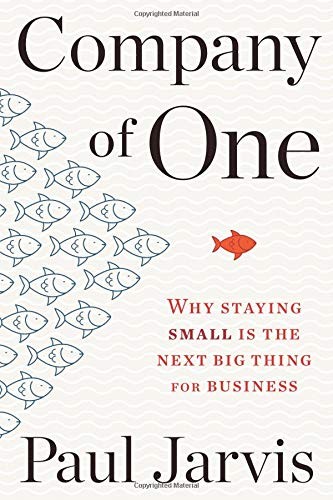
Jarvis on why staying small is a strategy, not a limitation — one founder, leverage, and no headcount to feed.
What AI handles now:
- Code: Claude Code, Cursor, GitHub Copilot — solo founders shipping products that used to require a 3-person dev team. One founder rewrote his entire product with Claude Code and a single freelance QA engineer.
- Design: Midjourney, Figma AI, DALL-E — professional visuals without a designer on payroll
- Marketing: AI copywriting, automated email sequences, content generation at 10x the speed
- Support: AI chatbots handling 80%+ of customer queries before a human ever sees them
- Operations: Automated invoicing, scheduling, reporting, data analysis, bookkeeping
What AI doesn't replace:
- Taste — knowing what to build and what not to
- Strategy — choosing which market, which positioning, which timing
- Relationships — trust, reputation, partnerships that compound over years
- Domain expertise — understanding the problem deeply enough to solve it elegantly
- Judgment — the founder's ability to decide when the data is ambiguous
This is why the solo founder wins. They bring the irreplaceable parts — judgment, taste, expertise — and delegate everything else to machines that work 24 hours, never complain, and cost $250/month.
Why Funded Teams Are Losing This Race
The VC-backed startup model was built for a world where execution required humans. Raise money → hire team → build product → find market. That sequence made sense when building required bodies.
In 2026, it's a liability:
Funded startups spend $2.00 to acquire $1 of new ARR (median). Solo founders with organic + AI spend pennies. Their CAC approaches zero because content, SEO, and word-of-mouth don't require ad budgets.
Overhead kills speed. A 10-person team needs alignment meetings, Slack threads, sprint planning, 1-on-1s, performance reviews, and someone to manage the managers. A solo founder thinks → builds → ships. Decision to execution in hours, not weeks.
Coordination costs compound. Every person added to a team creates communication overhead. A team of 10 has 45 possible communication channels. A team of one has zero. The funded team's advantage (capital for growth) is neutralized when growth costs approach zero.
AI companies took $242 billion in Q1 2026 — 80% of all global venture funding. But the returns are concentrating in tiny teams, not large ones. The capital is flowing in. The headcount isn't growing with it.
One founder built a multi-million-dollar AI agency in 8 months with zero employees — sales through execution, all AI-powered. That's not an anecdote. It's the new archetype.
The Window
This advantage is real but it's not permanent. Right now, AI fluency is rare enough to be a competitive moat. In 3-5 years, it will be table stakes — like knowing how to use the internet is today.
The solo founders who move now are building while their competition is still:
- Writing job postings for roles AI already does
- Raising funding rounds to pay for teams they don't need
- Debating AI strategy in committee meetings while one person ships the product
- Spending 6 months to reach profitability that a solo founder hits in month one
The window is open. The economics are absurd. A single person with expertise, taste, and $500/month in AI tools can build what used to require a seed round and 18 months of runway.
The Number
Revenue per employee at AI-native startups: $1.5M-$4M. Median traditional SaaS: $130K. That's a 12-30x efficiency gap. The solo founder with AI isn't slightly better — they're playing a different game on a different board.
What This Means (And What It Doesn't)
This doesn't mean "fire everyone and use ChatGPT." Some businesses genuinely need teams — hardware, healthcare, regulated industries, anything requiring physical presence at scale.
But for digital businesses — SaaS, content, agencies, ecommerce, consulting, digital products — the threshold for needing a team has risen dramatically:
- The $100K business that used to need 3 people? One founder with AI.
- The $1M business that used to need 10? Two or three people with AI.
- The $10M business? Maybe 5-8 — where it used to take 50.
The CEO who does less isn't just a management philosophy anymore. It's an economic inevitability. The machines do the doing. The human does the deciding.
If you're still trading hours for output in 2026 — hiring bodies to push buttons that AI can push better, faster, and for 100x less — you're not building a competitive business. You're funding a payroll while your solo-founder competitor ships circles around you.
The data isn't ambiguous. The trend isn't slowing. The one-person company isn't a curiosity — it's the future of how most valuable businesses will be built.
Ready to build yours? Start with a clear plan, grab the right tools, and get AI-powered guidance on your specific model. Or ask someone who built an empire before any of this existed — and imagine what they'd do with it today.
This piece is part of everything on the solopreneur model in one place — essays, references, and free tools for building a one-person business.