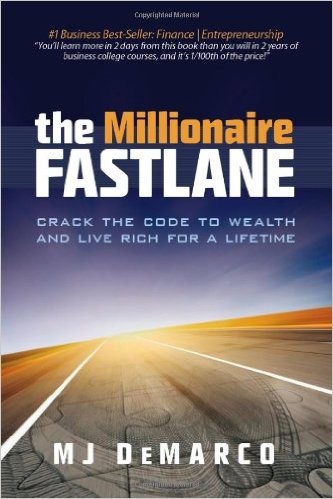

Everyone talks about the first million. Nobody talks about the first hundred thousand — which is strange, because it's the only number that actually changes your life. A million is abstract. A hundred thousand is the moment you stop wondering if this is real.
I've watched hundreds of solopreneurs cross this threshold. The ones who do it in 12-18 months share one trait that has nothing to do with talent, luck, or choosing the right niche. It's simpler than that — and harder.
They do one thing. They do it for longer than feels comfortable. And they refuse to start anything else until the first thing compounds.
The $100K Shift
Something breaks at six figures. Not your schedule — your identity.
At $40K, you're "trying something." At $70K, you're "making it work." At $100K, you're a business. Not because the IRS says so or because you filed an LLC — but because you've proven, with receipts, that you can generate and capture value alone. No employer. No safety net. No permission.
This is the commercial equivalent of Emerson's self-reliance. You stood in the market and said "here's what I do, here's what it costs" — and enough people said yes to fund your entire life. That's not a financial milestone. That's an identity shift.
The second $100K takes half the time. The third feels inevitable. But only if you get the first one right.
Insight
The first $100K doesn't change your bank account as much as it changes your internal operating system. You stop asking "can I?" and start asking "how fast?" That psychological upgrade is worth more than the money.
Three Paths (And Their Real Timelines)
Let's kill the fantasy. There is no secret business model that prints $100K in 90 days for beginners. But there are three proven paths, each with honest timelines:
Path 1: Services (6-12 months)
The fastest route. You sell your expertise directly: consulting, freelancing, coaching, done-for-you work. The math is simple:
10 clients × $10,000 = $100K.
20 clients × $5,000 = $100K.
4 retainers × $2,100/month = $100K.
Yes, it trades time for money. Yes, it's not "scalable." Nobody cares. Scalability is a year-two problem. Year one is about proof — proof that people pay you, proof that you can deliver, proof that the market wants what you offer. Services give you that proof fastest.
The mistake most solopreneurs make here: pricing too low. A $500/month client and a $5,000/month client often require the same amount of emotional energy. Choose the higher number.
Path 2: Productized Services (12-18 months)
Fixed scope. Fixed price. Repeatable delivery. "I build one landing page per week for SaaS companies. $3,500. Here's what you get."
This is the bridge between freelancing and freedom. You're still trading time, but the boundaries are clear, the margins are higher, and clients self-select. No more custom proposals. No more scope creep. You defined the box — they fit in it or they don't.
4-6 productized clients at $2-5K/month gets you there. Build your business plan around this model and watch how clean the numbers get.
Path 3: Digital Products (18-36 months)
Courses, templates, software, communities. The dream: income while you sleep. The reality: 12-18 months of building, testing, failing, and iterating before it generates meaningful revenue.
This path works best after you've done services. Why? Because services teach you exactly what people pay for, what language they use, and what problems keep them up at night. That intelligence makes your product 10x better than something built in a vacuum.
The honest truth: almost everyone should start with services, build capital and conviction, then productize. The people who skip to products first usually spend 2 years building something nobody wants.
The Focus Tax
Here's the math nobody shows you:
Every new idea you pursue before the first one works costs you approximately 3 months. That's 3 months of lost momentum, rebuilt context, new learning curves, and reset relationships. Four "pivots" in year one = twelve months of motion, zero months of progress.
I call this the Focus Tax. And it's the single biggest reason solopreneurs take 3-4 years to hit $100K instead of 12-18 months.
The compound effect of 1% daily improvement only works if you're improving the SAME thing every day. Switching directions resets the counter to zero. Every. Single. Time.
The unsexy secret of every fast solopreneur: they did one thing for longer than felt comfortable. While everyone else was "exploring opportunities" and "pivoting to market fit," they were sending their 200th cold email for the same offer. And then it clicked.
Insight
Boredom is a signal you're on the right track. If your business still feels exciting after 6 months, you're probably not going deep enough. The money is in the repetition — not the novelty.
The Monthly Math
$100K/year = $8,333/month. That's it. Stop looking at the annual mountain and look at the monthly hill.
Here's what $8,333/month actually looks like across different models:
Consulting: 2 clients at $4,200/month. Two. That's a Tuesday and a Thursday dedicated to each. The rest of the week is yours — for prospecting, thinking, or building what comes next.
Productized service: 3 clients at $2,800/month. Defined scope means you know exactly how many hours each takes. No surprises.
Freelancing (project-based): 1 project at $8-10K/month. One. Finish it, invoice it, find the next one. Keep a pipeline of 3 and you never have a dry month.
Digital product: 17 sales at $500/month. Or 84 at $100. The volume game is harder to start, but once it works, it works while you're asleep.
Notice something? None of these require thousands of customers. None require going viral. None require venture capital. They require a small number of right people finding you and saying yes.
Calculate where you stand now with our net worth calculator, and work backward from $8,333/month to today.

The path to $100K isn't a sprint. It's a solo climb — one focused step at a time until the view changes.
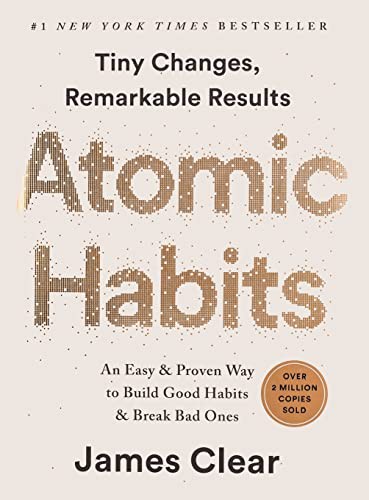
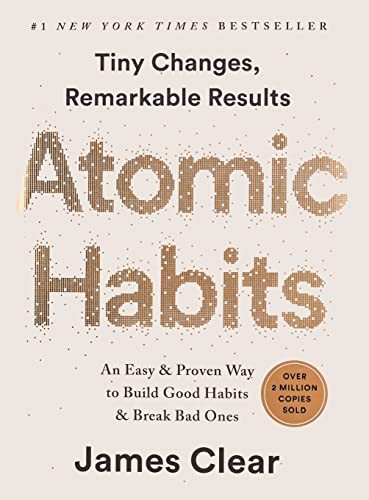
James Clear on why compounding beats intensity: the small, repeated systems that turn one focused offer into six figures.
What to Ignore Until $100K
The solopreneur's greatest enemy isn't competition. It's premature optimization.
Ignore until $100K:
Branding agencies. Fancy websites. Business cards. Networking events where everyone is selling and nobody is buying. Podcasts about podcasting. Logo redesigns. "Content strategy" that produces nothing sellable. Social media managers. CRM systems with 47 automations and zero leads.
Focus until $100K:
One offer. One audience. One channel to reach them. One revenue machine. Repeat until it works. Your tech stack should be minimal — only tools that directly help you deliver or sell. Everything else is cosplaying as a business owner.
Build ugly. Sell relentlessly. Refine later. The most profitable solopreneurs I know had embarrassing websites when they hit six figures. Nobody cared — because the work spoke louder than the brand.
The Quarter-by-Quarter Path
Q1 (Months 1-3): Validate
Pick one offer. Define it. Price it higher than feels comfortable. Reach out to 10 people per day. Get your first 2-3 paying clients. Learn what they actually value (it's never what you think). If you can't get a single client in 90 days, the offer is wrong — not you.
Q2 (Months 4-6): Systematize
You have clients. Now remove yourself from the chaos. Create delivery templates. Set boundaries. Raise prices for new clients. Build a simple referral loop. Revenue target: $3-5K/month.
Q3 (Months 7-9): Compound
Referrals start. Past clients come back. You've done this enough times to be fast. Raise prices again. Start saying no to bad-fit clients. Revenue target: $6-8K/month.
Q4 (Months 10-12): Lock
You're at or near $8,333/month. Convert project clients to retainers. Build a waitlist. Document your process for the eventual hire or productization. You've done it — not theoretically, but with real receipts.
The Compound After
Once you hit $100K, physics changes. Not metaphorically — literally.
Referrals come without asking. Your reputation precedes your cold outreach. Past clients return with bigger budgets. You've refined your process enough that delivery takes half the time it used to. The gap between revenue and effort widens.
The first $100K was proof. The second is momentum. The third is inevitability.
But here's what nobody tells you: the skills that get you to $100K (hustle, direct outreach, saying yes to everything) are different from the skills that get you to $300K (systems, positioning, saying no to most things). Be ready to evolve.
The wealth building blueprint shifts after six figures. You stop optimizing for revenue and start optimizing for leverage — upgrading your financial operating system from survival mode to growth mode.
And when you need perspective on what this journey actually looks like — the patience, the compounding, the refusal to quit before the curve bends upward — talk to those who walked this path centuries before you.
The first $100K isn't the destination. It's the proof that you don't need permission, a team, or a lucky break.
You just need one offer, one audience, and more patience than feels rational.
Start there. Stay there. And watch what compounds.
This piece is part of the solopreneur resource center — essays, references, and free tools for building a one-person business.