
Everyone frames this as a personality test. "Are you a leader or a lone wolf?" That's the wrong question. The right question is: what machine do you want to spend the next 5 years building — and what does it cost you to run it?
I've watched this decision paralyze smart people for months. They read about solopreneurs making seven figures and think: am I leaving money on the table by not raising? Then they read about startup founders working 90-hour weeks for a salary they could've earned at a job, and think: am I insane for wanting to hire?
The confusion comes from framing it as a choice between ambition levels. It's not. Both paths lead to wealth, freedom, and impact. They just run on completely different operating systems. And choosing the wrong one for your constraints is how you end up five years in, miserable, wondering where the exit is.
The False Binary
The internet loves clean categories. Solopreneur = small, lifestyle, capped. Startup = big, ambitious, unlimited. This is nonsense.
A solopreneur running a $2M/year SaaS with AI handling customer support is not "thinking small." A startup founder burning through $500K in runway with 6 employees and no revenue is not "thinking big." The labels describe the structure, not the outcome.
What you're actually choosing between is two different architectures:
Architecture A: Startup
Optimize for scale. Accept complexity, dilution, and dependency in exchange for the possibility of exponential outcomes. You're building a machine that could run without you — but requires many others to run at all.
Architecture B: Solo
Optimize for leverage. Accept a ceiling (maybe) in exchange for ownership, simplicity, and cash flow from day one. You're building a machine that only needs you — and AI makes "you" surprisingly capable.
Neither is superior. But one of them matches your life, your risk tolerance, and your market better than the other. The framework below helps you figure out which.
The Startup Machine
Let's be honest about what you're signing up for. Not the pitch deck version — the lived version.
Year 1: You're fundraising. That means 3-6 months of pitching before you build anything real. You're selling a vision to people who've heard 200 visions this month. If you succeed, you've given away 15-25% of your company for enough runway to hire 2-3 people and prove something works.
Year 2-3: You're managing. Half your time is people — hiring, aligning, mediating, motivating. The other half is metrics — showing investors the graph goes up. You're building the product in the gaps between meetings. You now answer to a board.
Year 4-7: You either hit escape velocity or you're in the grind — another round, more dilution, more pressure, the same pitch rewritten for the tenth time. The math: 90% of funded startups fail. 9% return modest outcomes (often less than the founders would've earned as employees). 1% change everything.
The upside is real. That 1% is life-changing — hundreds of millions, cultural impact, legacy. But the expected value calculation is brutal unless you genuinely believe you're in that 1%. And statistically, everyone believes that.
What you're trading: time, ownership, control, simplicity, and often your health. What you're buying: the possibility of an outcome so large it justifies the sacrifice.
The Solo Machine
Now the other architecture. Again, honestly — not the Twitter fantasy version.
Month 1: You're building and shipping. No fundraising, no pitch decks, no waiting for permission. You have an idea, you build a plan, and you start selling. Revenue can happen in week one if your offer is clear.
Month 3-6: You've found something that works — or you've pivoted twice (which costs nothing when it's just you). You're making $5-15K/month. Overhead is $200-500. You keep 80%+ of everything.
Year 1-3: You're optimizing. Systems, automation, AI handling the repetitive work. You're not managing people — you're managing systems. The ceiling depends on your market: some solo operators cap at $200K/year, others break $2M.
The downside: some markets genuinely can't be won alone. If you're building a social network, a marketplace, or hardware, solo isn't an option. If you're building software, services, content, education, or commerce — it probably is.

Same destination. Different terrain. The question is which path costs you less to walk.
The Decision Framework
Stop asking "which is better?" Start asking these:
1. Do you want to manage people or systems?
This isn't about introversion. It's about what energizes you. Some people come alive in a room full of humans solving problems together. Others come alive alone at 2 AM when the system they built just handled its 1000th customer without them touching anything. Neither is wrong. But choosing the wrong one means you'll hate your Tuesdays.
2. Is your market winner-take-all or fragmented?
If you're building in a market where the #1 player gets 80% of the value (social networks, marketplaces, search engines) — you need speed, capital, and scale. Solo won't work. If your market is fragmented — thousands of providers, no monopoly possible (consulting, SaaS niches, education, local services) — solo is perfectly viable. Maybe optimal.
3. Does your product require $10M to build, or $500?
Hardware, biotech, deep tech, regulated industries — you need capital before you have revenue. That's a startup by necessity, not choice. But in 2026, the number of products that require capital to build has collapsed. AI can build what used to take a team. If your product can be built for $500 and a weekend, raising $2M for it is a choice — not a requirement.
4. What's your relationship with risk?
Startup risk is binary: you succeed big or you fail completely. The middle outcome (acqui-hire, modest exit) often leaves founders feeling like they wasted years. Solo risk is gradual: you can always make some money. You can't go to zero unless you quit. The question is: do you want ruin risk (high upside, possible wipeout) or slow risk (steady progress, capped upside)?
5. Where do you want to be at 40?
The startup path at 40 looks like: either you won (rare) or you're on startup #3 still trying to find the big one. The solo path at 40 looks like: you've built 2-3 income streams over a decade, you own everything, you work 4-hour days, your net worth grew slowly but it's entirely yours. Which picture makes you feel something?
The 2026 Variable: AI Changed the Math
This framework would've looked different in 2020. Back then, a solo operator was genuinely limited — you could only do what one human brain and two hands could produce. The ceiling was real.
In 2026, that ceiling shattered. One person with the right AI stack can:
- Write, design, and ship software without a team
- Handle customer support for thousands of users
- Produce content at the pace of a 10-person editorial team
- Analyze data, run experiments, and optimize without a data scientist
- Generate legal docs, financial models, and marketing copy on demand
The practical consequence: the threshold for "you need a startup" moved dramatically upward. Problems that used to require 10 people now require one person and the right tools. This doesn't mean startups are dead — it means the default choice shifted. In 2020, solo was the exception. In 2026, solo is the starting point. You scale to a team only when you've proven you need one.
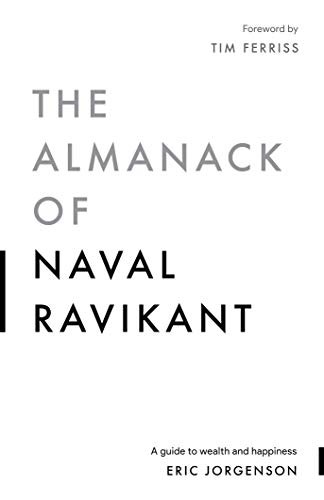
Naval Ravikant on leverage as the modern printing press — how one person, well-equipped, now rivals a funded team.
Franklin built an empire with a printing press and relentless self-improvement. The modern equivalent is a laptop and AI. The principles haven't changed — the leverage has.
The Hybrid Path Nobody Talks About
Here's what I actually recommend to anyone asking me this question: start solo.
Not because solo is inherently better. Because it's reversible.
You can always raise money later. You can always hire later. You can always scale later. But you cannot un-raise. You cannot un-hire (easily). You cannot un-scale without destruction.
The solo-first approach is a risk reduction strategy disguised as a business model. You validate with real revenue, not investor faith. You learn your market by selling in it, not by presenting about it. You build skills — every skill, from sales to product to ops — because there's no one else to do them.
Then, if the market demands scale and you've proven it does with real numbers — you raise. From a position of strength. With revenue. With leverage. Not hat-in-hand hoping someone believes your slide deck.
Price it yourself first. Sell it yourself first. If it works alone, imagine what it does with fuel. If it doesn't work alone, no amount of funding would've saved it.
The reversal test: Can you go from startup back to solo? Almost never — investors won't allow it, employees depend on you, the structure is locked. Can you go from solo to startup? Anytime. That asymmetry is the argument.
Make the Decision
You don't need more information. You need to be honest about five things: what energizes you, what market you're in, what you can build alone, what risk you can stomach, and what you want your life to look like in a decade.
If you answered "people, winner-take-all, expensive product, ruin risk is fine, I want to be famous" — go raise. Build the startup. Commit fully.
If you answered "systems, fragmented market, I can build it now, steady growth, I want freedom" — start solo. Build the machine. Own every piece of it.
If you're somewhere in between — start solo anyway. You lose nothing by proving the idea works with your own hands first. And you gain something no pitch deck can buy: certainty.
The decision isn't which path is bigger. It's which path is yours.
This piece is part of the full solopreneur resource hub — essays, references, and free tools for building a one-person business.
🚀 Starting a business? Use our free Business Name Generator to find a memorable, brandable company name in seconds.