
There is a quiet revolution happening in plain sight. While corporations optimize headcount and startups chase funding rounds, a growing class of builders is proving that the most dangerous business unit in 2026 is a single person with the right systems.
This isn't freelancing with a LinkedIn rebrand. This isn't the "hustle culture" of 2019 dressed up in new language. Something structurally shifted. The tools matured. The costs collapsed. And the people who noticed are building revenue machines that would have required a full team eighteen months ago.
This is the operating manual for that shift.
The Inflection Year
Every decade has a moment where the economics of building permanently change. In 2006, it was cloud computing. In 2012, it was mobile. In 2020, it was remote work infrastructure.
In 2026, it's this: AI became infrastructure.
Not a toy. Not a curiosity. Not a tool you use once for a blog post and forget. Infrastructure — the way electricity is infrastructure. The way the internet became infrastructure. Something you build on top of, not something you experiment with.
The data already proves it. Solo founders with AI are outperforming funded teams of ten. Not in theory. In revenue. In speed. In customer acquisition. The coordination costs of teams — meetings, misalignment, management overhead — are now a liability, not an asset.
Simultaneously, the cost of the solopreneur stack collapsed to near zero. Design tools, automation platforms, payment processing, AI assistants, distribution channels — the best tools are either free or nearly free. What cost $15,000/month in SaaS and contractors in 2022 now costs $200 and your attention.
This isn't a trend. It's a permanent restructuring of who can build what, and how fast.
The Mental Shift: Employee → System-Builder
Here's where most people fail before they start.
They leave their job. They call themselves a solopreneur. And then they replicate employment — except now they're both the boss and the employee, working more hours for less money, with no benefits and infinite anxiety.
That's not a solopreneur. That's a hostage.
The real shift is architectural. You stop asking "what should I do today?" and start asking "what should I build today that works without me tomorrow?" Every hour has two possible uses: production (doing the work) or construction (building the system that does the work). The employee mindset defaults to production. The solopreneur mindset compounds through construction.
Consider: a freelance designer who takes client projects is trading time for money. A solopreneur who builds a design template system, automates delivery, and lets AI handle client intake has built a machine. Same skills. Completely different architecture. One earns linearly. The other earns while sleeping. The path to your first $100K depends entirely on which architecture you choose.
The identity shift is the hardest part. You are not your labor anymore. You are the architect of systems that produce value. The moment you internalize this — truly internalize it — everything downstream changes.
Insight
The question is never "how do I do this faster?" The question is "how do I make this happen without me?" Every task you touch should be touched for the last time.
The Leverage Architecture
A one-person empire runs on four pillars. Remove any one and you're back to freelancing. Stack all four and you become unreasonably effective.
1. AI — Your Intelligence Layer
AI isn't your assistant. It's your department. In 2026, a single person uses AI as their research team, copywriting department, data analyst, customer service rep, and strategy consultant — simultaneously. Not in some futuristic sense. Right now. Today. The solopreneur who masters AI as a creation engine has a cognitive advantage that no amount of hiring can replicate.
2. Automation — Your Time Layer
Every repeatable process gets automated. Email sequences. Invoice generation. Client onboarding. Social distribution. Lead scoring. The boring parts run themselves. Your job is to build the automation once, test it, and never think about it again. A mature solopreneur operation runs 40+ automations silently in the background while they focus on the one or two things that actually require human judgment.
3. Content — Your Distribution Layer
Content is not marketing. Content is compounding distribution. Every article, video, or post you publish works for you forever. It attracts people while you sleep, builds trust before you've spoken a word, and positions you as the obvious choice in your space. The solopreneur doesn't "do marketing." They build a distribution engine that compounds.
4. Product — Your Scalability Layer
Services don't scale. Products do. But first, you need to price what you have correctly. The end game for every solopreneur is a productized offer — something with fixed costs, infinite margin at scale, and zero incremental effort per sale. Digital products. Templates. Software. Courses. Memberships. Communities. The vehicle matters less than the principle: decouple your income from your time.
When all four pillars are active, your day looks radically different. You spend the morning on the one creative task that moves the needle. AI handles research and drafts. Automations handle operations. Content distributes itself. Products sell without your involvement. You might work four focused hours and outproduce your former team of five working eight.

The solopreneur doesn't work harder. They control which systems get more energy — and which ones run themselves.
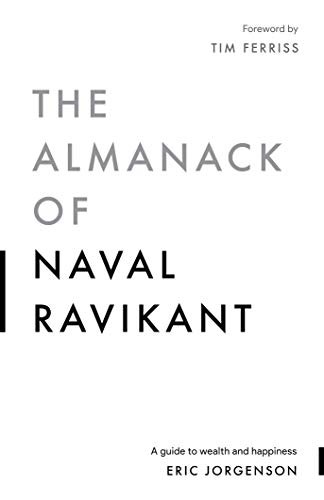
Naval Ravikant on the four leverages — labor, capital, code, and media — that let one person build what once required a company.
The Discipline of One
Here's the paradox nobody tells you: the hardest part of being a solopreneur isn't doing the work. It's not doing the work.
When you're the CEO, CFO, CMO, and intern simultaneously, every direction screams for attention. The invisible math of small decisions compounds against you. Decision fatigue hits by noon. Context-switching murders your deep work capacity. And the absence of external structure — no meetings, no deadlines, no boss — can feel like freedom right up until it feels like drowning.
The solution isn't discipline in the motivational-poster sense. It's system design.
The Operating Rhythm:
- Theme days — Monday is strategy. Tuesday is creation. Wednesday is outreach. Don't mix. Context-switching is the silent killer.
- The 3-task ceiling — Each day has exactly three outcomes. Not ten. Not "as much as possible." Three. If you completed them, the day was successful regardless of what else happened.
- The weekly audit — Thirty minutes every Friday: what produced results? What was busywork disguised as productivity? Kill the busywork ruthlessly.
- Boundaries as architecture — Working hours exist. Off hours exist. The solopreneur who works "whenever" works always — and burns out in eighteen months.
Burnout doesn't come from hard work. It comes from unstructured work — from the feeling that everything is urgent, nothing is finished, and the machine never stops. Build the machine with an off switch. That's not laziness. That's engineering.
Insight
Constraint creates output. The solopreneur who sets aggressive limits on their time produces more than the one who "works all the time." Parkinson's law applies to empires too: work expands to fill the time available. Compress the time. Watch the output intensify.
When to Stay Solo, When to Scale
Not every business should grow past one person. This is the heresy that Silicon Valley won't tell you.
Some businesses are better as one-person operations. More profitable. More enjoyable. More resilient. The moment you hire, you inherit coordination costs, management overhead, HR complexity, and a fundamentally different job description. You stop building and start managing.
Here's the decision framework:
Stay solo if:
- Your revenue ceiling as one person exceeds your lifestyle needs
- The work you'd delegate is the work you actually enjoy
- Your business model scales through leverage (content, product, automation) not labor
- You value autonomy more than empire — and you're honest about that
Consider scaling if:
- You're turning away revenue because you physically cannot deliver
- The bottleneck is genuinely labor, not systems
- You've exhausted automation and AI options for the constraint
- You want to build something that outlives your daily involvement
Most solopreneurs who hire too early aren't solving a real constraint — they're solving a feeling. The feeling of being overwhelmed. But overwhelm is usually a systems problem, not a headcount problem. Before hiring, ask: have I automated everything that can be automated? Have I eliminated everything that doesn't directly produce revenue? Have I pivoted my model toward leverage rather than labor?
If yes to all three and you're still constrained — hire. If not, you don't need a team. You need a better system.
The Solopreneur's Unfair Advantage
Here's what corporations will never admit: speed is worth more than resources.
A solopreneur can go from idea to launched product in a weekend. A company takes six months and a committee. A solopreneur can pivot their entire business model on a Tuesday afternoon. A company writes a proposal about writing a proposal.
In 2026, speed is the competitive advantage. Markets move faster than teams can coordinate. Customer needs shift faster than product roadmaps can adapt. The solopreneur doesn't win despite being one person — they win because they're one person. No consensus needed. No alignment meetings. No stakeholder buy-in. Just decision, execution, iteration.
Add AI to that speed advantage and the math becomes absurd. One person moving fast with AI leverage can test ten ideas in the time it takes a funded startup to validate one. The failure rate doesn't matter when your iteration speed is 10x everyone else's.
This is the real operating manual: build systems, not tasks. Build leverage, not headcount. Build speed, not consensus. And understand that in 2026, the most powerful business in the world might be run by someone no one has ever heard of, from a laptop, in a room with one chair.
Start with what you have. Launch with zero capital. Build your strategic plan. Know your financial baseline. Study the operators who've done it before you — the legends who built empires from nothing.
The math has never been more in your favor. The only question left is whether you'll build the system — or keep being employed by someone else's.
This piece is part of the complete solopreneur resource center — essays, references, and free tools for building a one-person business.