
You don't need 47 subscriptions. You don't need the tool someone recommended on a podcast last week. You need 7 layers — maybe 8 — and you need them to talk to each other. That's it. That's the whole game.
I see solopreneurs fall into two traps. Trap one: they overspend. $800/month in SaaS they barely touch because some guru said they "need" it. Trap two: they underspend and do everything manually — copying data between tabs, sending invoices by hand, posting to social one platform at a time. Both are failures of architecture.
The 2026 solopreneur stack is not a shopping list. It's a system architecture — each layer serves a function, each tool connects to the next, and the connections do the work you used to do manually. Here's the blueprint.
The Architecture (Not a List)
Every one-person business needs seven layers. Not seven tools — seven functions. The specific tool you pick matters less than whether it connects to the rest of your stack without friction.
The layers:
- Brain — AI (thinking, drafting, research, strategy)
- Creation — where you make things (content, design, product)
- Communication — email, client conversations, support
- Automation — the glue that connects everything without you
- Distribution — how you reach people (social, SEO, newsletter)
- Payments — how money moves in and out
- Analytics — how you know what's working
One tool per layer. Two maximum. If you have three tools doing the same job, you have a mess, not a stack. Automation eliminates redundancy — it doesn't create it.
Layer 1: The Brain (AI) — $20-40/month
This is your thinking partner, your first draft machine, your research department, and your strategy consultant. In 2026, this isn't optional. It's the layer that makes a single person viable where five were required before.
What it replaces: A research assistant, a junior copywriter, a strategist you'd pay $150/hour for.
What you actually use it for daily:
- First drafts of everything (emails, posts, proposals, product descriptions)
- Research and synthesis (market analysis, competitor review, summarizing documents)
- Strategy sessions (brainstorming, pressure-testing ideas, finding blind spots)
- Code and technical tasks (if you build digital products)
The best AI tools are either free or nearly free. A $20/month subscription to a frontier model gives you cognitive leverage that didn't exist two years ago. This is the highest-ROI $20 you'll ever spend.
Layer 2: Creation — $0-30/month
Where you make the things your business sells or publishes. This used to require a designer, a developer, and a content writer. Now it requires you and the Brain layer working together.
What it replaces: A graphic designer ($50-100/hour), a web developer ($75-150/hour), a content writer ($0.10-0.50/word).
The 2026 creation stack:
- Design: Canva or Figma (free tier handles 90% of solopreneur needs)
- Website/Landing pages: A simple builder or static site. Don't overthink this.
- Content: AI draft → your edit → publish. The creation process is AI-assisted, not AI-replaced. Your voice, your judgment, AI's speed.
- Digital products: Notion, Gumroad, or a simple PDF. The container matters less than what's inside.
The trap here is perfectionism. You don't need pixel-perfect design. You need shipped. A good-enough product live today beats a perfect product in your head next month.
Layer 3: Communication — $0-15/month
How you talk to clients, prospects, and your audience one-on-one. This is NOT marketing (that's Distribution). This is the inbox, the DMs, the support emails.
What matters: Speed, templates, and not letting things fall through cracks.
- Email: Gmail or whatever you use. The tool doesn't matter. What matters is templates for your 5 most common replies and a system for follow-up.
- Client messaging: Keep it in ONE place. Don't scatter across Slack, email, DMs, and WhatsApp. Pick one channel per client and enforce it.
- Support: If you're small enough, email works. If you're scaling, a simple helpdesk. Don't overcomplicate this until volume demands it.
The solopreneur's communication advantage: you ARE the brand. Every reply comes from you. That's a trust asset no corporation can replicate.
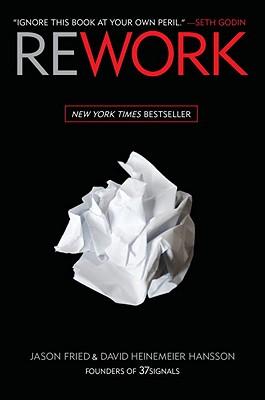
The 37signals founders on doing more with less — the minimalist operating philosophy behind a lean stack.
Layer 4: Automation — $0-30/month
The glue. The invisible machinery. This is the layer that makes you feel like you have a team when you don't.
What it does: Connects your other layers without you touching anything. When X happens, Y happens automatically. When a customer buys, they get an email, their access is provisioned, and your spreadsheet updates — all without you lifting a finger.
What to automate first:
- Client onboarding (welcome email → access → intake form — triggered by payment)
- Content distribution (publish once → posts to all platforms)
- Invoice and payment reminders
- Lead capture → email sequence
- Social posting on schedule
A mature solopreneur runs 20-40 automations silently. Each one saves 5-30 minutes per occurrence. That compounds into hours reclaimed every week — hours you spend on the work that actually requires your brain.
Insight
Every time you do something for the second time, ask: "Can this be automated?" If yes, automate it immediately. Don't wait until it's painful. By then you've already wasted dozens of hours.
Layer 5: Distribution — $0-50/month
How one person reaches thousands. This is where most solopreneurs either burn out (doing it manually) or give up (because they don't see immediate results).
The three channels that compound:
- Email newsletter: Your owned audience. No algorithm between you and them. Grows slowly but converts highest. Non-negotiable.
- Search (SEO): Every piece of content you publish works forever. The 250-door strategy — each article is a door people walk through to find you.
- One social platform: Pick ONE. Not three. Master it. Be consistent. The platform where your buyers already hang out.
Distribution is not "posting." It's building a machine that works while you sleep. Batch-create content weekly. Schedule it. Let automation handle the posting. Your job is creation, not distribution logistics.
Layer 6: Payments — $0 + transaction fees
How money moves. This should require zero thought after initial setup.
What you need:
- Payment processor (Stripe, PayPal, or Lemon Squeezy for digital products)
- Invoicing (automated — triggered by the sale or sent on schedule)
- Tax tracking (a simple spreadsheet or dedicated tool that categorizes transactions)
Don't overthink this. Stripe works. PayPal works. Pick one, connect it to your automation layer, and forget about it. The money should flow in without you manually processing anything. And make sure you're charging what your transformation is worth, not just what feels safe. Track your deductions from day one — future you will be grateful.
Layer 7: Analytics — $0
How you know what's working. Most solopreneurs either ignore analytics entirely or drown in dashboards. Both are wrong.
You need three numbers:
- Revenue — what came in this week/month
- Traffic/Reach — how many people saw your stuff
- Conversion — what percentage of those people did the thing you wanted
That's it. If revenue is up, keep doing what you're doing. If traffic is up but conversion is down, your offer needs work. If traffic is down, your distribution needs work. Three numbers tell you everything. Google Analytics (free) + your payment dashboard + 15 minutes weekly = complete visibility.
The Full Stack: $197/month
Here's what it looks like assembled:
- Brain (AI): $20-40
- Creation: $0-30
- Communication: $0-15
- Automation: $0-30
- Distribution: $0-50
- Payments: $0 (transaction fees only)
- Analytics: $0
Total: ~$60-200/month depending on your choices.
For context: hiring a part-time virtual assistant costs $1,500-3,000/month. A freelance designer costs $2,000-5,000/project. A marketing agency starts at $3,000/month. You're replacing all of them with architecture and $200.
This is what the solo founders outperforming funded teams understand: it's not about spending less. It's about spending architecturally. Every dollar goes to a layer that connects to every other layer. Nothing is orphaned. Nothing is redundant. The system works as one machine.
Insight
The best tech stack is the one you actually use every day. If a tool sits idle for two weeks, cancel it. Unused software is not an asset — it's a subscription to guilt. Be ruthless.
The Connection Map
The stack only works if the layers talk to each other. Here's how:
- Brain → Creation (AI drafts, you edit and publish)
- Creation → Distribution (publish triggers automatic social posts + newsletter)
- Distribution → Communication (new leads land in your inbox or CRM)
- Communication → Automation (reply triggers onboarding sequence)
- Automation → Payments (onboarding triggers invoice or checkout link)
- Payments → Analytics (revenue tracked automatically)
- Analytics → Brain (data informs next strategy session with AI)
It's a loop. The output of each layer feeds the input of the next. You sit at the center — not doing the work of seven people, but directing a system that does it. That's the difference between a solopreneur and a freelancer drowning in tasks.
Build your system. Start with the Brain layer — that's the first move if you're starting from zero. Add one layer per week. In two months you'll have the full stack running. In three months you'll wonder how you ever operated without it. And with the right stack running, your first $100K becomes a matter of months, not years.
Map your plan. Know your numbers. Learn from the builders who came before you. The tools exist. The cost is trivial. The only variable left is whether you'll build the system — or keep doing everything by hand.
This piece is part of the solopreneur resources and tools hub — essays, references, and free tools for building a one-person business.