
I didn't know I was scared until I wasn't anymore. The day my savings hit five figures, nothing external changed. Same job. Same apartment. Same life. But something in my chest released — a tension I'd been carrying so long I thought it was just... me.
It wasn't me. It was the absence of a cushion. The constant proximity to zero. The knowledge that one bad month — one car repair, one layoff, one dental bill — would unravel everything.
$10,000 didn't make me rich. It made me calm. And calm changed everything else.
The Sound of Nothing
The first thing $10K gives you is silence.
If you've been broke — actually broke, not "I can't afford that restaurant" broke, but "I might not make rent" broke — you know the sound. It's a low hum in the back of your skull. It's there when you wake up. It's there when someone suggests splitting a bill. It's there when your phone buzzes and you hope it's not your bank.
You stop hearing it because it never stops. You think it's just how life sounds.
Then one day you check your savings and the number has a comma in it. And the hum stops. Not gradually. Just — gone. Like a fridge you didn't know was running until it clicks off and the room is suddenly, impossibly quiet.
That silence is what $10K buys. Not a thing. Not a trip. Not an investment. Silence.
The Way You Walk Into Rooms
When you have nothing saved, you negotiate from a position of need. You take the first job offer because you can't afford to wait for the second. You accept the low raise because quitting means zero income next month. You stay in situations that shrink you because leaving costs money you don't have.
With a cushion — even a modest one — your posture changes. Literally.
You sit differently in interviews. You speak slower. You ask harder questions. You say "I need to think about it" instead of "yes, thank you, anything." Not because you're richer. Because you're not trapped. And people can feel the difference between someone who's choosing to be there and someone who has to be there.
$10K in the bank is not wealth. It's leverage. Quiet, invisible leverage that changes how the world responds to you — because it changes how you respond to the world.
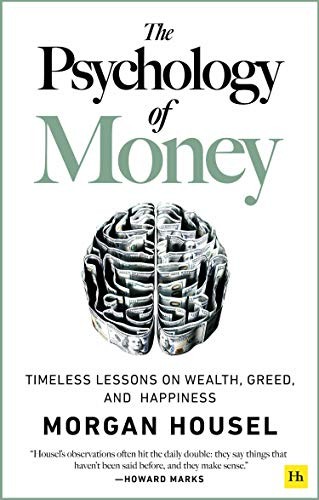
Housel on what money actually buys — not status, but control over your time and peace of mind.
The Decisions You Finally Make
Everyone has a list. The things you'd do "if you could afford to." The job you'd leave. The city you'd try. The idea you'd test. The relationship you'd exit. The conversation you'd finally have.
Most of those decisions don't actually cost $10,000. They cost the security of knowing you won't starve while the transition happens. They cost a runway — three months, maybe four — where you can afford to be in motion without income.
$10K doesn't make those decisions for you. It makes them possible. And "possible" is a completely different psychological state than "impossible." The decisions you make when something is possible are fundamentally different from the ones you make when it's not.
You stop asking "can I afford to?" and start asking "do I want to?" That's a different life.

The goal isn't money in an account. It's this: a mind quiet enough to rest.
The Person Your Kids See
If you have family — kids especially — this part matters more than all the others.
Children don't understand money. They don't know what a savings account is. They don't know about interest rates or investment vehicles or emergency funds. But they understand tension. They understand the tight jaw. They understand the difference between "yes, let's do that" and the heavy pause before "we'll see."
A parent in survival mode is a different person than a parent with breathing room. Not better. Not worse. Different. More patient. More present. More likely to say yes to the small things — the ice cream, the Saturday movie, the school trip — that kids remember for the rest of their lives.
$10K buys them a different version of you. And they won't know what changed. They'll just feel it.
The Compound Effect (Not Financial)
Here's what nobody tells you about saving your first $10K: the money compounds, sure. But the identity compounds faster.
Before, you were someone who couldn't save. After, you're someone who did. That shift — from "I'm the kind of person who lives paycheck to paycheck" to "I'm the kind of person who has $10K in the bank" — rewrites everything downstream.
The second $10K is easier. Not because you earn more. Because you believe differently. You've proven to yourself that you can. And a person who can makes different daily choices than a person who can't. It's not discipline. It's identity. Your brain literally operates differently when it's not in survival mode.
The first $10K isn't a financial milestone. It's a psychological one. Everything after it is easier — not because the math changes, but because you do.
The Real Number
Maybe for you it's not $10K. Maybe it's $5K. Maybe it's three months of rent. Maybe it's enough to cover one emergency without borrowing.
The number doesn't matter as much as what it represents: the line between reacting and choosing. Between "I have to" and "I want to." Between running and walking.
Figure out your number. The one where you'd exhale. Where the hum would stop. Where you'd sit differently in a chair.
Then go get it.
The Truth
Money doesn't buy happiness. But the absence of money buys anxiety, bad decisions, and a smaller life. The first $10K isn't about getting rich. It's about getting free.
Ready for the how? How to Save $10,000 in One Year on a Low Income →