
You were raised on a simple rule: debt is the enemy, savings are safe. It's clean, it's moral, and inflation quietly turns it upside down. The dollar you tucked away loses value while you sleep. The fixed-rate loan you took on an asset gets lighter every year — paid down not by you, but by inflation itself. Nobody writes that sentence plainly. So I will.
Inflation Isn't a Price Hike. It's a Transfer.
We talk about inflation like it's weather — "prices went up." That framing hides what's actually happening. Inflation doesn't destroy money. It moves it. Every point of inflation quietly takes purchasing power from one group and hands it to another.
Who loses? Anyone holding cash, and anyone who is owed money at a fixed rate — the saver, the lender, the bondholder. Their dollars are worth less when they finally spend or collect them.
Who wins? Anyone who owes money at a fixed rate against a real asset — the borrower-owner. They repay tomorrow's loan with yesterday's shrinking dollars, while the asset the loan bought rises with the very inflation eroding everyone else's cash.
That's the whole engine. Not a tide that lifts all boats — a pump. It empties one pocket and fills another. The uncomfortable part is which pocket you've been taught to stand in.
The Trade You Were Trained to Avoid
Picture it in real numbers. You borrow $100,000 at a fixed rate today and buy a real asset — property, a productive piece of a business, something that tracks the cost of living. Ten years pass at 3–4% annual inflation.
On paper, you still owe roughly $100,000. But those dollars now buy what about $70,000 bought a decade ago. You're repaying the bank with melted money. Meanwhile the asset the loan paid for didn't sit still — it inflated right alongside everything else.
Two gifts at once: your debt shrinks in real terms, and your asset grows in nominal terms. The saver who did the "responsible" thing — pile cash in a low-interest account — got the mirror image. Their money shrank and bought nothing new. Same decade, same inflation, opposite outcome. The only difference was which side of the pump they chose.
Why This Feels Wrong (And Isn't)
Everything in your upbringing screams that this is reckless. Debt is a trap. Owing money is weakness. And for most of the debt most people carry, that's completely true. The instinct isn't stupid — it's just untargeted.
The lesson was never "all debt is good." It's that debt is a tool, and inflation changes which way the tool cuts. A fixed obligation against a rising asset is a bet that time is on your side. Inflation is time, denominated in dollars. The borrower-owner isn't gambling — they're letting the clock do the paying.
This is the same quiet truth we keep circling in our most profitable work being the work you don't do: the biggest wins compound in the background, while you're busy doing something else. A well-structured debt is one of the few obligations that works for you while you sleep — the inverse of the consumer debt that eats you alive.

The Fine Print That Keeps It Honest
Here's where every finance guru selling you "good debt" conveniently goes quiet. This mechanism only works when three things are true at the same time. Break any one, and the pump runs in reverse — against you.
1. The rate is fixed. A variable rate hands your "gift" straight back to the lender. When inflation rises, central banks raise rates, and your payment climbs with it. Fixed is what lets inflation shrink the debt without the cost chasing you. Variable means you're the saver again, just dressed as a borrower.
2. The borrowed money bought a real asset. Something that rises with inflation — property, equity in a productive business, an income-producing holding. A depreciating purchase does the opposite: the TV, the financed car, the lifestyle upgrade. Those lose value faster than inflation shrinks the loan. You get the debt without the asset. That's not the trade — that's the trap.
3. You can carry the payments. Comfortably. The whole thesis assumes you hold the position long enough for inflation to do its work. Get forced to sell at the wrong moment — a cash crunch, a rate spike you can't absorb — and the math never gets to finish. Leverage amplifies both directions. Respect it.
Miss all three and you get the cautionary tale everyone's grandparent warned about. Hit all three and you get the quiet machine the wealthy have used for generations. The difference isn't luck. It's structure. For a feel of how these levers interact over years, run our decision simulation and watch the compounding play out.
Cash Is the Only Thing Inflation Can Fully Reach
Flip the lens and the fear turns into strategy. The thing inflation erodes most reliably is idle cash. It has nowhere to hide — no appreciation, no yield that keeps pace, nothing to offset the melt. Holding large piles of cash "to be safe" is, in an inflationary world, one of the quieter ways to go backwards.
This doesn't mean spend recklessly or drown in leverage. It means understand what you're holding and why. A cushion for emergencies and opportunities — yes, always. But cash as a long-term store of wealth is a slow leak. The question isn't "how do I beat inflation?" It's "am I standing on the side of the pump that fills, or the side that empties?" We dig into that reflex in everything you know about money is wrong and how to make money love you.
What This Means for You — Starting This Week
You don't need a real estate empire to use this. You need to stop thinking of all debt as the same thing, and all cash as safe.
Look at what you owe. Is it fixed or variable? Did it buy something that appreciates, or something that decays? If you're sitting on consumer debt at 20%+, inflation doesn't help you there — that's the pump running against you, and clearing it is the highest-return move you can make. But a fixed-rate obligation tied to a real, appreciating asset you can comfortably hold? That's not a burden. That's a position.
Then look at your cash. Not the emergency buffer — the rest. The portion just sitting there "being responsible" is the portion inflation reaches first. The founders and owners who quietly build wealth aren't the ones who fear debt and hoard cash. They're the ones who learned which side of the transfer they're on — and moved there on purpose. That's the same muscle behind turning debt into seven figures over a decade and the long game in the wealth-building blueprint.
Inflation isn't coming to rob you. It's already paying someone, every single day. The only decision left is whether that someone is you.
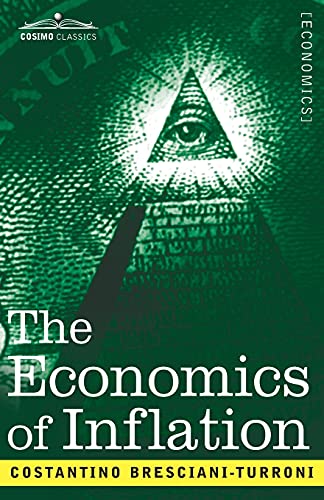
The classic study of money that lost its meaning — hyperinflation in 1920s Germany, watched up close. If you want to see the wealth transfer play out at full speed, where debtors walked away free and savers were wiped out, this is where it was written down first.
View on Amazon