
Everyone obsesses over revenue. "I did $8K last month." Nobody asks the only question that pays rent: how much did you keep? Revenue is what passes through the beaker. Margin is the band at the top you actually get to hold. And for a solopreneur, that band is wildly different depending on what you sell — which is exactly what nobody tells you in clear numbers.
So let's put real benchmarks on the table. Not "it depends." A grid of what a realistic net profit margin looks like for a one-person business, by industry — and why the gap between a 20% business and a 70% business decides your life, not your effort.
Gross vs. net: the number that actually matters
First, the trap. Most people quote gross margin (revenue minus the direct cost of delivering the thing) and feel rich. Net margin is what's left after everything — tools, taxes, fees, your own time, the invisible overhead of running solo. That's the band of green at the top of the beaker.
Here's why it matters for you specifically: a solopreneur has no team to absorb cost, but also no payroll to feed. Your margin profile is a different animal than a 10-person agency's. If you've been figuring out how to price without a sales team, this is the other half of that equation — price sets the top line, margin decides what survives the fall to the bottom.
Insight
Two solopreneurs can both earn $100K in revenue. One keeps $25K, the other keeps $70K. Same "success" on paper. Completely different lives. The difference isn't hustle — it's which business they chose to be in.
Realistic net margins by solopreneur type
These ranges reflect what a solo operator actually nets after tools, platform fees, taxes set aside, and realistic overhead — not the fantasy gross number. They draw on how these business models behave once you strip the glossy top line, the same lens we used when we mapped how long each business type takes to become profitable.
High margin (60–80% net) — you sell your mind, not stuff:
Consulting / coaching / advisory: 65–80%. Almost no cost of goods. Your overhead is a laptop and a calendar. The catch: it doesn't scale past your hours (which is why the client math to replace your salary gets tight fast).
Digital products (courses, templates, ebooks): 70–85% once built. The cost is front-loaded in making it; every sale after is nearly pure margin. This is the dream band — but only after the unpaid build.
Freelance writing / design / dev: 60–75%. Skill in, deliverable out, minimal tooling. Margin bleeds mostly through unbilled hours, not hard costs.
Middle margin (25–50% net) — you sell a service with real inputs:
Agency-of-one (marketing, SEO, ads management): 35–50%. Software subscriptions, ad spend pass-through, and contractor help eat into it.
SaaS / micro-software (solo): 40–60% at maturity, but negative for a long time while you build and acquire. The churn-and-LTV reality of the subscription model is what makes or breaks the number.
Local service (cleaning, repair, trades solo): 25–45%. Fuel, materials, insurance, equipment. Honest work, honest costs.
Thin margin (5–20% net) — you sell physical things:
E-commerce / dropshipping: 5–15%. Product cost, shipping, platform fees, ad spend, returns. Big revenue, small keep. The reason so many "six-figure stores" are quietly broke.
Handmade / artisan products: 10–25%. Materials plus the brutal cost of your own time per unit — unless you've built an imperfection premium that lets you charge for the human touch.
Reselling / retail arbitrage: 5–20%. You're renting someone else's margin.

Same revenue, different keep. The green tip is your net margin — and it's set by your model, not your hours.
Why your margin is really a lifestyle decision
Look at the beaker again. If you're in a 70% business, every $10K of revenue drops $7K into your life. In a 12% business, that same $10K drops $1,200 — you'd need to run six times the volume for the same bottom line. Six times the orders, the support, the shipping, the headaches. Same net.
This is the thing the "just scale revenue" crowd skips: high-volume, thin-margin businesses tax your time twice — once to earn, once to manage the machine. It's the quiet version of the financial paradox where chasing more revenue can actually shrink what you keep. If you want to understand where your money leaks before it reaches you, map it the way you'd map a net worth baseline — honestly, line by line.
Insight
You don't fix a thin-margin business by working harder. You fix it by changing what you sell, raising your price, or adding a high-margin layer on top (a course, a service, a premium tier). Margin is a design choice, not a willpower problem.
How to actually raise your margin as a solo
Three levers, in order of leverage. First, price. A 10% price increase on a 30% margin business is a 33% increase in profit — nothing else comes close. If raising prices scares you, read why being cheaper is the most expensive decision you'll make, and why the wrong number quietly kills businesses.
Second, cut the invisible overhead. Audit your tech stack and its real monthly cost — most solos leak 10–15% of margin on tools they half-use. And structure your business to keep more of what you earn; the tax and structure side is pure margin you're leaving on the table.
Third, shift your mix toward the high-margin band. Add a digital product. Layer advisory onto a service. Build the asset once, sell it forever — the same compounding logic behind building your first $100K. When you're deciding whether to stay solo or scale, margin should be the deciding voice in that solopreneur-vs-startup choice.
And if you're mapping it all out from scratch, run the model before you commit — a clear plan beats a hopeful one every time (build the numbers in a business plan). The founders who win the margin game think in systems, not grind — the kind of long-view thinking you can borrow from the minds who built empires on leverage, not labor.
The number to write on your wall
Not your revenue. Your net margin percentage. It's the honest measure of whether your business is a machine that feeds you or a treadmill that drains you. A solopreneur in a 60% business at $120K revenue nets more than one grinding $300K in a 15% business — with a fraction of the chaos. The whole one-person empire is built on choosing the right band of green, then protecting it like it's the only number that matters.
Because it is.
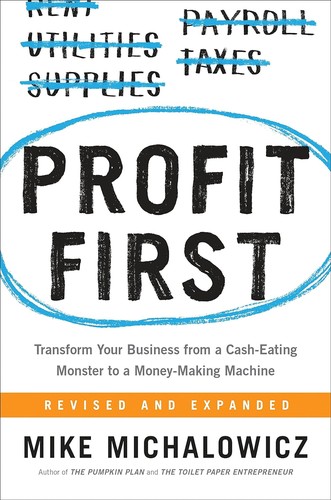
The whole book is one idea done right: pay your margin first, run the business on what's left. The exact mindset shift this article argues for — keep, don't just earn.
View on Amazon