
Here's the quiet truth most solopreneurs never hear: your healthy margin isn't something you have to go out and build. It's already in there — dissolved into the business you've already made. The revenue is flowing, the work is real, and somewhere in that mix is a band of profit you simply haven't brought to the surface yet. You don't need more hustle. You need the right reaction.
If you just read what a realistic margin looks like for your type of business and your number came in low, this is the hopeful half of that story. A low margin today is not a verdict. It's a solution that hasn't precipitated yet — and three gentle moves bring it out.
Low margin isn't a flaw. It's unfinished.
The instinct, when the keep-rate is thin, is to grind harder — more clients, more orders, more hours. But volume rarely moves margin; it just makes you busier at the same percentage. The band of green at the top of the beaker doesn't rise because you poured in more liquid. It rises because something in the mixture changed.
That reframe matters, because it's energizing instead of exhausting. You're not short on effort. You're sitting on profit that's simply still in solution — and the levers to reveal it are smaller and calmer than you think. The founders who win this game think in systems, not strain; it's the same long-view logic behind building your first $100K.
Insight
A 10% price increase on a 30%-margin business is a 33% jump in profit — with zero extra work, zero new clients, zero longer hours. That's not optimization. That's margin that was already there, finally surfacing.
Lever one: price — the fastest reaction
Price is the single most powerful lever a solo operator has, and the most under-used. You feel every objection personally when you're the whole company, so you anchor low to feel safe. But low price is the slowest leak there is — it drains margin on every single sale, forever.
Raising your price isn't aggression; it's alignment. It's charging what the work is actually worth to the person receiving it. If that still feels scary, it helps to understand why being cheaper is the most expensive decision you'll make, and how the wrong number quietly starves a business that's doing everything else right. For a one-person shop, pricing is its own craft — one you can master without a sales team at all.
Start small. Raise your next quote by 10–15%. The world rarely flinches. And the first time a client says yes at the higher number, you'll feel the margin you've been giving away for free.
Lever two: mix — add a higher band
Your business isn't one thing. It's a mix of what you sell, and each piece carries its own margin. The move here isn't to tear anything out — it's to add a layer that sits higher in the beaker and gently lifts your blended average.
Layer a digital product onto a service. Add an advisory tier on top of done-for-you work. Package what you already know into something you build once and sell forever. You're not working more — you're letting one unpaid build pay you repeatedly, which is the same compounding you'd want in any engine that turns value into currency.
What a higher band looks like, by type:
Service providers: a template, a mini-course, or a self-serve audit priced once and sold on repeat.
Makers & e-commerce: a premium line, a bundle, or a membership that carries far more margin than the base product.
Consultants: a group program or a productized offer that stops trading pure hours for dollars.
Even one high-margin offer changes the shape of the whole mixture. The blend rises because you added something richer — not because you drained yourself dry.
Lever three: focus — remove what dilutes
Here's the gentlest lever of all, and often the most freeing: stop doing the thin-margin things. Most solopreneurs carry one or two offers that eat enormous time for almost no keep — the client who negotiates everything, the service that's all cost and no joy, the stack of tools you half-use that quietly siphons 10–15% of your margin every month.
Concentration is clarifying. When you pour your energy into the richest part of your mix and let the diluting work go, two things rise at once: your margin and your sanity. There's a reason saying no is a strategy, not a loss. And keeping more of what you earn is often just structure — the tax and setup side is pure margin sitting on the table, waiting for you to pick it up.
Insight
You don't have to win all three levers at once. Pull one — raise a price, add an offer, drop a dilutant — and the whole mixture shifts. Margin responds fast when you stop trying to force volume and start changing the reaction.
See it before you commit
The beautiful part is how little this costs you. No new launch, no burnout, no gamble. Just a clearer look at a business you already run — and the quiet confidence that the profit is in there. Before you change anything, map the real numbers honestly, line by line, the way you'd set a net worth baseline, and model the new shape in a simple business plan so you can watch the margin move before it's real.
This is the same honest math behind how long each business type takes to turn profitable and the full one-person empire operating manual — profit isn't luck, it's design. And design is something you can start today.

One small reactant changes the whole mixture. Price, mix, or focus — pull one, and the margin you already had comes to the surface.
The band was always there
You didn't fail at margin. You just hadn't run the reaction yet. The healthy keep-rate you want isn't somewhere out in the market, waiting to be earned through more exhaustion — it's dissolved in the business you've already built, waiting for one of three small, kind moves to bring it up to the surface.
Raise a price. Add a richer offer. Let go of what dilutes. Any one of them, and the green band rises — not because you worked harder, but because you finally let what was already there become visible. That's the most encouraging number in business: the profit you already have.
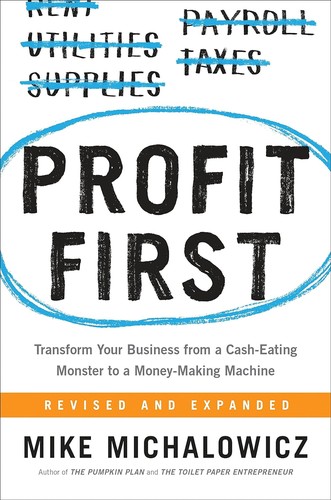
The companion idea to this whole piece: take your margin off the top first, run the business on what's left. It turns "unlock the profit you have" into a habit, not a one-time reaction.
View on Amazon