
I ran the simulation to prove the business was the smart move. It proved the opposite.
I did everything a driven person is supposed to do. I built the business. I made the bold bets. I chased the moves that felt like they mattered — the ones with a pulse, the ones you can tell a story about at dinner. Years of effort, visible and exhausting.
Then one afternoon I actually ran the numbers. I laid every path I'd taken side by side and asked a simple question: what, exactly, made me money? Not what felt important. What actually compounded into a fortune.
The answer was almost insulting. It wasn't the business. It wasn't the bets. It was a small, boring investment I'd made early and then nearly forgotten about. Quiet. Unremarkable. The thing I'd have been embarrassed to mention. It beat everything else combined — by a mile.
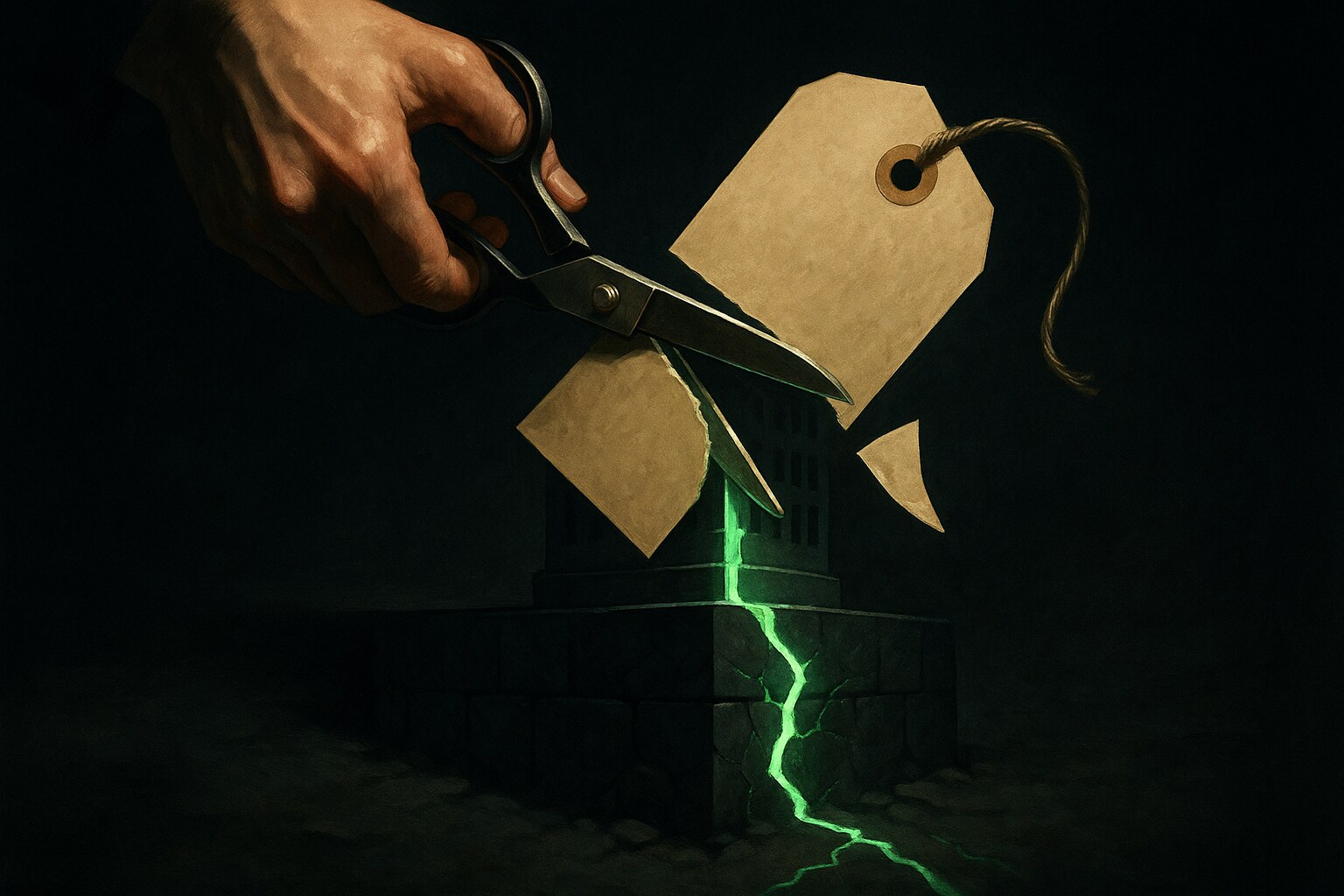
The most profitable work of my life was the work I didn't do.
Two Games, Not One
Here's what took me years to see: effort and compounding aren't the same tool pointed at the same goal. They're two completely different games, and most founders only know they're playing one of them.
Effort is linear and alive. You push, it moves. You stop, it stops. The business, the deals, the hustle — every dollar of it needs you in the room. It scales with your energy, your hours, your presence. It's the money that demands you show up.
Compounding is exponential and patient. It doesn't care about your energy at all. It needs exactly one thing effort can never provide: time. It's money that doesn't need you — it only needs to be left alone. The curve stays flat and boring for a long while, then bends into something absurd. The same shape I wrote about when I argued that the best growth is compound interest, not marketing.
These aren't competing strategies. They're different physics. And the mistake isn't choosing effort over compounding — it's not knowing you're holding two different instruments that obey two different laws.
Why Hustle Feels Like the Answer (and Quietly Lies)
Effort is seductive because it's visible. You can feel it. You close a deal, you ship a thing, you see the needle move today. It flatters the ego — "look how hard I'm working, look how much I care." Every grind gives you a dopamine receipt.
Compounding gives you nothing to feel. The boring investment doesn't text you back. It doesn't congratulate you. For years it looks like you did nothing — because, in the visible sense, you did. So we abandon it. We pull the money toward the thing that feels alive, the next bet, the next push, because sitting still feels like losing.
This is the same trap as mistaking motion for progress — the one where busy becomes a story we tell to feel important. The grind feels like the answer precisely because it's loud. The thing actually building your fortune is silent, and silence is easy to ignore.
And it's why so many people who grind the hardest end up with the least. They're playing the linear game with everything they've got, and wondering why the curve never bends.

The Real Killer Isn't Laziness. It's Interference.
Here's the part that stung the most when I saw it in my own numbers. I didn't lose the bigger fortunes by being lazy. I lost them by being too active with the wrong money.
Every time I pulled funds out to chase a better opportunity. Every time I "optimized," rebalanced, got clever, got scared and moved things around. Every time I dug up the seed to check whether it was growing — I interrupted the one process that was actually working.
Compounding has a single mortal enemy, and it isn't poor returns. It's interruption. You cannot rush it, and every time you touch it to make it go faster, you reset the clock. It's the gardener who pulls the sprout up by the roots every morning to measure the growth, and then wonders why it died.
The founder doesn't kill the golden goose by neglecting it. He kills it by trying to make it run.
The Seed You Forget Is the Seed That Grows
So here's the strange, almost unfair truth underneath both the relief and the sting: the thing that made me rich worked because I forgot about it. My neglect of it was the entire reason it survived. The money I obsessed over, I interfered with to death. The money I ignored, time was free to multiply.
That's not a license to be passive about everything. The business needed my effort — that part was real and necessary. The lesson isn't "stop working." It's that there's a kind of money whose highest use is to be planted and left completely alone, and that treating it like your active money — poking it, moving it, chasing more with it — is how you starve it of the only thing it ever needed.
I'm not asking you to take my word for it. We actually built a simulation of this — a game called Zero to Billion, where you make real financial choices over a lifetime and watch the curves play out. Run it a few times. Chase the exciting bets as hard as you want. Then try the boring, patient path and leave it alone. Watch which one you're embarrassed by, and which one quietly builds the fortune. It taught me faster than years of doing it the hard way.
What This Means If You're Building Something
If you run a business, you live in the effort game by necessity. That's fine — it's the engine. But an engine that only ever feeds itself goes nowhere. The job isn't to work harder in the engine. It's to make sure the engine is feeding a seed — a patient, boring, compounding thing that doesn't need you, that you will be tempted every single month to raid, and that you must learn to leave alone.
Most founders never separate the two. They treat all their money as active money — the same money that pays the tasks and bills and bets — and so the seed never gets planted, or never gets left in the ground long enough to matter. The ones who build lasting wealth figured out early that effort money and compound money are different species, with different jobs. (That's a whole conversation of its own — one I'll come back to.)
Learn to tell the difference between the dollar that needs your hands and the dollar that needs your absence. It changes everything about what you do with the first real money you make.
The Work I Didn't Do
I used to think wealth was something you earned in proportion to how hard you pushed. The numbers told me otherwise. The most profitable decision of my life wasn't a decision I made over and over — it was one I made once, and then had the rare discipline to stop touching.
Not because I was lazy. Because, for once, I let something grow without digging it up to check.
The hardest work in building wealth isn't the grind. It's the stillness — the discipline to leave the quiet thing alone long enough for time to do what effort never could.
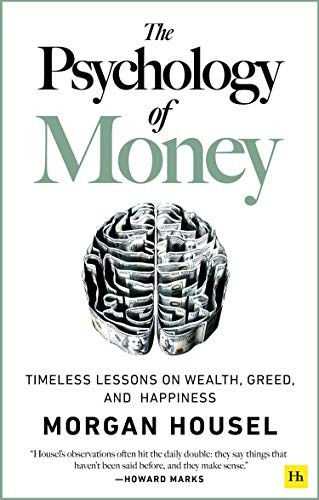
The best book ever written on why patience beats brilliance with money — and why the quiet, boring, left-alone decisions are the ones that compound into everything.
View on Amazon →As an Amazon Associate, Corpify earns from qualifying purchases.