
Every hobby can make money. That's not the interesting part.
You bake bread. You fix bikes. You know a ridiculous amount about houseplants. Someone, somewhere, will pay for that. The internet has made sure of it. So when people ask me "can my hobby make money?", I tell them they're asking the wrong question.
The right question is: how big do you want it?
Because the answer changes everything. Not the size of the number, but the kind of business you build. Want to round out the month? You'll sell your time, locally, this weekend. Want to quit your job? You'll need something repeatable that doesn't stop the moment you do. Want an empire? You stop selling the hobby and start building the platform the hobby lives on.
Same skill. Completely different businesses.
One hobby, three very different answers
Take chess. Ask how to make money from it at the lowest ambition, and you get the honest, obvious answers: local tutoring, online lessons, hosting a chess club. Cheap to start, a few hours a week, and the first dollar can arrive within days. Nothing glamorous. All of it real.
Turn the ambition up to "quit my job," and the ideas shift. Coaching for beginners is still there, but now it sits next to an online course and a YouTube channel: things that keep working when you're not in the room, and take months, not days, to pay.
Turn it up again, to "an empire," and the ideas stop looking like a side hustle at all. A marketplace connecting coaches with students. Tournament software for clubs. A franchise system for chess clubs, where you stop running one club and start licensing how to run a hundred. Higher start cost, heavier effort, a much longer road to the first dollar.
Nobody is lying to you at either end. They're just answering different questions. Most "monetize your passion" advice fails because it never asks yours. It hands a weekend tutor a startup playbook, or tells a would-be founder to sell lessons by the hour, and both walk away thinking the problem was them.
Three numbers before you start anything
Once you know how big you're aiming, every idea deserves the same three questions. Not revenue projections. Nobody can honestly tell you what you'll earn from one sentence about your hobby, and anyone who does is selling something. Just these:
What does it cost to start? Almost nothing, a few hundred dollars, a few thousand, or real capital. This one decides whether you can test the idea this month or need to plan for a year.
How much effort does it take? A few hours a week, or your whole life. Be honest here. An idea that needs you full-time is not a side income, no matter how small it looks on paper.
How long until the first dollar? Days, weeks, months, or a year or more. This is the one people skip, and it's the one that kills the most ideas. Not because the idea was bad, but because the founder ran out of patience, savings or belief before the money showed up. It's the same trap I wrote about in what nobody tells you about passive income: the front-loaded part is real, and it's long.
Put those three side by side and something useful happens. Two ideas that sounded equally exciting suddenly aren't. One costs nothing and pays in a week. The other needs savings and a year. Neither is wrong. But now you're choosing with your eyes open.

The obvious, the clever and the wild
Here's a habit worth stealing: whenever you brainstorm how to make something pay, force yourself to produce three kinds of ideas.
The obvious ones are what everyone with your skill already does. They're obvious because they work. Don't skip them out of pride; they're usually your fastest first dollar.
The clever ones combine your skill with a different model: the baker who sells a starter kit instead of bread, the bike mechanic who sells a fixed-price tune-up package instead of open-ended repairs. A small change in how you charge often matters more than a big change in what you sell.
The wild one is there to stretch you. Most of the time you won't build it. But it shows you the edge of the map, and every so often the wild idea turns out to be the only one nobody else is doing. That's what happens when you cut your niche small enough that you're alone in it.
Where passion breaks
None of this works if nobody wants what you're offering. That's the uncomfortable half of the story, and my colleague Robert made the case bluntly in follow your passion is how talented people go broke. Loving the thing is not a business model. Someone has to pay for it, and they pay for what solves their problem, not for what you enjoy doing.
So treat every idea as a test, not a commitment. The best ideas come with a first step you can take this week: a post in a local group, a fixed-price offer to three people, a single product page. If nobody bites, you've lost a few evenings, not a year. If someone does, you've learned more than any plan could tell you. And when they do bite, don't let it go quiet: the follow-up is the whole business.
We built a tool for exactly this
Full disclosure: we got tired of watching people get generic advice, so we built something. It's called Make It Pay, and the chess examples above came straight out of it.
You tell it what you have, do or love, in a few words. Then you turn a dial with six settings: round out the month, a real side income, quit my job, a real business, an empire, and billionaire. It gives you seven specific ideas, three obvious, three clever and one wild, and every one comes with the three numbers from this article: start cost, effort and time to first dollar, plus a concrete first step.
Don't like what you see? Remix it: weirder, safer, or cheaper to start. Found one you like? Take it straight into our business name generator, the business plan generator or the pitch deck builder, with the idea already filled in.
It's free, and it's honest about what it is: ideas, not income promises. At the top setting it even tells you the odds are tiny. They are. The imagination, though, costs nothing.
So, how big?
The hobby was never the problem. The question was. Before you ask whether it can make money, decide how much of your life you want it to take, how much you can put in to start, and how long you can wait. Then pick the idea that fits those answers, and test it this week.
Some of the most satisfying businesses I've seen were small on purpose. Some of the biggest started as one person's weekend. As I wrote in the work I didn't do, the money that matters most is often the money you set up well and then leave alone. Either way, it started with someone deciding how big. Now it's your turn.
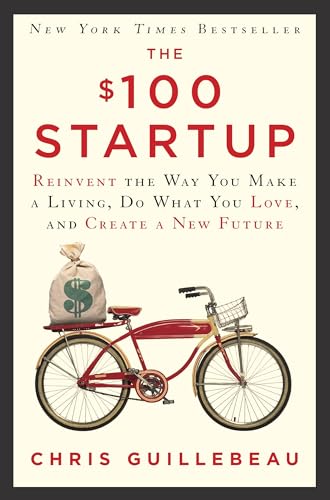
Dozens of real people who turned a skill or a hobby into a small, profitable business without big money — the best proof that "how big" is a choice, not a verdict.
View on Amazon