
I'm going to save you a year.
Not with a secret. Not with a hack. With a sequence — three phases, 90 days, executed in an order that most people get exactly backwards. The result is $10K/month in recurring revenue. No ad spend. No existing audience. No investor money. Just you, an offer, and the willingness to be embarrassingly direct with strangers.
Sound too clean? It's not. The middle is messy. But the starting point is almost insultingly simple.
The Trap Everyone Falls Into
You know what people do when they decide to "start a business"?
They buy a domain. They spend three weeks on a logo. They agonize over whether the button should be blue or green. They write landing page copy for a product nobody's asked for. They tell their friends they're "building something."
Three months later: zero dollars. Zero clients. A gorgeous Notion board. A graveyard of good intentions.
I've watched it happen hundreds of times. Smart people. Talented people. People who could absolutely deliver a $1,000 result to a paying client — stuck in permanent pre-launch because starting ugly feels beneath them.
Here's what they don't understand: revenue is not a reward you earn after preparation. It's information you collect by acting.
It tells you what's real. What people want. What they'll pay for. Without it, you're just guessing in the dark and calling it "strategy."
So let's stop guessing.
Phase 1: Proof (Days 1–30)
The entire point of your first 30 days is to answer one question:
Will a stranger give me money for this?
Not a friend. Not your mom. A stranger — someone with zero emotional obligation to say yes — pulling out their credit card because what you're offering solves a problem they actually have.
That's it. That's the whole phase. Get 3–5 people to pay you. Do the work. Deliver. Learn.
No website. No funnel. No logo.
(I can feel some of you tensing up. Good.)
The Proof Threshold
Three paying strangers is worth more than 10,000 followers, a perfect brand kit, and six months of "market research" combined. It means the demand is real. Everything after this is optimization.
Days 1–3: Pick one offer. One specific result for one specific type of person. Not "I do marketing." Try: "I'll write 4 LinkedIn posts per week for B2B founders. $500/month." Done. Move on.
Days 4–10: Message 10 people a day. Not a pitch. A conversation. "Hey — I'm doing this for a few people this month. Know anyone who might be interested?" That's it. Send it 70 times. Some will bite. One person with velocity beats a team with a marketing budget.
Days 11–20: Deliver. Overdeliver, actually. Not because you're a perfectionist — because you're learning. What takes too long? What do they actually care about vs. what you assumed? Where's the real value?
Days 21–30: Collect testimonials. Raise the price 20%. Refine the offer based on what you now know instead of what you used to guess.
By day 30 you should have $1,500–$3,000 in revenue. Maybe more. Maybe less. The number doesn't matter yet. What matters is you've crossed the most important line in business: from theory to proof.
You know what that feels like? Like the ground solidified under your feet. Suddenly you're not hoping anymore. You're iterating.
Need help defining the offer? Start here.
Phase 2: System (Days 31–60)
Okay. You've got clients. You've got proof. You've got a slightly chaotic delivery process held together by caffeine and willpower.
Now we build the machine.

The path you walked manually becomes the road others can follow.
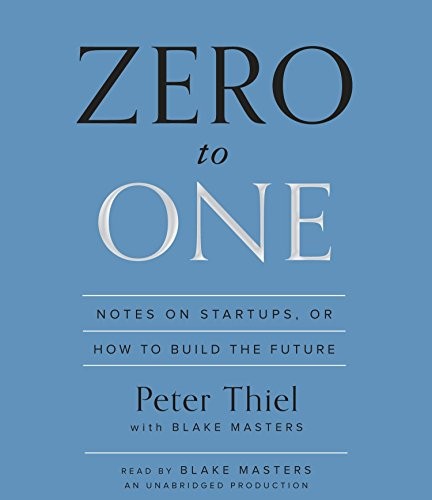
Peter Thiel on building something singular rather than competing on scale — proving one machine works before you multiply it.
Phase 2 is about one thing: removing yourself from the delivery without destroying the quality. Piece by piece. Not all at once — you're not hiring a team or building software. You're creating templates, processes, and repeatable steps so that the work you did manually in Phase 1 takes half the time in Phase 2.
This is also — finally — when you build the landing page. But here's why it works now and didn't before: you know what to put on it. You know what people respond to because you've had the conversations. You know which words made them say yes. You're not guessing at copy. You're transcribing reality.
Automate what's boring. Keep what's valuable. The trick is knowing the difference — and Phase 1 taught you that.
What to systematize:
- Delivery: Turn "I figure it out each time" into "I follow these 7 steps." Write the SOP. Your future self — tired, distracted, overbooked — will thank you.
- Acquisition: Whatever brought your Phase 1 clients — do it daily. One channel. Not five. Your first 1,000 clients come from one channel done relentlessly, not five done half-heartedly.
- Pricing: You have data now. What do clients value most? What takes you too long for too little return? Know your real numbers. Restructure accordingly.
- Onboarding: The gap between "yes" and "started" should be 24 hours max. Automate the intake form. Send the welcome sequence. Remove all friction from the moment of commitment.
By day 60, you can handle twice the clients in the same hours. Not because you're hustling harder — because the machine is carrying half the weight.
Revenue target: $4,000–$6,000/month.
And something funny happens here. You stop feeling like a freelancer. You start feeling like an operator. That shift? It changes everything that comes next.
Phase 3: Scale (Days 61–90)
Now it gets fun.
You've proved the concept. You've built the system. Phase 3 is about one word: leverage.
Doing more without proportionally increasing your time. Three ways to do it:
Lever 1: Raise the price.
You have testimonials now. Results. A delivery system that's tighter than what you offered on day 1. The version of you at day 61 is objectively better at this than the version at day 1 — so why charge the same? Move from $500 to $1,000. The clients who can't afford it weren't your real market anyway. The ones who stay won't blink.
Lever 2: Add a tier.
Your current offer is the baseline. What's above it? More access? Faster turnaround? A "done-with-you" layer on top? Two tiers retain better than one. People like choosing. Give them something to choose.
Lever 3: One force multiplier.
Pick exactly one:
- Content — turn your expertise into assets that attract clients while you're not working. One post a day. It compounds. Things you build once can sell forever.
- Partnerships — find one business that serves your exact client but doesn't compete. "I'll send you mine, you send me yours." Instant new channel. Zero cost.
- Referrals — your best clients know five people with the same problem. Make referring stupidly easy and genuinely rewarding. Clients who refer are your highest-ROI asset on earth.
The $10K Math
10 clients × $1,000. Or 20 × $500. Or 50 × $200. There's no universally correct model — only the one that matches your capacity and your market. Pick it. Build for it. Stop romanticizing the other options.
By day 90: $10K/month. Not theoretically. Operationally.
Why It Breaks When You Reverse It
You know why most "business courses" don't work? They teach Phase 3 first. They start with funnels, ads, content strategy, scaling frameworks — for businesses that haven't made their first dollar yet.
It's like teaching someone to drive on a highway before they've turned the key.
The sequence matters because each phase generates the information the next phase requires:
- Phase 1 tells you what people actually pay for. Not what you assume. Not what a market research report says. What real humans hand you money for.
- Phase 2 tells you what can be systematized — and what can't. (Some things require you. That's fine. Now you know which parts.)
- Phase 3 tells you what scales. Some offers multiply beautifully. Others collapse under volume. You can't know until you try — with real data from the first two phases.
Skip a phase and you're building on assumptions. Assumptions are the most expensive thing in business. They cost months. Sometimes years. Sometimes the whole company. The path to profitability is not mysterious. It's sequential.
And this is why compounding works so violently here: each phase makes the next one faster. Proof accelerates systems. Systems accelerate scale. By day 90, you're making decisions in minutes that would have taken weeks on day 1. Not because you got smarter — because every decision is now informed by data from the phase before.
What It Actually Looks Like at $10K/Month
Let me kill the fantasy real quick.
$10K/month is not a beach. It's not passive. It's not "four-hour work week." It's a machine that runs because you maintain it — 4 to 6 hours a day on delivery, 1 to 2 on acquisition. You have 8 to 15 active clients. A system handles 70% of the work without your real-time attention. You check in, you steer, you improve. That's the job.
But here's what it gives you that zero doesn't: optionality.
The ability to say no to bad clients. The ability to take a week off without the machine dying. The ability to invest back into it — better tools, faster delivery, or multiplying the capital into something bigger.
And here's the thing nobody tells you: $10K/month is the hardest milestone. Not $30K. Not $50K. Ten. Because getting to $10K teaches you the skill of building machines. After that, you just... build another one. And another. The physics don't change. The confidence does.
Every empire in history started with one working engine. Yours starts in 90 days.
Day 1
Not Monday.
Not "after I figure out my niche."
Not when the stars align and Mercury leaves retrograde and your Canva template is perfect.
Today.
One offer. One message. One person.
The machine doesn't care about your readiness. It cares about your willingness to start ugly, learn fast, and iterate without ego. Ninety days from now, you either have a revenue machine — or another quarter of thinking about it.
Proof. System. Scale.
In that order. No shortcuts.
Build the plan. Then go get your first yes.
The clock started when you opened this page.