
Let's say it all disappears tomorrow. The job. The clients. The savings account. The reputation. I wake up with a laptop, an internet connection, and 30 days to build something that puts money in my pocket. No network to lean on. No brand. No runway.
What do I do?
Not "what would I think about doing." Not "what would I research for two weeks." What would I actually do — starting the morning it all goes to zero?
This is that plan. Day by day. No theory. No motivation. Just moves.
Day 0: The Audit
Before anything else, I sit down with a blank page and answer one question: what can I deliver a result on this week?
Not what I'm passionate about. Not what I "want to build someday." What can I do — right now, today, with the skills sitting in my head — that someone would pay for?
I write three options. Maybe it's writing. Maybe it's building systems. Maybe it's making sense of messy data. Maybe it's something embarrassingly simple that I've been undervaluing for years because it comes easy to me.
The rule: if it requires more than a week of learning before I can charge for it, it's off the list. I don't have a week. I have today.
I pick the one where the pain is clearest. Where I can point at a person and say: "You have this problem. I fix this problem. Here's what it costs."
Skills beat credentials every time. Especially when you're starting from nothing.
Days 1–3: The Offer
I don't build a website. I don't buy a domain. I don't design a logo.
I open a Google Doc and write this:
What I do: [one sentence]
Who it's for: [one sentence]
What you get: [one sentence]
Price: [$200–$500]
Timeline: [delivered in X days]
That's the whole offer. Five lines. Ugly. Functional. Real.
The price is low on purpose. Not because I'm undervaluing myself — because I'm buying speed. At $300, saying yes is a non-decision for anyone with the problem I solve. I don't need convincing. I need velocity.
I'll raise it later. Right now I need proof, not profit.
(If I'm stuck on what to offer, I map it out here — takes five minutes, clears the fog.)
Days 4–7: The Outreach
This is where most people would quit. Because this part isn't fun. It's not creative. It's not "building." It's asking.
20 messages a day. Every day. For four days.
DMs. Emails. Old contacts I haven't spoken to in months. Communities where my future clients hang out. LinkedIn. Twitter. Discord servers. Facebook groups. Doesn't matter where — matters that I show up and say the thing.
The message is simple: "Hey — I'm doing [thing] for a few people this month at [price]. Know anyone who might need this?"
Not: "I've launched my new agency and I'd love to schedule a discovery call to explore synergies." God, no. (If you need to sound corporate without sounding insane, there's a tool for that. But for outreach — be human.)
Just: "I do this. Need it?"
80 messages in four days. I expect 2–3 yeses. Maybe 4 if my offer is sharp. That's not a guess — that's math. A 3–5% conversion on cold outreach is normal. Solo operators with velocity close faster because there's no friction between "interested" and "started."
By day 7, I have paying clients. Not many. But enough to prove the thing works.
Revenue so far: $600–$1,500. Doesn't matter. The zero is broken. That's everything.
Days 8–14: The Delivery
Now I shut up and work.
These seven days are about one thing: delivering a result so good that my first clients become my marketing department. I'm not trying to impress them with polish or professionalism. I'm trying to make them feel like they got a steal.
Over-deliver. Not by doing extra work — by caring more than they expected. Faster turnaround. A follow-up they didn't ask for. A small bonus insight they didn't pay for.
While I deliver, I document everything. Screenshots of results. Before-and-after. The process I used. Not for a case study (yet) — for myself. So I can replicate it without thinking next time.
On the day I deliver the final result — not a week later, not "when I remember" — that day, I ask for a testimonial. Two sentences. "What was the problem? What happened after?" That's all I need.

Day 14 is where the pressure fractures the old reality. Something warmer starts bleeding through.
By day 14, I have: revenue, proof, testimonials, and — crucially — I know what my offer actually is. Not what I thought it was on Day 1. What it became after real humans tested it with real money.
That gap between "what I planned" and "what they valued" is where the real business lives. Your first clients teach you more than any market research ever could.
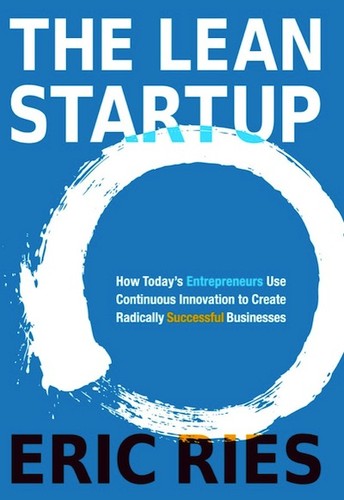
Eric Ries on build-measure-learn: your first clients reveal what the business actually is, faster than any plan.
Days 15–20: The Compound
Now I have ammunition.
Testimonials in hand, I do three things simultaneously:
1. Raise the price 30%. If I was at $300, I'm now at $400. If I was at $500, I'm at $650. I've earned it — I have results to prove it. The price increase is a signal: this isn't a hobby. This is a service that works.
2. Outreach round two — with proof. Same 20 messages a day, but now the message includes: "Here's what I just did for [client]. Want the same?" Night and day difference. Cost per client drops when you have receipts.
3. One piece of content per day. Not "building an audience." Not a content strategy. Just — showing my work. Publicly. A screenshot of a result. A lesson from a client project. A quick take on my industry. I post it wherever my clients pay attention. The content isn't the business — it's the residue of doing the business. It attracts people while I sleep.
Revenue by day 20: $2,000–$4,000 total earned. But more importantly — momentum. The snowball is rolling. Each day is easier than the last because proof compounds faster than effort.
Days 21–25: The System
I'm tired. I've been running on adrenaline and manual effort for three weeks. Good — that means it's time to build the machine.
Not a complicated machine. A simple one:
- Intake form: Three questions. "What's the problem? What have you tried? What's your timeline?" No more back-and-forth DMs to understand what they need.
- Payment link: Stripe or PayPal. One click. No invoicing, no "I'll send the details later." The moment they say yes, they pay. Friction kills momentum.
- Delivery template: The process I've now done 5–8 times? I write it down. Step by step. Automate the parts that don't require my brain. Keep the parts that do.
- Onboarding sequence: Client pays → auto-receives welcome message + intake form + timeline expectations. No manual email. It just happens.
The goal: next client goes from "yes" to "started" in under 24 hours without me lifting a finger. This is how the revenue machine gets built — not by planning it in advance, but by paving the path you've already walked.
Time saved per client: 3–5 hours. That's another client I can serve. That's the leverage.
Days 26–30: The Lock
The final push isn't about getting more clients. It's about getting the right clients — the ones who stay.
One-off projects are cash. Recurring clients are income. There's a difference. Cash runs out. Income compounds.
So I go back to my best clients — the ones who loved the result — and ask: "Want this every month?"
Maybe it's ongoing content. Maybe it's a monthly audit. Maybe it's a retainer for access. Whatever it is, I package the thing they already loved into a recurring model. $500/month. $1,000/month. Whatever matches the value.
Two recurring clients at $1,000/month changes everything. Three of them and I'm rebuilt. Not rich — stable. With a system. With proof. With a trajectory.
Seven figures starts here — not with a windfall, but with the first recurring thousand that you know will show up again next month.
The Day 30 Scorecard
Revenue: $3,000–$6,000 total earned. Recurring: $1,000–$3,000/month locked. Clients served: 6–10. Testimonials collected: 4+. System built: yes. Brand: none needed. Ads run: zero.
What This Exercise Actually Reveals
Here's the part nobody talks about.
You don't have to lose everything to do this. The exercise is a stress test. It strips away every crutch — the title, the network, the brand, the savings — and asks: "What are you actually worth to a stranger?"
Most people have never answered that question. They've been employed, or riding an existing reputation, or hiding behind a brand that does the selling for them. They don't know what they'd do on Day 1 because they've never had to think about it.
Now you have the answer. Written down. Day by day.
You can treat it as a thought experiment. Or you can treat it as a blueprint and start tomorrow — not because you have to, but because building from zero is the fastest path to freedom most people will never take voluntarily.
The people who built empires all started with a version of Day 0. They just didn't wait for life to force them into it.
Day 1 Is Tomorrow
Or today.
The laptop's already open. The skills are already there. The only thing between you and the first $1,000 is the willingness to ask a stranger for money in exchange for something real.
That's it. That's the whole secret.
Build the plan. Then go get Day 1 behind you.
Everything gets easier after that.