
Every business advice article assumes you have money. A budget for ads. Capital for inventory. Savings to live on while you "figure it out." This article assumes you have $0, a laptop, and a weekend. That's enough.
Not "enough to start planning." Enough to launch. Enough to have a real, revenue-capable business by Sunday night. The internet + AI didn't just lower the barrier to starting a business — they deleted it. But most people still operate as if you need capital to begin. You don't. You need clarity, one weekend, and the willingness to ship something ugly.
The $0 Advantage
Here's something nobody says: having no money is actually a feature when you're starting.
Money lets you postpone decisions. It lets you buy ads before you know if anyone cares. It lets you build bloated products nobody asked for. It lets you hide behind "investment" instead of facing the market.
$0 forces clarity. When you can't buy traffic, you have to make something people genuinely share. When you can't hire a team, you learn to use AI as your entire workforce. When you can't outsource decisions, you make them fast.
The leanest businesses are often the most profitable — no overhead means pure margin. And right now, in 2026, every tool you need has a free tier or can be built with AI for nothing. The cost to register is minimal. Everything else? Zero.
The physics of wealth favor leverage over capital. Always have. Now leverage is free. And there are financial exploits most people miss that cost nothing to deploy.
Seven $0 Businesses You Can Launch This Weekend
1. Service Arbitrage
Offer a service — copywriting, web design, social media management, email marketing — and use AI to deliver 10x faster than clients expect.
You don't need a website. You don't need a portfolio. You need one DM to one business that clearly needs help: "Hey, I noticed [specific problem]. I can fix that for you this week. Here's what I'd do."
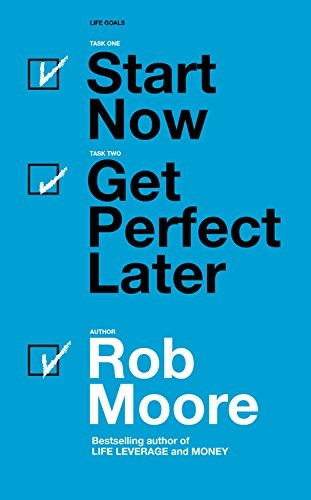
Rob Moore on beating perfectionism — launch messy this weekend and refine once real customers show up.
Cost: $0. Revenue: first client this week. The skill isn't the service — it's the clear communication that gets you hired.
2. Niche Content Site
Pick something you know well. Build a simple site. Publish 5-10 genuinely useful articles. Monetize with ads once traffic comes, or weave in affiliate links from day one.
The key: go narrow. "Fitness" won't work. "Kettlebell workouts for busy dads over 40" will. Specificity is how you become discoverable with zero ad budget. You don't fight for attention — you own a corner nobody else bothered with.
3. Digital Templates & Downloads
Budget spreadsheets. Resume templates. Notion dashboards. Email scripts for cold outreach. Social media content calendars. Wedding planning checklists.
Things people recreate from scratch every day — that you build once and sell while you sleep. List on Gumroad (free until you sell) or Etsy. Price at $9-$29. Post in one relevant Reddit community or Facebook group. First sale often comes within days.
4. Freelance + AI Superpower
This is different from #1. Here you're going to established platforms — Upwork, Fiverr, local Facebook groups — and bidding on real projects. The edge: you use AI to deliver in hours what others take days to complete.
Web design gig? AI builds it in 20 minutes. Copywriting project? AI drafts, you refine. Data entry contract? AI processes it while you bill hourly. Your margin is insane because your actual labor is minimal.
5. Directory / Curated Resource
The most underrated business model — literally just a well-organized list. Best coworking spaces in your city. Top AI tools for real estate agents. Wedding vendors in your region. Vegan restaurants ranked by locals.
Build it with AI in a weekend. Add 50-100 listings. Monetize through featured placements, sponsorships, or ads. Compounds over time as Google trusts you and listings grow.
6. Community-First Business
Start a free community around a specific interest or problem. Discord, Facebook group, newsletter — whatever fits your niche. Provide genuine value. Curate, connect, educate.
Build audience first, monetize second. At 500+ engaged members, sponsorships appear. At 1,000+, you can launch paid products, courses, or premium tiers. The community IS the asset — everything else flows from it.
7. Micro-Tool With Upgrade Path
Build one tiny tool that does one thing well. Make the basic version free. Add a paid tier for power users.
Free calculators that limit results to 3 (pay for unlimited). Free generators that add a watermark (pay to remove). Free tools that save locally (pay for cloud sync). The free version is your marketing — the paid version is your business.

Seven paths, zero dollars required. The only cost is choosing one and walking it.
The Saturday-Sunday Launch Framework
Stop treating "starting a business" like it takes months. Here's the 48-hour version:
Saturday morning: Pick your model from the seven above. Choose the one closest to a skill you already have or a problem you already understand. Don't overthink this — you can always pivot later.
Saturday afternoon: Build it. Use AI to create the site, tool, or product. Describe what you want. Iterate. Don't aim for perfect — aim for functional.
Saturday evening: Write the landing page or listing. One clear sentence about what this is. One clear reason someone would want it. One clear way to pay you or sign up.
Sunday morning: Tell 10 people. Post in one relevant community. Send 5 DMs to people who might need this. Not spammy blasts — genuine, specific outreach.
Sunday evening: You're live. You have a business. It exists in the world. Someone can find it, use it, and pay you for it. Everything from here is iteration.
The Launch Minimum
If you can't launch in a weekend, the idea is too big. Shrink it ruthlessly. What's the smallest version that still delivers value? Build that. You can always expand once you know people care.
What Replaces Money
Every advantage money buys has a $0 equivalent in 2026:
- Instead of paid ads: content marketing, niche communities, DMs, word-of-mouth, understanding what people actually search for
- Instead of developers: AI coding agents — describe what you want, watch it get built
- Instead of designers: AI-generated assets, clean free templates, good taste
- Instead of an office: your laptop, anywhere with wifi
- Instead of employees: AI handles 80%, you handle the 20% that requires judgment
- Instead of a business plan: a one-page plan you write in 10 minutes and update as you learn
- Instead of mentors: conversations with history's sharpest business minds — available 24/7
The only thing that can't be replaced? Your decision to start. That's the one resource no tool provides. Not sure which direction to take? Get AI-powered guidance to pressure-test your idea before you build.
The One Thing That Separates Starters from Dreamers
Dreamers plan endlessly. They read another book. Take another course. Wait until they "feel ready." Research one more competitor. Tweak one more spreadsheet.
Starters ship ugly.
Your first version will look bad. Your first landing page will be embarrassing in 6 months. Your first product will be rough. None of that matters. The only thing that matters Sunday night: does it exist? Can someone find it? Can someone pay you?
Every business you admire looked embarrassing on day one. Every founder you respect shipped something imperfect and improved it live. The gambit principle applies: not starting isn't safe. It's just losing slowly.
Momentum beats perfection. A live, ugly business beats a perfect plan sitting in a notebook. Always.
The Sunday Night Test
Ask yourself one question Sunday at 10 PM: "If someone Googled [my thing] right now, would they find me?" If yes — you launched a business this weekend. If no — what stopped you? Usually it's not money. It's permission. Give it to yourself.
There's a version of you that's still reading business articles in 6 months, waiting to feel "ready." And there's a version of you that launched something ugly this weekend and already has their first customer asking for more.
Same person. Same skills. Same bank account ($0). The only difference is one of them started.
Which one are you?
🚀 Starting a business? Use our free Business Name Generator to find a memorable, brandable company name in seconds.