
Here's the story we tell ourselves. "I clash with everyone — coworkers, family, the neighbor, whoever. People are exhausting. So I'll go solo. No boss, no team, no drama. Just me and the work." It feels like freedom. It feels like finally exhaling. And then the first difficult client shows up, and there is no one left to hand them to — because you're the whole company now.
Let me say the thing nobody prints on the solopreneur brochure: when you work for yourself, your revenue never climbs higher than the hardest relationship in your pipeline. Not your smartest idea. Not your best product. The relationship you're worst at is the ceiling on what you earn.
That's not a personality critique. It's plumbing. And once you see it, the whole "I'll escape people by going solo" plan falls apart in the best possible way.
The Comforting Lie
The fantasy is a cabin in the woods. Just you, the craft, the quiet. No one to disappoint, no one to negotiate with, no one whose mood you have to read across a table. If people are the source of the friction, remove the people — problem solved.
Except you've confused two very different sentences. "I'm bad with people" is not the same as "I should avoid people." One is a skill gap. The other is a strategy — a bad one — for hiding the gap instead of closing it. Going solo doesn't retire your people problem. It promotes it. It takes the thing you were worst at and makes it the center of your job.
You don't hate people, most likely. You hate the feeling of being bad at them. Those are wildly different diagnoses, and only one of them gets solved by locking the door.
The Job Was Absorbing Your Weak Spots
Employment is a giant relational shock absorber, and almost nobody notices it until it's gone. Your boss ate the furious client so you never saw the worst of it. HR defused the coworker friction. The company brand did the trust-building before you ever walked in the room — people extended you credit because of the logo behind you. A teammate quietly covered the call you dreaded. When you dropped a relationship ball, the system around you caught it before it hit the floor.
That's how a person with weak people skills can survive — even thrive — inside a company. The structure carries the part they can't. It's a buffer, and buffers are invisible right up until the moment you remove them.
Going solo removes every single one. No boss, no HR, no brand borrowing you credibility, no teammate. You are now the sales team, the account manager, the support desk, the negotiator, and the collections department. Every relational job the company used to absorb lands on you — and the market doesn't grade on a curve.
Insight
Avoidance never resolves relational anxiety — it feeds it. A solo venture chosen mainly to escape people isn't ambition. It's an avoidance strategy wearing ambition's clothes, and the market charges interest on it.
Money Flows to the First Blockage
Think of your revenue as water in a pipe. It doesn't matter how much pressure is behind it — it stops at the first clog. And in a solo business, the clogs aren't technical. They're relational.
The prospect you don't quite reassure, so they "think about it" and vanish — that's a clog. Trust is the thing that makes people buy once and never second-guess it (the whole economy of being chosen runs on it), and if you can't build it in a conversation, the sale dies there. The price you won't defend, so you quietly discount yourself out of a living — that's a clog, and it's why pricing without a sales team is really a nerve problem, not a math problem. The client who gets upset and you can't calm them, so it becomes a one-star review that scares off the next ten — clog. Customer experience isn't a department anymore; it's every interaction you personally have, and it's what makes people come back instead of leaving quietly.
The follow-up you skip because reaching out again feels needy — maybe the biggest clog of all. That's often the highest-value task you refuse to do, and you refuse it for a purely relational reason: it's awkward. Each of these is a hard cap on the top-line number. Widen the pipe anywhere else you want — better product, prettier site, sharper niche — the water still stops at the relationship you avoid.

Left: the job took the hit for you. Right: solo, there's no wall — the same difficult person now lands directly on your revenue.
The Two Kinds of Alone
Now, an important distinction, because I'm not here to guilt you out of a real preference. There are two kinds of alone, and they could not be more different.
There's alone-by-choice: the deep focus, the autonomy, the freedom to build without a committee. That's healthy and genuinely powerful — and the truth is the modern solopreneur is never really alone anyway. You build a team out of community, mentors, tools, even AI collaborators. Solo founders are outrunning funded teams precisely because they orchestrate a lot of relationships well, not because they cut them off.
Then there's alone-by-fear: solitude as escape hatch. It feels like peace, but it's postponement. The conflict you ran from doesn't dissolve; it waits, and it compounds, because every avoided rep makes the next one scarier. The first kind builds you. The second kind quietly bills you.
You Can Learn People the Way You'd Learn Code
Here's the liberating part, and it's the whole reason this article isn't a sad one. People skills are not a fixed trait you were or weren't born with. They're a learnable business skill — closer to a craft than a personality. You can study them, drill them, and get measurably better, the same way you'd learn a new tool or a new language.
And solo is the fastest teacher you'll ever have, precisely because the feedback is direct and it costs real money. No boss softens the blow. No HR reframes it. You say the wrong thing in a sales call and you feel it in your bank account by Friday. That sounds brutal, but rapid, honest, high-stakes feedback is exactly how humans learn fast. A difficult client isn't a verdict on your worth — it's a rep. A rep you used to never get, because the company was taking your reps for you.
Even the way you work with your non-human "team" is applied people skill. Directing an AI well is a relationship in miniature — being clear, setting expectations, describing what good looks like instead of just insisting louder. The best solo operators treat their tools like a teammate they've learned to brief. It's the same muscle. And when you want to watch clear, human persuasion done at the highest level, you can even study how history's sharpest minds moved people.
Consider: Two solopreneurs, identical skills, identical product. One dodges the price conversation, never follows up, and freezes when a client is unhappy. The other says the number without flinching, follows up twice, and stays in the room when it gets tense. Same craft. The second one earns three times as much — not because they're more talented, but because their pipe has no clog. That gap is entirely learnable.
Widen the Narrowest Pipe
So the move isn't "fix all your conflicts before you're allowed to start." That's paralysis, and it's not true. The move is to treat people skills as a core business system — ranked right next to pricing and bookkeeping, not filed under "soft stuff."
Three concrete shifts. First, find your single narrowest pipe — the one relationship type you avoid most (the upset client, the price talk, the follow-up) — and widen just that one. You don't need to become a charmer; you need to unclog the one spot the water's stuck. Second, build deliberate buffers instead of fleeing behind none: clear written contracts, expectations spelled out up front, a clean and honest "no," simple scripts for the hard conversations so you're not improvising under stress (a real operating manual for your one-person business should include these, and even a tool like our plain-language translator can help you say the firm thing kindly). Third, treat every awkward interaction as a low-stakes rep, and build the plan around getting more of them, not fewer.
Going solo won't cure your people problem. Nothing external will — you take yourself with you wherever you go. But it might be the thing that finally teaches you, because for the first time there's no one standing between your weak spot and the consequences. The solopreneur who wins isn't the one who escaped people. It's the one who stopped running long enough to learn to read them — and watched the ceiling lift.
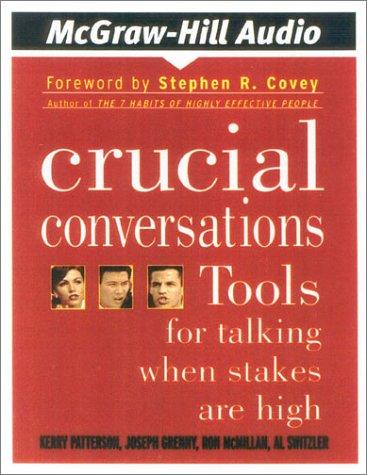
Every solo business has one conversation that decides it — usually the one nobody wants to have. This is the field guide to staying in the room when the price, the doubt, or the silence gets heavy, instead of retreating to email. The clearest way to widen your narrowest pipe.
View on Amazon