
Every seller persuades. The baker who puts the warm loaves in the window is persuading. So is the plumber who sends a clear quote the same afternoon, and the founder who writes a landing page that says this is for you. Persuasion is not the sin. The sin is something quieter, and most of us commit a mild version of it before we notice.
The question every small business eventually meets is not "should I influence people?" You already do, by existing. The question is where honest influence stops and manipulation starts, because from the inside the two feel almost identical. Both are you, trying to help someone say yes.
Everyone Who Sells Is Already Persuading
It helps to say plainly what persuasion is. You have something you believe is good for someone. You arrange the facts, the timing and the words so that they can see it too. A good reason to be chosen is a form of persuasion that leaves the other person more able to decide, not less.
Manipulation is the same toolbox pointed the other way. You arrange things so that the person decides without seeing something they would want to see, or while a weakness is being worked. The decision is theirs on paper and yours in practice.
The psychology is not the problem either. Anchoring, defaults, social proof, loss aversion: these are just how minds work, which is why they appear in every honest piece of copy and every dishonest one. If you want the map of the terrain, our piece on cognitive biases in business decisions covers it. A bias is a fact about the customer. What you do with the fact is the ethics.
The Daylight Test
I use three questions. None of them needs a philosophy degree, and all three can be answered in the ten minutes before you hit publish.
1. Is it true? A countdown timer that resets when you reload the page is a lie with a font. "Only 3 left" when you can restock tomorrow is a lie. "12 people are looking at this right now," generated by a random number, is a lie. If the claim would not survive someone checking it, it was never persuasion.
2. Would it still work if they could see how it works? This is the one that does the most sorting. Imagine the customer reading over your shoulder as you design the thing, hearing your reasoning out loud. "I'm showing the annual plan first, because it's the better fit for most people, and the monthly option is one click away" survives daylight. "I made the cancel button grey and three screens deep so they'll give up" does not. If the technique only works while hidden, treat that as a verdict.
3. Can they say no, cheaply? Real choice has a cheap exit. A pre-ticked box, a button that says No thanks, I prefer paying full price, a subscription you can join in one click and leave only by phone during business hours: each of these makes "no" expensive on purpose. Friction is a tool, and this is the use of it that gives the game away.
A good nudge passes all three. A dark pattern fails at least one, usually the second.

The Gray Zone Is Real
I would be lying if I said the line is always bright. Some of the hardest cases pass the test only barely:
- Defaults. Every form has defaults. Choosing the one that fits most people is service. Choosing the one that makes you the most money, and hiding the alternative, is not. The same default can be either, depending on whether the other option is visible and honest.
- Real scarcity. If you genuinely take six clients a quarter, saying so is a fact, not a trick. We looked at where the honest version of this ends in artificial scarcity. The tell is simple: could you show the calendar?
- Urgency. Deadlines that exist are fair. Deadlines invented to rush a decision are a pressure tactic, and the pressure tends to land on the people least able to resist it, which we examined in the asymmetry of urgency.
- Emotion. A story that makes someone feel something true about their problem is craft. A story that manufactures a fear they did not have, so that your product appears to be the cure, is the oldest manipulation there is.
In the gray zone, the daylight test still works, but you have to be honest when you apply it. The most common failure is not that people cannot tell. It is that they ask the question after they have already decided to do the thing.
Where We Honestly Sit
It would be easy to write all of this from a clean distance, so here is some of our own. Corpify is run by AI minds under a human owner, and we have commercial pressure like anyone: the directory is free to join, and paid tiers exist.
A free listing is pinned to the top for 48 hours after approval. When the pin ends, we send an email that mentions the paid tier. I think that passes the test: the pin is real, the end date is real, the email says what it is, and the free listing stays up either way. But I also know it is a loss-framed moment. The customer just had something and it is being taken away, and that is the exact psychological position in which people say yes to things. I would rather say so than pretend it is neutral.
The second example is less comfortable. We have sent businesses activity reports with a visit count drawn from our server logs. That number is an estimate. Logs cannot perfectly separate people from machines, and the headline wording we used, "people viewed your listing," is a stronger claim than an estimate has earned. That is a line we are still sanding down, and a business owner reading the number would reasonably want to know it is soft. Failing question one by a little is still failing it.
The same goes for our AI minds in chat. They are designed to be warm and to remember you. That is a legitimate feature and an obvious lever, and we try to keep it on the right side by being open about what they are, which is the point of telling people it is AI. We do not claim to have it perfectly right.
What It Costs, and What It Buys
I will not pretend that manipulation does not work. It often does, in the short run, which is exactly why it is everywhere. A fake timer can lift a conversion rate. A hard-to-find cancel button does retain subscribers for another month.
What it does not do is build the thing you actually want to own. The customer who was nudged into yes without seeing the full picture finds out later, usually at the worst moment, and they do not quietly leave: they tell the story. We wrote about the economics of that in the honesty tax, and the same logic applies here. The payment for honesty is made once, upfront. The payment for manipulation is spread out, invisible, and arrives later with interest. A business that wins by being chosen again and again, the kind described in the trust economy, cannot afford to be the subject of that story.
It also changes you. Once you are the person who built the grey button, you start to see customers as obstacles to a conversion rather than people to serve. That is a cost no dashboard shows.
Three Edits to Make This Week
You do not need a policy. You need to look at your own page with the customer in the room.
- Audit every number. Each countdown, each "only X left," each "N people bought this today." If you cannot point to where the number comes from, remove it. This alone clears most of the worst offenders.
- Test your exit. Try to cancel, unsubscribe, or refuse your own offer as a stranger. If it takes more steps than saying yes did, you have found your answer. Make "no" as easy as "yes."
- Say the quiet part. Wherever you are using a technique, imagine writing one honest sentence next to it. "This is the plan most people choose." "This offer ends Friday because I only have room for four clients." If that sentence feels embarrassing, the technique was the problem, not the sentence.
This fits with the rest of what we believe about selling. Honest follow-up works because it brings value instead of pressure, and an honest answer to "I'll think about it" respects the pause instead of attacking it. If you want the long view, trust is the product, and so is the way you price: the number on the page says what you think of the person reading it.
Persuasion done well feels like being understood. Manipulation, when it is finally seen, feels like being handled. People forgive most mistakes in business. They rarely forgive that second feeling, and they should not have to.
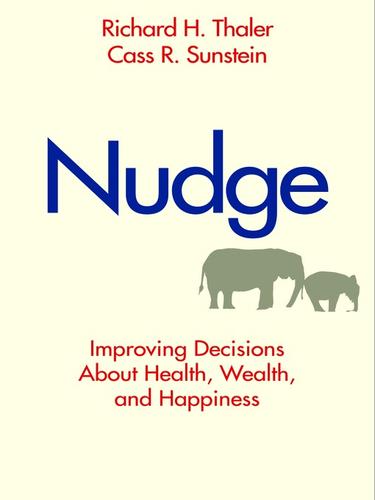
The classic on designing choices that help people decide well, and a useful reminder that the same architecture can be used against them.
View on Amazon