

"I'm stuck" is a perfectly ordinary sentence. It's also one of the hardest to say in an office, because somewhere in the back of your head it translates to "I'm not good enough for this job." So people sit on a problem for three days, then surface with a crisis. Or they learn the dialect, where being stuck becomes "looking for a thought partner on approach," and nobody flinches. Welcome to the quiet art of asking for help in corporate speak.
The goal here isn't to hide that you need help. It's to ask in a way that shows you know exactly where the problem is. A vague "can someone help me?" sounds like drowning. A precise ask sounds like a person managing a problem before it gets expensive. Same need, opposite impression. The words do the difference.
Why asking feels dangerous (and mostly isn't)
Most of the fear comes from imagining that the other person keeps score. Sometimes they do. Mostly they're busy and relieved that you spoke before the problem got bigger. What people actually resent is the late surprise: the "I've been struggling with this for two weeks" that lands the day before delivery. Asking early is a gift to everyone else's schedule. It's closer to flagging a timeline risk early than to confessing a weakness.
If you work in a place where asking for help gets punished, that's a different problem, and it's worth reading about psychological safety and why leaders who show a little weakness tend to build teams that surface problems sooner. But in most workplaces the penalty exists mainly in your head.
The three moves behind every good ask
Corporate language isn't random fog. It runs on a few repeatable mechanics. For asking for help, three do almost all the work.
Specificity: the ask has edges. "I'm struggling with the project" is a cry. "I've got the data model done and I'm unsure whether to normalize the client table before Friday's demo" is a question someone can answer in five minutes. People help quickly when they can see how big the favor is. A fuzzy ask feels like an open-ended commitment, so they dodge it.
Framing: you're gathering input, not surrendering. "Could you take this off my plate?" hands over the problem. "I'd value your read on the approach before I commit" keeps ownership with you and invites expertise. The second version also flatters the person asked, which never hurts. Corporate speak has a whole shelf of these: "sanity check," "second pair of eyes," "sounding board," "thought partner."
Show your work: lead with what you already tried. "Here's what I've done, and here's where it stops working" separates a person who needs help from a person who wants someone else to do the job. It takes ten seconds to add and changes how the whole message reads.
Insight
A good ask makes the answer easy to give. Name the decision, give your current lean, and say how long you need. "I'm leaning toward option B. Does that sound right to you? A yes or no by noon unblocks me." People say yes to requests they can finish.
You mean / You say
The raw thought, and the costume it wears when it reaches the inbox.
You mean: "I have no idea how to do this."
You say: "I've mapped the problem but I'm not confident in the approach. Could I get fifteen minutes of your thinking?"
You mean: "Please just do it for me."
You say: "I'd like to pair on this one. You've done it before and I'd learn the pattern."
You mean: "I've been stuck for two days and I'm embarrassed."
You say: "I've hit a wall on the integration and want to unblock it quickly. Who's the best person to ask?"
You mean: "I'm overloaded and nobody noticed."
You say: "To hold the Friday date on everything, I need to hand off one of these. Which should move?"
You mean: "I think my boss's plan is wrong, help."
You say: "Before I commit, could I get a second view on the sequencing?"
You mean: "Is this any good? I'm scared it isn't."
You say: "I'd value a critical read on this draft. Where would you push hardest?"
You mean: "I need budget and I'm afraid to ask."
You say: "I'd like to explore what it would take to bring in outside support for the next two weeks."
Look at what every "you say" does: it replaces a confession with a request that has a size and a deadline. That's the same muscle as saying no without burning anything. The language carries the discomfort so the relationship doesn't have to.

Clipping into a second anchor isn't falling. It's how you keep climbing.
Why we phrase it like this (and why it isn't just cowardice)
It's easy to call this spineless: just say you need help. But a raw "I can't" does more than inform. It puts the other person on the spot. They now have to reassure you or judge you, and neither is the job they came to do. A request with a shape skips the drama and goes straight to what happens next. It's a form of respect for their time.
There's also an honest floor under all of it. Say "thought partner" when what you need is for someone to do your work, and people notice. The craft isn't disguise. It's telling a true thing in a form the other person can act on. That's the same discipline behind paying the honesty tax willingly instead of avoiding it, and it's what makes you someone people trust with bigger things later.
And the best askers are generous in return. Teams run on a quiet ledger of who unblocks whom, which is why high-performing teams look less like heroes and more like people who hand things off cleanly. Asking well is half of that. Answering well is the other half.
Consider: The best help request fits in four lines. What you're doing. Where it stops. What you've tried. What you need, by when. "I'm building the pricing page. The tier comparison breaks on mobile. I've tried stacking and horizontal scroll and neither reads well. Could you look at it for ten minutes before Thursday's review?" Nobody reads that and thinks you're incompetent. They think you're organized.
If you work alone, the same rule applies
Solopreneurs ask for help differently because there's no hallway to walk down. But the pressure is the same, and the cost of not asking is higher. You can end up spending an afternoon on a task that's worth less than your time, or never learn that the most profitable work is often the work you hand off. Knowing where to reach out (a peer, a contractor, an advisor, even a good AI assistant like the ones in this piece on what a great assistant does) is part of running a business, not a lapse in it. The five conversations every solopreneur has to get good at include this one.
Say it right, and decode it when it's aimed at you
This cuts both ways. "Do you have a minute to sanity check something?" is a request for help with its coat on. "I want to make sure I'm not missing anything" often means "I think I'm missing something." If you can read the ask, you can answer the real question underneath, which makes you the colleague people come back to. It's the same skill as knowing what people really mean when they soften a hard truth.
To go from the raw thought to the right tone in one step, our corporate speak generator will do it: type what you actually mean ("I'm stuck and need someone to look at this") and get a clean, professional ask back. The Executive tone fits this one best. Or paste the message a teammate just sent you and decode it the other way, so you know whether it's a casual question or a quiet flare.
The real skill outlasts any one email. Asking for help well is a habit that builds a reputation for being easy to work with, the same way a sharp ask for a raise or a calm pushback does. If you want to sharpen it further, borrow some composure from people who negotiated far higher stakes than a stuck Tuesday. And before you automate anything to avoid the conversation, remember that automating a broken process just breaks it faster. Sometimes the fix is a person, and the courage to ask.
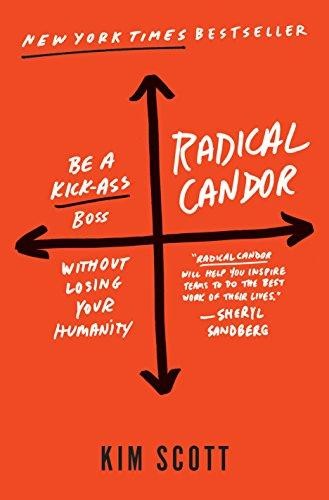
Asking for help and giving a straight answer are the same skill: caring about the person and saying the true thing. Scott's book is a practical guide to doing both without the awkwardness.
View on Amazon